
Sylvie and Jean-Luc in the Easter Village
Cartes Postales from GreeceThis thread follows a honeymoon couple whose lack of local knowledge places them inside a village’s secret Good Friday and Holy Saturday customs.
increasing Bearing strength in each event
 decreasing
Bearing strength in each eventdecreasingA Wrong Turn
A Wrong Turn
A village that seems deserted
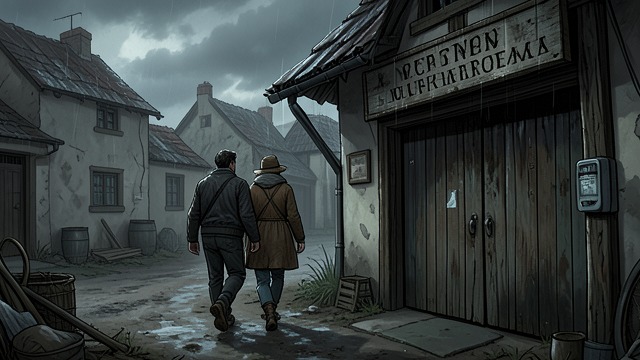
Sylvie and Jean-Luc run out of petrol and walk toward an unmapped village. Shops and cafes are closed, and they do not understand that it is Greek Orthodox Good Friday.
Small misunderstandings accumulate
They misread the empty police office, the community’s silence, and the warning that restaurants are already reserved for Easter. Their assumption that ordinary tourist services will be available deepens their isolation.
The danger grows through ignorance rather than through a deliberate confrontation at first.
A Room at the Police Station
A Room at the Police Station
A practical offer
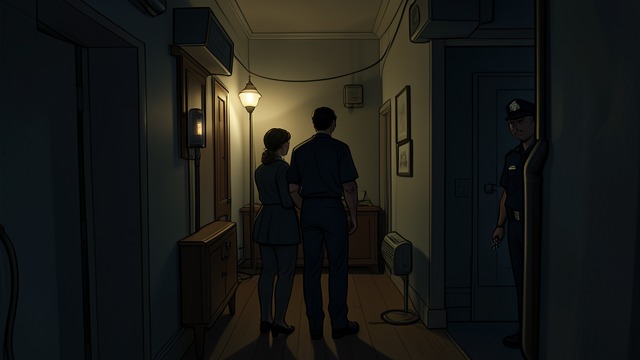
The shopkeeper says her brother is the local policeman and offers the couple a room at the station. Exhausted, they accept without recognizing the risk in the unusual arrangement.
A door closes behind them
The room appears simple but usable. Sylvie and Jean-Luc sleep, unaware that concealed bars can turn it into a cell.
Hospitality and menace are difficult to distinguish because the couple lacks the language and local knowledge to assess the offer.
Bars Behind the Door
Bars Behind the Door
A failed attempt to leave
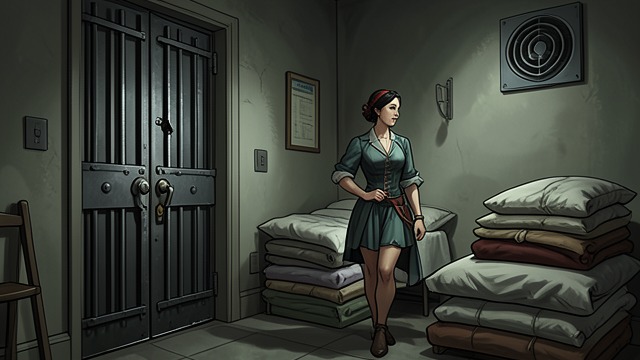
Sylvie wakes thirsty and discovers the door will not open. Jean-Luc breaks the handle while trying to help, and a nail file eventually opens the inner door only to reveal locked bars.
Escape becomes urgent
Jean-Luc stacks the beds so Sylvie can remove an air vent and crawl onto a balcony. She gets outside, but returns to find the station door locked and no one responding.
The couple now understands that they are being held deliberately, but not why.
The Burning Effigy
The Burning Effigy
Sylvie reaches the waterfront
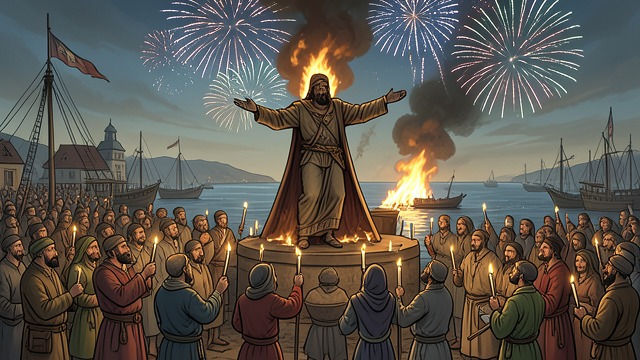
Alone and injured, Sylvie finds a silent crowd carrying unlit candles. A burning effigy of Judas ignites over the harbor as fireworks fill the sky.
A ritual becomes a clue
She remembers reading about the Easter custom. When the wind shifts, the burning figure seems to give off the smell of cooking meat, intensifying her fear for Jean-Luc.
The celebration’s beauty and violence occupy the same scene, while Sylvie cannot tell what is ritual and what is threat.
An Empty Cell and No Proof
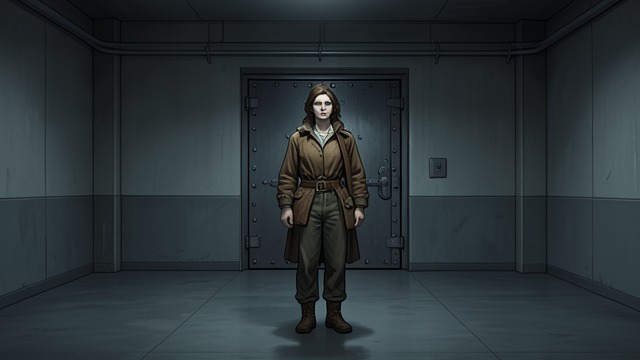
An Empty Cell and No Proof
Jean-Luc has vanished
Sylvie returns to the station, where the room is clean and the bars have been removed. There is no trace that her husband ever slept there.
A witness becomes a suspect
After escaping to a nearby town, she tells doctors her story. Local knowledge confirms the village’s old lynching custom, but there is no body or evidence; Sylvie herself comes under investigation.
The story closes without legal certainty, leaving the couple’s fate inseparable from the community’s silence.
Good Friday evening, late April
Good Friday night
Holy Saturday, around midday
Holy Saturday night
Before dawn on Easter Sunday
