Antigoni
Cartes Postales from GreeceAntigoni’s story traces the making of an artist under the pressures of marriage and family duty. Her paintings first give her a way to explore an island where she feels exiled; later, the destruction of her work becomes the breaking point that sends her back to Piraeus and an independent life.
Identity and Background
Antigoni is nearly thirty when her father accepts a marriage proposal for her. Her future is entangled with that of her younger sister, Ismini: family custom prevents the younger daughter from marrying first, and Ismini longs to leave home. Antigoni accepts the match partly to stop being an obstacle to her sister’s fulfilment, although she is content with her own life and has no passion for the man who proposes.
That life has taken shape in Piraeus, a fast-growing city of nearly two hundred thousand people in the mid-1930s. Since their mother died when Antigoni was fifteen, she and Ismini have enjoyed considerable freedom there. Antigoni reads, visits cultural events, and paints from the open French windows of their home, often depicting a boat or a neoclassical building against the sea. She also sketches people in the street and colours the drawings in private. When Ismini tells her she should teach, Antigoni begins giving lessons, earning a little income and independence. Marriage would mean surrendering not only familiar surroundings but a life she has begun to make for herself.
A Marriage of Convenience and Exile
Christos Vandis is a wealthy ship owner from Andros, forty-five years old and frequently at sea. He wants a dependable wife to manage his household while he is away, not a glamorous bride he fears he cannot trust. Antigoni’s father is a port manager, but Christos is not seeking a wealthy family. Their union is practical rather than passionate: Antigoni agrees to it for Ismini’s sake and because she fears remaining unmarried forever in her father’s home.
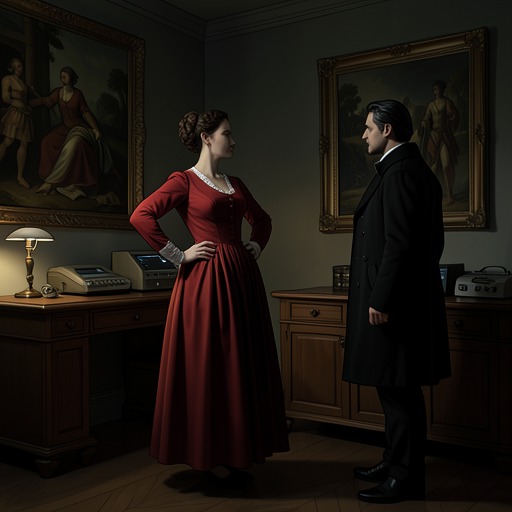
The wedding gathers Antigoni’s familiar friends from Piraeus, but by its end she understands that the celebration has also been a farewell. At the reception on Andros the following week, she meets a hundred well-dressed islanders beneath the painted portraits of Christos’s ancestors. Her new husband gives her instructions about which eccentric islanders to avoid. Although he presents his caution as concern for her safety, Antigoni suspects he wants to keep her secluded until he returns.
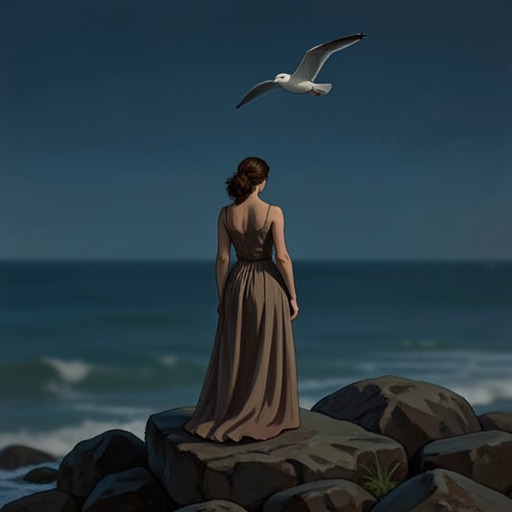
Three and a half weeks after the wedding, in late July, Christos sails for North America, expecting to be gone for a year. Antigoni feels abandoned and lonely, far from home. As the weeks pass, she can scarcely recall his face without looking at his portrait in the hall. His touch fades from memory; the scent of tobacco and cologne on his suits, or the smell of men smoking outside a coffeehouse, is what still brings him to mind. The modest attraction that had grown during their short time together is already disappearing.
Painting the Island
During the hot summer, Antigoni’s days contract around visits with other shipping wives and household management. She eats little and becomes lethargic, but the stillness bothers her less than she expected: the heat quiets the streets and makes the days feel almost motionless. As the weather cools and her energy returns, she takes up her easel and paints outdoors. On the first of October she sets out at sunrise with water, cheese, and tomatoes, walking into the hills while the servants watch her leave.
Painting becomes both her company and a reason to explore. The unfamiliar landscapes lead her along ancient footpaths, past stone walls, waterfalls, and streams. She paints cypress trees with deep green strokes, setting a church, windmill, or pigeonnier into the scene, and returns repeatedly to domed churches against blue sky and castle ruins at sunset. The work changes the island from a place of confinement into a landscape she can investigate and represent on her own terms. But this outdoor season is brief: by mid-November, torrential rain washes away the strokes of a painting, ending her days of painting on the hillsides.
Her artistic practice also turns toward people. She sits quietly with a fisherman and makes five drawings, giving one to him. In June, she works in the cool of the dining room, which she has converted into a studio. Four large oil portraits, each more than a metre wide and one larger still, lean against the wall until a carpenter makes heavy, moulded dark-wood frames. Antigoni’s paintings replace the stiff ancestral portraits in the house. The faces of people who have relieved her loneliness now look down from its walls: her art has made a place for her companions inside the very household where she had felt stored away.
Departure and Artistic Legacy
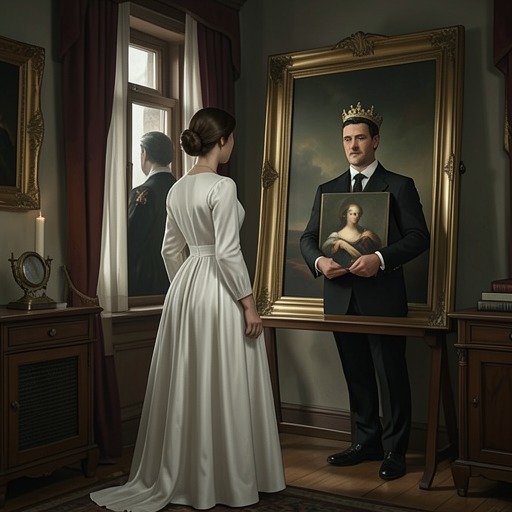
More than a year after Christos’s departure, a cable announces that his boat will return in a week. Antigoni is glad at the prospect of seeing him, yet wonders how much of a stranger he will be. His scent has vanished from his clothes, and she stands beneath his portrait to try to reacquaint herself with the man it represents. On the evening he returns, the dining room resumes its original function: she puts away her easels, brushes, and paints, and a maid removes paint splashes from the floor.
Later, as her portfolio burns, Antigoni sees the image of Ismini among the pictures curling upward in the flames. She pulls away from her husband and runs through the house and out the front door. The next morning’s ferry offers a way out, and she is willing to face the consequences. She knocks on the schoolmaster’s door; he gives her money for the bus and the ferry. A few months later, she sends him a painting in thanks. The gift proves valuable enough that, a decade later, the schoolmaster can sell the still life and retire.
Antigoni becomes a celebrated painter, while Christos continues to spend long periods at sea and returns only for short visits to a dusty home. She never leaves Piraeus again. The Vandis mansion, once the setting for her enforced separation and her paintings, is now a guesthouse. The story’s account of a female artist whose work has been lost in Andros gives that absence a sharper edge: the burning portfolio belongs to a life she escaped, but her return to Piraeus does not erase the achievement that followed.