Apostolos Papazoglou
Cartes Postales from GreeceApostolos Papazoglou’s rise from displacement and precarious work to hotel magnate is followed by a family succession contest that destroys the empire he hoped to pass on. Having once lost his home and livelihood, he builds a business by recognizing opportunity; yet, when he tries to secure its future through competition between his sons, he fails to account for the pressures and wrongdoing that will undo them all.
Displacement and the first foothold
In 1955, Apostolos was among the Greek residents forced to flee Constantinople during a pogrom. He left behind his home and a popular guesthouse, arriving in Greece with his young wife, Melina, their two small sons, and only a handful of keepsakes they had managed to carry. The escape was not the start of a comfortable new life: he had a family to support and had to look for work immediately.
He settled in Patras, where the sea offered a familiar point of connection to the place they had left. He worked long days in a kafenion and then spent several hours each night as a porter at the docks. The two jobs brought in enough to feed the family and eventually build some savings. His later fortunes therefore begin not with inheritance or a ready-made enterprise, but with sustained labor and the gradual accumulation of capital.
Building the hotel business
Apostolos’s opportunity came with the expansion of tourism. During the military dictatorship in the late 1960s, hotels were opened to boost the economy; after the junta ended, the growth of tourism accelerated. He saw how much visitors valued the climate, sea, sand, and inexpensive food, even when accommodation was plain. A nearby Xenia hotel, busy with German guests despite offering little comfort, provided a practical demonstration of what the tourist market would accept—and of how much it might later demand.
He acted quickly. By the end of his first summer in the hotel business, he had plans for a second hotel, and for five years he built another each winter. His properties filled from Easter until the end of October. As tour operators began seeking greater comfort and higher standards, Apostolos adapted; over two decades, the number of guests multiplied twentyfold, along with his profits and financial forecasts. His investments in undeveloped coastal land, acquired before many others saw its potential, helped his luxury-hotel empire spread through Greece’s seaside resorts and islands.
This expansion marks a striking reversal from the family’s beginnings in Patras. The two sons who had once shared a one-bedroom apartment with their parents now spent summers at luxury resorts, living on room service and Coca-Cola. They had never made a bed. Their mother, Melina, had praised them even when they did badly at school, while Apostolos was preoccupied with making money. The narrative presents their indulgence as a family condition, not simply a personal failing: they had grown up with little sense of rules, and their father’s success had not prepared them to take over his business.
The succession test
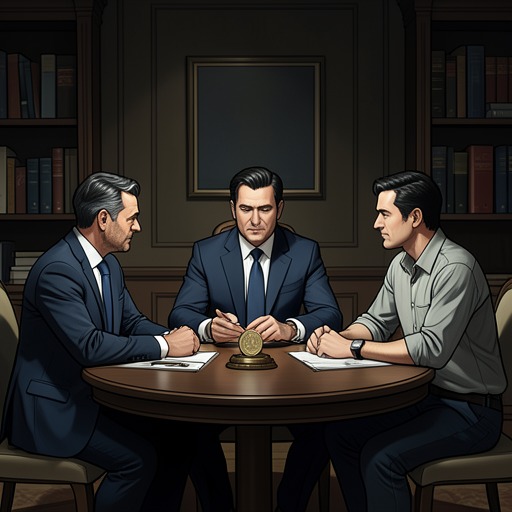
As his seventy-fifth birthday approached, Apostolos wanted to retire without dividing the hotel group. He also resisted the assumption that his elder son, Manos, should inherit it automatically. He privately thought Stephanos had more charm and was better suited to lead. Melina proposed a test: let each son demonstrate who could do the better job, then choose the successor on that basis. Apostolos agreed.
On 13 October, during a family celebration at a smart restaurant, Apostolos took an old drachma coin from his desk drawer and announced the terms. He owned two undeveloped sites in Patras, one near the busy port and one on a stretch of beach. The coin would assign the plots; whichever son developed the more successful hotel would take over the entire empire. The toss gave Manos the port-side site and Stephanos the beach plot. The decision made their rivalry the instrument of succession, but the two projects would be judged in circumstances shaped by more than their individual business choices.
The date itself also acquired significance. Waiters listening to the announcement regarded the thirteenth as unlucky, invoking the digits of 1453 as a warning. Both hotels later opened on 29 May, a date remembered locally in connection with Constantinople. In retrospect, the coin toss and the competing launch date became part of the story the people of Patras told about the family’s ruin. The narrative establishes the community’s belief in these signs; it does not present superstition as a substitute for the material causes of the collapse.
The contest and its collapse
The first summer appeared successful for both sons. Apostolos was impressed by their profit margins and, to their relief, did not examine the businesses more deeply. Manos concealed what was happening at Hotel Pyrgos, a concealment that kept his father from seeing how vulnerable the enterprise had become. Giorgos Kourtis, who owned a rival hotel and had powerful connections, first appeared as a customer at the Pyrgos, including in its private gambling room. Manos came to understand that Kourtis’s interest was tied to competition with the new hotel.
The pressure soon became costly. About five months after opening, the Pyrgos lost its electricity. Although electricians found no fault in the system, Manos had been cut off and was told it would cost five million drachmas to reconnect. The same happened to the water, again for a large fee. Police then repeatedly searched the hotel for gambling evidence, which they found, and Manos concluded that bribes were necessary to limit the visits. He took out loans to meet these demands. His accounts showed outgoings far beyond income, while winter power cuts left rooms cold and occupancy fell. In the damp, unheated hotel, the painted decoration began to flake; the building meant to resemble a lasting castle began to deteriorate.
The financial damage reached beyond the hotel’s walls. As the October reckoning with his father approached, Manos was burdened with debt, sleeplessness, and asthma attacks brought on by stress. He could not afford to repair the lift, and his girlfriend left after discovering the cost of his status as the owner of the town’s grandest hotel. These details expose the difference between the apparent success Apostolos had accepted after the first summer and the precarious reality his son had hidden from him.
Trials, bankruptcy, and legacy
By Apostolos’s seventy-seventh birthday, the intended retirement handover had been replaced by another decision: both sons were facing trial, with proceedings beginning on the same day in Athens. Melina suggested that he toss a coin to decide which trial to attend. The episode echoes the earlier succession test, but its stakes have changed. The first toss had offered a future in which one son would inherit the business; the later choice arose after both sons had entered legal jeopardy. The account does not say which trial Apostolos attended.
Seven months later, on 29 May, verdicts of manslaughter were delivered in both cases. The compensation owed to injured guests and bereaved families exceeded what the sale of the entire hotel empire could cover, and Apostolos was obliged to declare bankruptcy. The man who had built his business through work, adaptation, and investment could not preserve it through the inheritance scheme he had designed.
For years, the decaying remains of the two hotels stood as reminders of the family’s fall. Patras residents continued to recall the dates of the openings and the warnings about the thirteenth, interpreting the ruins through a mixture of religious belief and superstition. Apostolos’s arc thus binds economic achievement to family failure: he successfully recognizes a changing market, but the empire’s succession becomes a contest whose consequences extend from his sons to guests, bereaved families, and the family fortune itself.