Daedalus
Cartes Postales from GreeceDaedalus is an inventor whose resourcefulness enables him to escape imprisonment, but whose most ambitious invention carries a devastating cost: his son Icarus dies during their flight. In the novel, the legendary inventor appears not only through the story he tells of his life, but as an old man rescued from the sea and sheltered on Ikaria. His account links ingenuity and freedom to the limits of a father’s power, while his grief gives the ancient tale an intimate, continuing aftermath.
Identity and Background
Daedalus comes from an island far south of Ikaria, a place described as so large that it resembles a country, ruled by King Minos and furnished with a palace of hundreds of rooms. The narrator contrasts this world of royal authority and grand buildings with Ikaria, where there are no such structures and people are described as equal. Daedalus’s own defining quality is his inventive intelligence: the narrator compares him to Leonardo da Vinci and imagines that, had he lived in the present, he might have invented the internet or built the world’s tallest building.
Minos summons Daedalus to construct a labyrinth to contain a monster born to the king’s wife. Men and women from Athens are sent into the maze to be eaten. When Theseus kills the monster and escapes, Daedalus’s advice to Minos’s daughter Ariadne has helped make that escape possible. Theseus elopes with Ariadne, then abandons her. Minos’s anger at his wife and daughter’s actions turns against Daedalus: the king imprisons him in a tower with Icarus.
Invention and Escape
The tower keeps father and son high above the ground, ostensibly making escape difficult. For Daedalus, confinement is especially punishing because it separates a capable, inventive man from the wider world. Yet the tower also gives him a view of birds in flight. Watching them soar and swoop over the course of weeks, he studies the complexities of aerodynamics and begins to imagine a way out.
Over several months, Daedalus makes traps and gathers dozens of birds of different sizes to obtain feathers of varying lengths. He finds a binding material in the bees nesting in a corner of the ceiling and takes their wax. Icarus initially feels upset at the sight of the dead birds; after Daedalus explains that the feathers offer their only hope, he joins in plucking them and arranging them as his father directs. The work turns into a shared preparation for flight, and Icarus’s excitement grows as the wings take shape.
When the wings are ready, there is no test flight and no second attempt available: Daedalus and Icarus must jump from the window ledge. Daedalus gives his son strict instructions. Flying too close to the sea could wet and weigh down the wings; flying too high could melt the wax that holds the feathers together. They must keep a steady course and stay together over the long journey. Daedalus plans to jump first, telling Icarus to abandon the attempt if it proves disastrous. The wings are engineered carefully and made beautiful as well as functional, but their craft cannot remove the danger of the escape.
The Flight and Icarus’s Death
The flight ends with Icarus in the sea and Daedalus alive nearby. A group of six strong teenage boys rows out from the beach to search for him. Daedalus lands on a rock, struggling to balance in the breeze until two boys help remove his wings. The rescuers dive in shifts for an hour or more. Neither Daedalus nor Icarus is a strong swimmer, and feathers and pieces of wood spread across the water, casting a shadow that hampers the search. The boys use their oars to clear the debris, while two also dive as deeply as their breath allows.
The narrator later understands Icarus’s flight as more than an escape attempt. Daedalus’s voice breaks while telling the story, and the narrator feels that Icarus may have begun performing tricks after seeing people watch him from below. In this reading, the boy’s display is an attempt to impress his audience, an impulse the narrator associates with teenage confidence. Icarus’s intense pleasure in freedom carries him beyond the restraint his father prescribed. The contrast is painful: Daedalus is wise and accomplished, yet cannot govern his son’s natural impulses or guarantee his safety.
Grief and the Promise of Remembrance
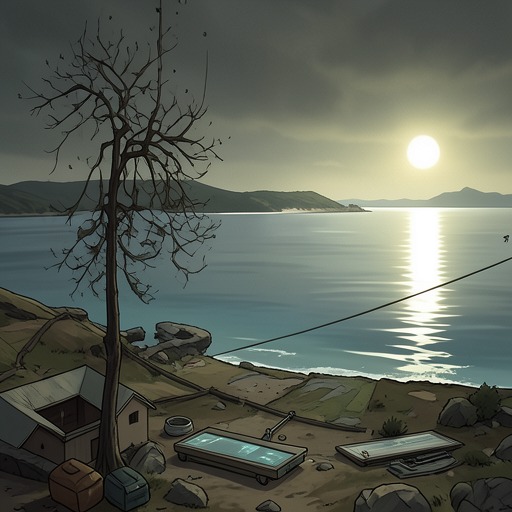
After the rescue, the narrator leads Daedalus to a stone-built house and offers him a place to stay for as long as he needs. For days, Daedalus goes without eating the food set before him. He spends each day at Icarus’s grave, remaining there until night, and sometimes wakes the household with shouts that the narrator takes to be nightmares. Debris from the wings continues to wash up on the beaches. The practical remnants of the escape thus persist alongside the bereavement they represent.
On the sixth night, Daedalus begins to talk at length. The narrator sees the telling as a way of helping him live with his grief, and listens as Daedalus relates his history. Even after the account is finished, loss remains inseparable from self-blame: Daedalus blames himself both for Icarus’s death and for having believed the wings could be safe. His inventiveness and distinction offer no protection from the fact that he has lost the person he loves most.
Daedalus stays for roughly another week. He continues visiting the grave, but gradually begins eating the narrator’s food and sleeping better; the shadows around his eyes fade. Their conversations occupy hours, and the narrator sometimes accompanies him to the graveside. Daedalus also has a practical problem: he remains a fugitive, and Minos will be looking for him. When he raises the question of what will happen to Icarus, the narrator promises to make sure the boy continues on his way so that Daedalus can continue on his own. The promise commits the narrator to remembering Icarus and making offerings at the grave. Daedalus responds with gratitude and tears, marking a change in his mourning without undoing it.
Narrative Role
Daedalus’s story is framed as a bereaved man’s spoken account to the islander who has sheltered him. The frame changes the emphasis of the escape legend: the labyrinth, the invention of wings, and the flight are not merely feats of cleverness, but a history recounted by a father who survived his son. In turn, the narrator’s promise extends the story beyond Daedalus’s immediate grief. The tale leaves the question of escape open as Daedalus remains hunted, while giving the narrator a lasting responsibility: to keep Icarus present through remembrance and ritual.