Death of Lord Byron
Cartes Postales from GreeceLord Byron’s death in Messolonghi transforms a city’s admiration into mourning and ends Despina Dimotsis’s hope of seeing him again. The event joins her private grief to a public farewell: the poet she had watched from afar lies in a coffin, while the city closes its shops and gathers in the rain to honor him.
Waiting and the News
During the weeks of Byron’s illness, Despina sat at her window each day, hoping for another sight of him. She had once glimpsed him on horseback, but rumors that delirium had confined him to bed kept her awake. Her vigil was shaped by distance and uncertainty: she waited for a glimpse even as reports suggested that he might no longer appear in public.
When news of Byron’s death was announced the following day, the shock spread through the entire city. For Despina, the announcement brought a loss she had never experienced before, an emptiness that made her suffering distinct even within the city’s wider grief.
The Coffin in the Church
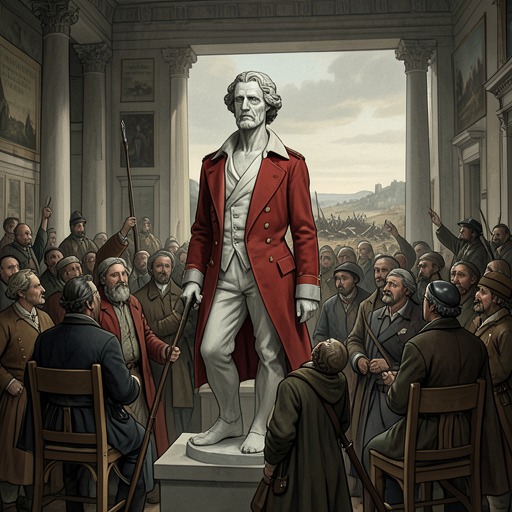
Despina saw Byron for the third time in her life in the church of Agios Nikolaos, where he lay inside his coffin. The crowd surrounding him recalled the gatherings at his arrival, but its purpose had changed: people now came to mourn his departure. His closed eyes could no longer charm, marking the end of the living presence that had sustained Despina’s distant adoration.
The scene makes the contrast between celebrity and mortality immediate. The crowds remain, but the admired figure they once came to see is now still; the public spectacle of mourning cannot restore the private hope that he might appear again.
Messolonghi in Mourning
Grief took civic form across Messolonghi. Guns were fired from the fortress, Easter Week celebrations were cancelled, shops and public offices closed, and the city declared three weeks of mourning. These suspensions of ordinary life made the loss a shared public event rather than a private sorrow alone.
The funeral was first postponed because torrential rain fell on its intended day. When it took place the following day, thousands lined the streets to say farewell. The weather delayed the ceremony but did not diminish the turnout: the funeral became the city’s collective act of leave-taking.
Private Grief and Public Farewell
Despina wept more than anyone else, her eyes swollen from crying. Her response gives the public mourning a sharply personal focus: the city could close its offices and cancel its celebrations, but it was Despina who experienced the death as the shattering of an intimate hope. The farewell ends her vigil not with another sight of Byron alive, but with the sight of him in his coffin.