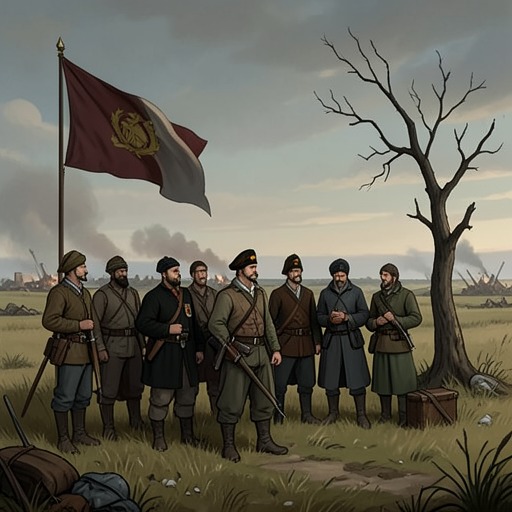
Fall of Constantinople
Cartes Postales from GreeceThe Fall of Constantinople was the Ottoman capture of the besieged city on Tuesday, 29 May 1453, a catastrophe whose memory continued to shape Greek attitudes toward Tuesdays centuries later. The narrative connects the city’s fall not only with conquest and loss, but with portents, religious desecration, and a date that remained charged in everyday life.
Siege and Capture
Constantinople, which many Greeks still called i poly, meaning “the city,” had endured a forty-day siege by the Ottoman forces. As defenders attempted to repel the attackers outside the walls, a lunar eclipse, an icon of the Virgin slipping from its platform during a procession, and a violent thunderstorm were read as terrible portents. The city fell on a Tuesday, 29 May, when the Ottoman forces broke through its defenses.
The City’s Loss
The account describes men, women, and children being killed during the capture. It singles out the desecration of the basilica of Agia Sofia and the killing of the priests and congregation worshipping there as, for some, the greatest atrocity. The emphasis makes the fall more than a military defeat: it is remembered as an assault on a sacred place and the people gathered within it.
A Date That Endures
The weekday of the fall acquired a continuing weight. Some Greeks avoid scheduling anything important on a Tuesday, with the memory of 1453 especially stirred on that day. The old name Constantinople also persists in speech: many Greeks cannot bring themselves to use Istanbul, the name given by the conquerors, and airport departure and arrival boards still use the older name.
The narrative later sets this inherited caution against a deliberate disregard for it. On 29 May 1979, a Tuesday and the anniversary of the city’s fall, two hotels opened under the ownership of a family that treated the taboo as superstition. The public was aghast, showing how a historical event could remain present not just in commemoration, but in the significance attached to an ordinary date.