Filoxenia as a measure of welcome
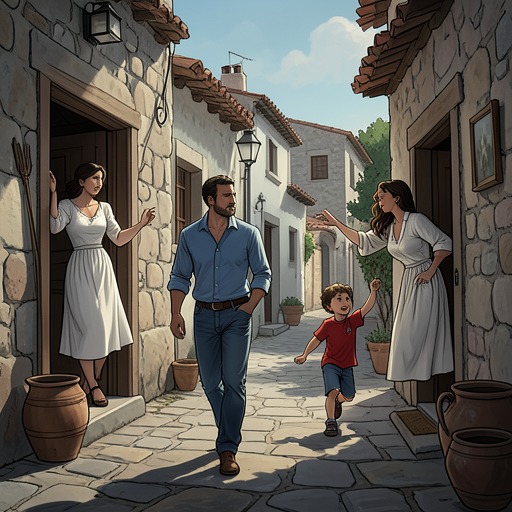
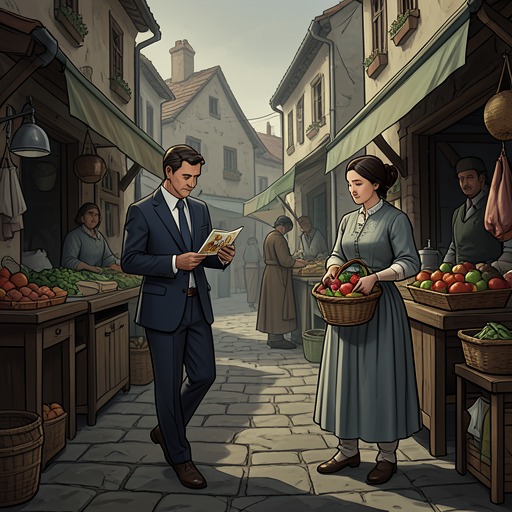
Cartes Postales from GreeceFiloxenia as a measure of welcome is made tangible through the treatment of travellers, not simply through Greece’s celebrated scenery. The novel contrasts postcard images that kindle an outsider’s longing with encounters that can either deepen that attraction or unsettle it: a beautiful village offers little welcome, an unassuming hotel owner makes a solitary traveller feel at ease, and Sylvie and Jean-Luc find themselves pushed out of a town. Hospitality emerges as a human practice that can vary sharply from place to place, and as part of what makes a destination feel inviting—or hostile.
An imagined Greece and its limits
Before travelling, Ellie Thomas encounters Greece through anonymous postcards pinned to a corkboard. Their recurring blues and whites—sky, sea, boats, whitewashed buildings and blue shutters—form a vivid mosaic, while the place-names suggest a country she longs to see. The cards become a glimpse of Greece rather than a complete account: their images cannot convey its scents or sounds. As Ellie’s desire to visit grows, she is drawn to the promise of the landscape, but the gap between a picture and a lived encounter remains central to the novel’s treatment of welcome.
That distinction becomes sharper on the road. The travelling narrator observes that a place may look like a quintessential postcard and still feel wrong, while somewhere scruffy may be charming. The first impression is difficult to explain, and may seem to depend on small acts—a shopkeeper’s smile or scowl, or a waiter’s manner toward a traveller. Filoxenia is thus registered not as an abstract national quality but through the details of an encounter.
A picturesque village that refuses visitors
Near Lamia, the traveller reaches a fishing village by a bumpy track through meadows and ripening crops. Oranges and lemons lie ungathered in mounds; a sheltered harbour holds colourful fishing boats, a sandy swimming cove sits below pine trees, and ancient olive trees cover the nearby hills. The setting seems abundant and made for a travel image. Yet the local response contradicts that promise.
Seafront restaurants appear to serve a largely local population with little interest in tourism. Several people give a dismissive tut when the traveller asks for a table. No shop sells familiar seaside necessities such as sun lotion, straw hats or postcards, and the village has no hotels, pensions or signs advertising rooms. These details make its lack of welcome practical as well as social: the traveller is not only treated coolly but has nowhere to stay. Swimming and walking through the village do not dispel the unease. After a reluctantly served, overpriced dinner, the traveller leaves and drives another fifty kilometres before stopping for the night.
The village’s beauty therefore cannot stand as proof of hospitality. The episode also leaves room for an explanation beyond the traveller’s first impression: after hearing where the visitor has been, a hotel owner reacts with disbelief and says that something terrible is said to have happened there. The cause is not disclosed in this account, but the revelation reframes the village’s apparent hostility as something with a history, rather than a simple failure to perform for visitors.
Welcome in an ordinary hotel
The contrast arrives in a workaday town, where the traveller takes the first hotel encountered: a two-star establishment costing twenty-five euros for the night. The room has crisp linen and a comfortable bed, and breakfast includes notably good coffee. The owner brings a second espresso before being asked and cheerfully inquires whether the guest will stay another night. The warmth of this ordinary exchange carries more weight than the village’s spectacular setting.
The owner asks about the traveller’s lack of a fixed itinerary and whether the journey is being made alone. By then, the word alone has lost some of its sting. He listens with genuine interest as the traveller describes favourite places and recounts the unsettling village visit. Filoxenia here consists not in lavish accommodation or a famous attraction, but in attentive questions, a freely offered coffee and an invitation to remain. The stay makes the traveller decide spontaneously to extend the visit, showing how welcome can alter the direction and feeling of a journey.
Hospitality withheld
A separate encounter makes exclusion explicit for Sylvie and Jean-Luc. After asking about hotels, they are told bluntly that there are none. Their table has been completely cleared, including its paper covering, a gesture that makes the waiter’s wish for them to leave unmistakable. Sylvie quietly says that she hates the place. The episode contrasts with the hospitality they had experienced on previous trips and confirms that the welcome associated with travel cannot be assumed at every stop.
Across these episodes, filoxenia is tested through practical provision, gestures and conversation: whether a visitor can find a room, whether a meal is served willingly, and whether anyone shows interest in the person passing through. The contrast between postcard beauty and lived reception prevents scenery from becoming a reliable measure of welcome. Hospitality—or its absence—depends on how travellers are received, and can change the meaning of an otherwise picturesque or unremarkable place.