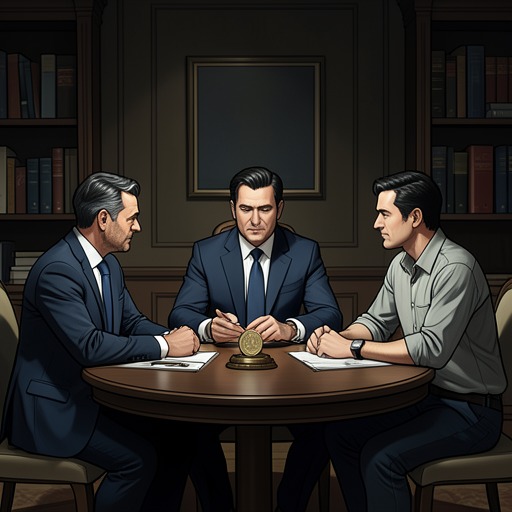
Giorgos Kourtis
Cartes Postales from GreeceGiorgos Kourtis is a rival hotel owner whose quiet, indirect pressure becomes a major threat to Manos Papazoglou’s Hotel Pyrgos. The novel first presents him as an occasional guest, then reveals the gap between that surface role and Manos’s growing conviction that Kourtis is orchestrating the obstacles undermining the hotel. His power is felt through the services cut off, the police who arrive knowing where to search, and the debt Manos accumulates trying to keep operating.
Rival Hotelier and Apparent Customer
Kourtis owns a competing hotel in the centre of town. His rival is Manos, whose business strategy is to draw customers beyond the seasonal tourist trade: he targets businesspeople, commercial travellers and dock workers, hoping to attract people with money to spend throughout the year. The Pyrgos also offers gambling in a private room, where Kourtis visits once or twice and spends an evening with one of the women there. He appears to enjoy the place, but Manos eventually learns that Kourtis has a more consequential interest: he is losing business to the new hotel.
That shift in perspective gives Kourtis’s early visits a double meaning. He has access to the hotel as a customer, yet he is also its competitor, watching a business that is taking clients from his own establishment. The narrative does not show him issuing orders; instead, his role emerges through the pressures Manos experiences and his realization that Kourtis has powerful connections.
Coercion Behind the Competition
About five months after the Pyrgos opens, its electricity fails. Manos initially turns the outage into an atmosphere for guests, bringing out candles and presenting the darkness as romantic. But electricians find no fault in the system: the hotel has been cut off, and reconnection will cost five million drachmas. The water is then cut off as well, with the same fee demanded to restore it. Manos recognizes the payments as extortion rather than ordinary operating costs.
The police provide a second means of pressure. Officers search the hotel destructively for evidence of gambling and find it; they return regularly, and Manos soon understands that only a substantial bribe to the right people can stop the visits. He believes Kourtis is masterminding these troubles. The account links Kourtis’s powerful connections to the pattern of interference, while keeping the reader at the same remove as Manos: the coercive machinery is visible, but Kourtis’s instructions are not directly shown.
Manos’s Losses and the Wider Collapse
The demands leave Manos trying to maintain the hotel through loans while preparing the balance sheet he must present to his father in October. He believes that refusing to cooperate could cost him both the Pyrgos and his future. Debt keeps him awake; stress brings regular asthma attacks, and his increasing weight makes the stairs to his second-floor office difficult. He cannot afford to repair the lift. His girlfriend, initially drawn to his standing as owner of the town’s grandest hotel, leaves when the costs of that status become clear.
Kourtis’s pressure is not the only difficulty facing the Pyrgos. Winter power cuts leave rooms without heat, and cold, damp conditions damage the painted muses on the walls as guest numbers fall. Those operating problems compound the extortion and bribes, deepening the hotel’s financial crisis. In the larger hotel story, both of Apostolos Papazoglou’s sons later face manslaughter trials; after the verdicts, compensation for injured guests and bereaved families exceeds what the sale of the hotel empire can cover, and Apostolos is forced into bankruptcy. The narrative does not assign Kourtis a role in those trials or establish what becomes of him. His significance lies in the earlier, more intimate contest: he embodies a form of business rivalry in which access to power can make a competitor pay not only for customers, but for the basic means to keep a hotel open.