Hotel Pyrgos
Cartes Postales from GreeceHotel Pyrgos is Manos Papazoglou’s attempt to turn an empty office block in Patras into a personal fortress and a year-round business. Built as one half of a contest between Manos and his brother Stephanos, it opened with an imposing exterior and luxurious public rooms, but its success was steadily compromised by extortion, bribery, seasonal decline, and unsustainable debt. The hotel’s eventual ruin leaves the family’s inheritance contest in tatters and makes the building a lasting emblem of the dangers the town associated with its opening date.
Site, Contest, and Design
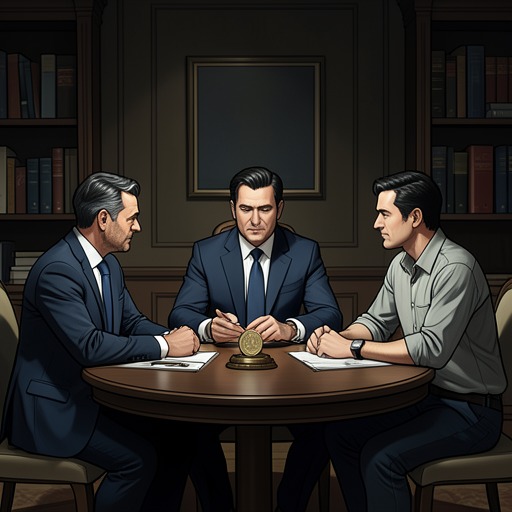
Hotel Pyrgos began with a family decision made on Apostolos Papazoglou’s birthday, 13 October. At a restaurant celebration, the wealthy hotelier announced that his two sons would each develop one of his undeveloped sites in Patras. An old drachma coin assigned Manos a plot near the busy port and Stephanos a beachside site. The son whose hotel had the better balance sheet after two years—even by ten drachmas—would take over their father’s business empire. The coin toss therefore made the Pyrgos one side of a contest whose prize was not simply a successful hotel but control of the family enterprise.
Manos wanted customers throughout the year rather than relying mainly on seasonal tourists. He targeted businesspeople, commercial travellers, and dockworkers, hoping to offer a more sophisticated establishment than the workaday port town usually provided. The plot already held a large, featureless office block. Demolishing it would have been costly, so Manos chose conversion as the faster and cheaper route. With a ruler, set square, and blank paper, he spent twenty minutes drawing a castle-like vision inspired by a childhood visit to the old castle at Nafplio. Solid, square, and crowned with turrets and crenellations, the imagined hotel was to function as his own fortress.
The conversion gave the building a new exterior and balconies, while thin partition walls divided its former office spaces into rooms with bathrooms. Manos concentrated his investment on the ground floor, where he expected the hotel to earn its profits. The reception rooms were planned around pseudo-classical murals with an erotic undertone; the hotel would also offer fine dining, several small bars for music and dancing, and a private gambling club. Copies of Botticelli paintings were commissioned for the gambling room, altered to show more exposed figures than the originals. The contrast between the castle’s sturdy appearance and the commercial entertainments inside reflected Manos’s effort to sell both prestige and diversion.
Opening and Early Prospects
The exterior looked solid, and the ground-floor rooms were luxurious, furnished without restraint. Manos believed he had chosen the right market and was gaining ground in the race against time. Hotel Pyrgos opened on 29 May, the same date Stephanos chose for the launch of his beach hotel, Hotel Thalassa. The rival celebrations took place simultaneously: Apostolos visited the Pyrgos first, while his wife went to the Thalassa, and then the parents switched venues. During the first summer, both sons appeared to be doing well. Their father was impressed by their profit margins and, to their relief, did not investigate the businesses more closely.
That early performance concealed the Pyrgos’s vulnerability. A few months after opening, Giorgos Kourtis, who owned a rival hotel in the town centre, visited. He had previously been an occasional customer, including at the private gambling room, but Manos came to understand that Kourtis’s central concern was competition: he was losing business to the Pyrgos and had powerful connections. The hotel’s apparent success had made it a target, while its dependence on customers and services controlled by others left Manos with little room to resist.
Extortion and Deterioration
One night, the electricity supply to Hotel Pyrgos failed. Manos initially managed the disruption with candles and presented it to customers as atmosphere. Electricians found no fault in the hotel’s system: the supply had been cut off, and reconnecting it required five million drachmas. The water was then cut off under the same conditions and for the same fee. Manos recognized the demands as extortion. Police searches followed, conducted destructively and focused on the gambling operation. The officers knew where to look, found evidence, and returned regularly. Manos concluded that only substantial bribes could prevent further visits.
The costs of these pressures compounded the hotel’s design and seasonal weaknesses. Outgoings began to exceed income. The power interruptions could be made to seem atmospheric in summer, but in winter they left rooms without heat. As occupancy declined, cold winds from the Ionian Sea brought indoor temperatures below ten degrees. Condensation formed on the walls, and the painted muses began to flake away. Guest numbers fell sharply; as another summer approached, the building that Manos had imagined as permanent was already deteriorating.
With the October accounting deadline four months away, Manos took out several loans to keep paying the extortion and bribes. He believed Kourtis was behind the hotel’s troubles and feared that refusing to cooperate would cost him both the building and his future in the family business. Debt weighed on him so heavily that he could not sleep; stress brought recurring asthma attacks, and his increased weight made it difficult to climb to his office on the second floor. He could not afford to repair the lift. His girlfriend, who had been attracted to his status as the owner of the town’s grandest hotel, left after six months. These personal consequences unfolded alongside the Pyrgos’s commercial decline: its grandeur was increasingly a costly shell that Manos could neither maintain nor escape.
Criminal Case and Ruins
By the end, the hotel’s debts were unpayable, and interest had grown beyond what its continued operation could cover. On the day Stephanos was charged, the Pyrgos lost its final guest; its last remaining employee had gone unpaid for six months. Manos drank from the only decent whisky left in the bar. When he saw a local police officer at the reception door, he recognized the man as one of those who had repeatedly visited the hotel. The officer was wearing the watch Apostolos had given Manos for his twenty-fifth birthday; Orestes Sakaridis had accepted it in place of money on an earlier visit. Seeing the watch intensified Manos’s anger as he realized there was nothing left to give.
Later, two policemen put Manos in their car after noticing that he had been drinking. On the way, they heard over the radio that the body of their colleague had been found on the steps of the Pyrgos. The hotel thus became the setting for a fatal criminal case as well as the site of Manos’s financial ruin. Apostolos’s seventy-seventh birthday, which was supposed to mark his retirement and the transfer of his empire to one son, instead found both sons facing trial. Seven months later, on 29 May—the date the hotels had opened—both received manslaughter verdicts. The compensation owed to injured guests and bereaved families could not be met even by selling the entire hotel empire, and Apostolos was forced to declare bankruptcy.
For many years, the decaying remains of Hotel Pyrgos and Hotel Thalassa stood as ghostly reminders of the sack of Constantinople. People in Patras remembered the opening date and treated the verdicts as confirmation that the family should have respected its ominous reputation. The Pyrgos’s story therefore comes full circle: the coin toss that began the contest took place on the thirteenth, and the hotels opened on a date burdened by local superstition and religious belief. What Manos had designed as a durable stronghold became a ruin bound to the failed inheritance scheme and the town’s memory of its consequences.