Nikos
Cartes Postales from GreeceNikos, Akis Adamakos’s koumbaros, is the friend who acts when a wedding begins to unravel. At the Church of St Spyridon, Nafplio, he makes the call that confirms the bride is not coming, urges Akis to leave, and accompanies him from the gathering. Later, as they drive away, Nikos turns suspicion into a proposed act of revenge. His role is defined by this movement from practical intervention to open readiness for violence—and by the contrast between his resolve and Akis’s more measured answer.
Identity and Place in the Wedding
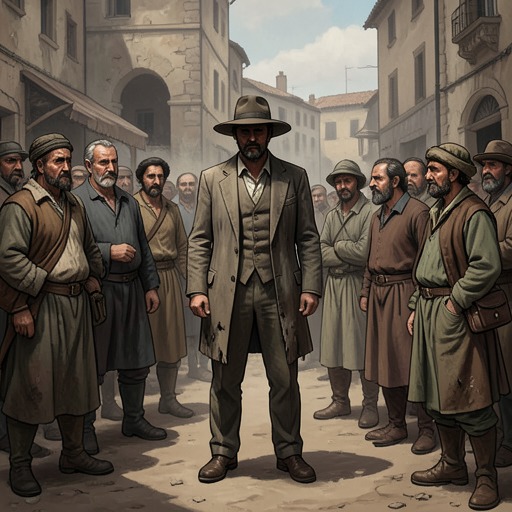
Nikos is identified through his relationship to Akis: he is the koumbaros, or best man, at Akis’s wedding. The ceremony has drawn more than three hundred relatives and friends, including guests who have travelled from the Mani, where the Adamakos family comes from. Amid the crowded church and street, Nikos is one of the two people, alongside the groom, who cannot relax into the celebration. The bride is already an hour late, and the clock tower’s five o’clock bell makes the delay impossible to ignore.
The narrative gives Nikos a task within the crisis rather than a separate history. He is the person Akis relies on to find out what has happened, and the person who stays beside him as the answer changes the meaning of the day. His importance comes into focus through what he does under pressure: he leaves the celebration to make a call, returns with the news, and then helps Akis withdraw before the watching congregation can turn their uncertainty into a spectacle.
The Call and the Departure
Nikos makes the call from a nearby kafenion. As the phone rings at the bride’s home, he looks up at a television showing a black-and-white comedy starring Aliki. The detail sets the ordinary scene around his apprehension: he imagines that an accident might explain the delay, but the television offers no confirmation of disaster. The call brings no answer. When he returns, he takes Akis aside and tells him there is no answer and that they should leave immediately.
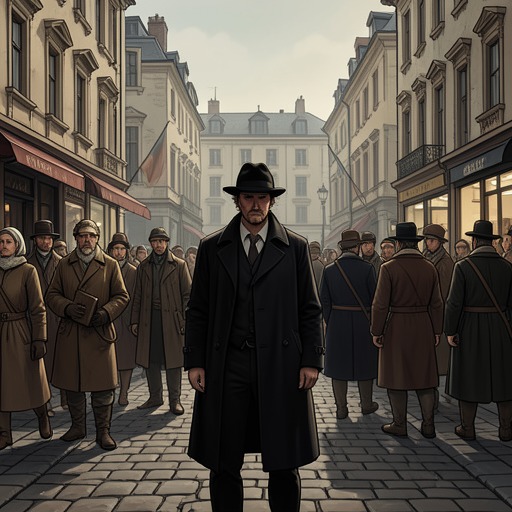
The pair’s exit is purposeful. People have begun to drift out of the church, and the congregation watches the two men walk to the end of the street and disappear around the corner. News spreads that neither bride nor groom is now there; the noise of the gathering gives way to a subdued atmosphere. Nikos’s intervention does not resolve the bride’s absence, but it gives Akis a way to leave the public scene before the crowd’s attention becomes an additional humiliation. His judgment is concise and practical: with no answer, they should go at once.
Suspicion and Shared Knowledge
After Akis learns that Savina has gone to Athens, Nikos touches his arm, and Akis steps back. The gesture is small, but it marks a change from managing a wedding-day delay to confronting what the men believe may have happened. Both suspect that Savina did not go alone. Nikos had heard a rumour the previous week but had chosen not to tell Akis. The account establishes both the prior warning and Nikos’s silence, without explaining why he withheld it.
Nikos therefore occupies an uneasy position between loyalty and knowledge. He has not prevented the crisis, and the earlier rumour gives him information Akis did not have; once the bride’s departure is confirmed, however, he does not distance himself from his friend. He remains at Akis’s side as they face Savina’s father and her younger siblings. When Akis drops the flowers at the father’s feet and turns away, Nikos leaves with him. The discarded bouquet makes the wedding’s intended welcome into a visible rejection, while Nikos’s presence turns the departure into an act they undertake together.
Revenge and the Maniot Code
In the car, Nikos drives quickly out of the village. After five minutes he pulls over and says they have to decide when. Akis quietly corrects him: if, not when. Nikos rejects that uncertainty. For both men, the narrative says, they are from the Mani, and vendetta is in their blood. Nikos is thus not merely responding to a private insult; he speaks from a cultural inheritance the scene associates with the men’s shared origin. The exchange makes the distinction between them precise: Nikos treats retaliation as inevitable and its timing as the question, while Akis still voices the possibility that it might not happen.
Nikos offers to take his brothers back that night, at least to deal with the bride’s father and brother. His proposal makes the threat concrete: revenge could be immediate, collective, and directed at the male members of Savina’s family. Akis refuses that version of the plan, saying there is greater revenge. Nikos answers by asking whether anything could be greater than shooting someone through the head. The exchange reveals his readiness for direct violence, but it does not show him carrying out an attack. His brothers are part of the proposed response, not participants in any action established here; the scene ends with a difference of judgment, not a completed act of vengeance.
Narrative Role and Limits
Nikos serves as Akis’s companion at the point where ceremony becomes rupture. At first his actions are protective and logistical: he checks the bride’s home, communicates the result privately, and leads Akis away from the crowd. As the men leave, that practical alliance becomes a shared reckoning with family honour and retaliation. The shift is carried by concrete gestures—the hand on Akis’s arm, the flowers dropped before the bride’s father, the car pulled over—rather than by a separate account of Nikos’s life.
The episode leaves his later choices unresolved. It establishes that he heard a rumour, that he did not pass it on, and that he is willing to bring his brothers into a revenge plan; it does not establish whether the plan is acted upon. That boundary matters to his characterization. Nikos is an instigator of the immediate proposal and a steadfast companion to Akis, but the scene’s last word belongs to their disagreement over what revenge should mean, and whether it is inevitable at all.