
Justice, Vengeance, and the Law
CaughtThis flow follows the novel’s challenge to private punishment, asking who may wield force when courts fail and what happens when certainty outruns justice.
increasing Bearing strength in each event
 decreasing
Bearing strength in each eventdecreasingA Case Built by Television
A Case Built by Television
Public exposure as punishment
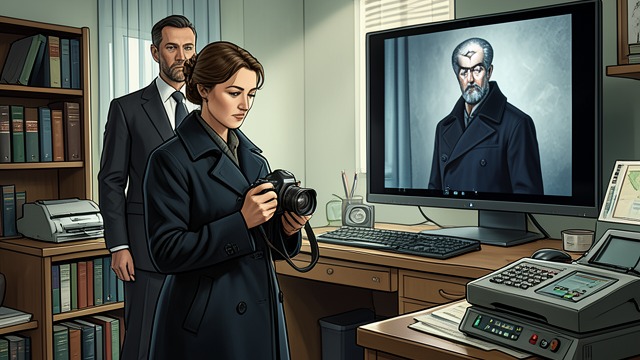
Wendy Tynes’s program presents Dan Mercer as a predator before a court has determined his guilt. The televised confrontation is designed for public clarity: lights, cameras, accusation, and the spectacle of a man caught at a supposed meeting with an underage girl.
That clarity proves more powerful than the later legal process. The broadcast creates a public judgment that survives even after the evidence is challenged and the charges are dismissed.
The cost of spectacle
The show’s method blurs reporting and punishment. Wendy sees herself as exposing danger and helping victims’ families, but the camera also imposes a lasting penalty before the legal case is decided.
The novel does not treat the harm of the broadcast as proof that Mercer is innocent. Instead, it asks whether a righteous purpose excuses a method that can ruin someone regardless of what a court later finds.
The Court Draws a Boundary

The Court Draws a Boundary
The legality question
Flair Hickory argues that Wendy Tynes’s entry into Dan Mercer’s house compromised the search that followed. The prosecutor insists the police had a warrant and that Wendy, a private citizen, was not an agent of law enforcement.
The dispute is not only about whether the material looks incriminating. It is about whether it was obtained through a process the court can accept. Judge Lori Howard excludes the evidence and dismisses the charges.
A necessary but painful limit
The ruling frustrates people who believe Mercer is dangerous, but it affirms that suspicion cannot authorize any method investigators find convenient. The law’s boundaries matter most when the accused is unpopular and the public wants an immediate result.
The decision does not settle the truth of Mercer’s conduct. It demonstrates that a justice system must distinguish moral certainty from admissible proof, even when that distinction feels intolerable to those seeking protection and closure.
The Father’s Private Court
The Father’s Private Court
Grief becomes judgment
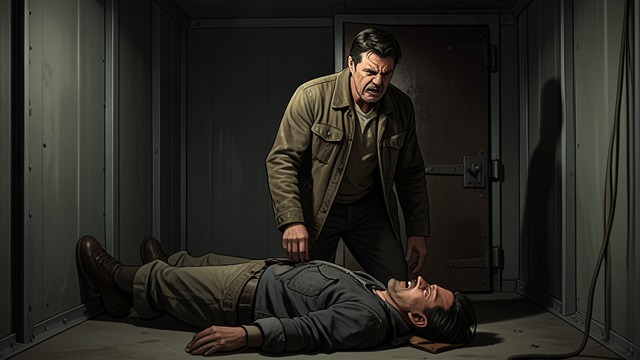
Ed Grayson believes Dan Mercer abused his son, E. J., and that Mercer will hurt another child if left free. When the court releases Mercer, Grayson decides that legal failure gives him the right to act as judge and executioner.
He kills—or appears to kill—Mercer in the trailer, carrying out the sentence the legal system has not imposed. His conviction is built on protective love, fear, and an assumption of guilt that he does not submit to any independent test.
The seduction of certainty
Grayson’s decision makes private justice look emotionally comprehensible but morally dangerous. The father’s pain is real; it cannot by itself prove that the accused is guilty or confer authority to kill him.
The apparent murder also sets off consequences Grayson cannot control. His act complicates the search for Haley and becomes another example of how personal certainty can turn a demand for justice into further harm.
The Sword and the Scales

The Sword and the Scales
Punishment belongs to an institution
Hester Crimstein tells Ed Grayson that Lady Justice’s sword represents punishment, but that the system—not a grieving individual—holds the authority to use it. She admits that the legal system can be manipulated, yet insists that remaining within it preserves a balance between accusation and defense.
Her argument is not that the courts always produce morally satisfying outcomes. It is that allowing everyone with a grievance to impose a sentence would dissolve the shared rules that make justice possible at all.
A fragile defense of procedure
Grayson recognizes the self-interest in a lawyer defending the system that gives her work. But the story gives her claim weight: even a well-intended act can create chaos when it bypasses a process designed to test competing accounts.
The principle becomes especially difficult when the alleged victim is a child and the suspected offender is widely despised. The novel leaves the tension intact rather than offering an easy reconciliation between procedural fairness and the desire to prevent harm.
The Unfinished Demand

The Unfinished Demand
What the law must still confront
After the truth about Haley McWaid’s death and the staged shooting becomes clearer, Wendy tells Mickey Walker that Dan Mercer was innocent and that Ed Grayson should face justice. Walker acknowledges the moral force of the demand but offers no promise that the case will be easy to pursue.
The people involved have already made choices outside the law: the Wheelers concealed Haley’s death, and Grayson apparently concealed Mercer’s escape. Their reasons differ, but each choice has obstructed the process that might have established the truth publicly.
Justice without a clean ending
Wendy refuses to treat the new revelations as a reason to absolve everyone. She is not the judge, but she also will not pretend that exposure of one wrongdoing erases another.
The ending keeps accountability unfinished. A legal system can fail, and individuals can distort it, yet neither fact makes private moral certainty a safe replacement. The demand for justice remains precisely because no single act can restore everything that was lost.
At the first broadcast of Wendy Tynes’s sting
At the evidentiary hearing three months later
When Ed Grayson enters the trailer in Wykertown
During Hester Crimstein’s advice to Ed Grayson
At the memorial service after the identities are revealed
