
Reputation as an Unofficial Sentence
CaughtThis flow traces how television exposure and online accusations impose reputational penalties that persist beyond legal findings and reshape the lives of the accused and accusers.
increasing Bearing strength in each event
 decreasing
Bearing strength in each eventdecreasingThe Broadcast Verdict
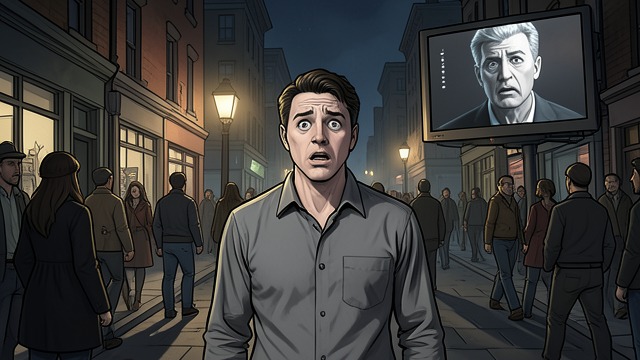
The Broadcast Verdict
A private encounter becomes public judgment
The sting footage of Dan Mercer airs nationally, presenting the encounter as a decisive exposure. Viewers see the accusation and Mercer’s shocked response, but they do not share the uncertainty or procedural questions that will later dominate court.
The broadcast transforms a disputed case into a public identity. Neighbors, strangers, and would-be vigilantes respond to the label attached to Mercer, treating the televised allegation as if it were already a final judgment.
Consequences beyond the courtroom
Even when the charges are later dismissed, Mercer cannot return to his former life. The public meaning of the footage is stronger than the legal correction: suspicion remains attached to him, and his attempts to move between temporary lodgings do not restore safety or privacy.
The novel presents reputational harm as an unofficial sentence. It can be imposed instantly and remain in force after the legal case has collapsed, leaving the person branded with little practical chance to appeal.
A Life Driven Underground

A Life Driven Underground
Punishment after dismissal
After the charges against Dan Mercer are dismissed, threats and public hostility continue. He moves from motel to motel and eventually rents a trailer, paying cash and keeping a low profile because neighbors and vigilantes have made ordinary life dangerous.
His legal status has changed, but his social status has not. The gap between the two shows how public accusation can keep punishing a person without any formal sentence or reliable avenue for clearing his name.
The price of a permanent label
Jenna Wheeler explains that people followed Mercer, threatened him, and beat him. His exoneration in court does not erase the story that first made him notorious.
This isolation also helps create the mystery of his disappearance. Because he has been forced into secrecy, police and reporters struggle to know where he is, and the label that was supposed to identify a danger instead obscures the truth about a man’s life.
The Same Weapon Turns

The Same Weapon Turns
Rumors become institutional pressure
A network of online posts accuses Wendy Tynes of sexual relationships with her boss and of manipulating her career. The claims are fabricated, but NTC executives respond to their circulation by investigating her and removing her from work while they assess the allegations.
Wendy recognizes the method as a deliberate smear campaign similar to the online attacks surrounding the Princeton roommates. The posts are not presented as carefully tested claims; their force comes from repetition, search visibility, and the damage they can cause before anyone verifies them.
The accuser is accused
The reversal makes Wendy experience the vulnerability she helped create for others. She has previously watched reputations collapse under public exposure; now she finds that declaring a story false does not prevent it from changing how colleagues and neighbors treat her.
Her anger does not erase the distinction between truthful reporting and fabrication. It does, however, make the cost of unverified accusation concrete and personal, forcing her to reconsider how easily the public can confuse scandal with proof.
Scandal as Retaliation

Scandal as Retaliation
A pattern of public ruin
Wendy discovers that Phil Turnball, Farley Parks, Dan Mercer, and Steven Miciano have all faced damaging scandals within a short period. The claims differ, but their timing and online presentation suggest that someone is using public exposure as a tool to punish people without needing to secure a conviction.
Norm explains how viral marketing can be turned backward: fabricated posts, anonymous accusations, and search manipulation can make a targeted person appear surrounded by corroboration. A real underlying fact can be buried beneath a designed flood of hostile material.
Truth does not make the method harmless
Phil eventually admits that some allegations concerned real wrongdoing, while others were engineered to inflict humiliation and professional loss. The distinction between exposing misconduct and manufacturing a scandal is therefore not always visible to an audience looking only at search results.
The campaign’s moral ambiguity does not vindicate it. A true accusation can still be used vindictively, while a false one can ruin someone before it is disproved. The novel asks readers to resist treating popularity, repetition, and scandal as substitutes for careful judgment.
The Stain After Exoneration

The Stain After Exoneration
Clearing a name is not restoration
NTC clears Wendy of sexual misconduct, but her workplace remains uncomfortable and her assignments diminish. In Kasselton, parents avoid her, and a school committee asks her to step aside for the sake of the children.
The formal correction cannot command every person to revise an impression already formed. Wendy is legally and professionally cleared in one sense, yet she continues to live with the residue of the accusation.
A measure of empathy
This aftermath echoes Dan Mercer’s experience, though their situations and actions are not identical. Wendy now understands that the damage of a public label can outlast both its factual basis and the institutions that withdraw support for it.
The novel does not claim that all reputations can be repaired by a correction. Instead, it shows why people who publish accusations carry responsibility for what follows, and why truth must be pursued with care before a public verdict becomes impossible to reverse.
Two days after the sting
During Mercer’s two weeks moving between temporary lodgings
When online accusations against Wendy surface
As Wendy and the Fathers Club investigate the Princeton men
After Phil Turnball’s death and Wendy’s return to NTC
