
The Unequal Weight of Loss
CaughtThis flow connects parental love, missing-child grief, public attention, and the moral choices adults make when they believe they are protecting their families.
increasing Bearing strength in each event
 decreasing
Bearing strength in each eventdecreasingThe Empty Bed
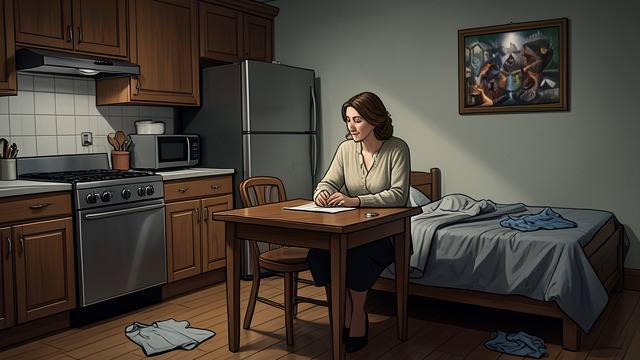
The Empty Bed
A household altered by absence
Marcia McWaid begins the morning in ordinary domestic comfort, moving between coffee, the newspaper, and her children’s rooms. Haley’s made bed first seems consistent with her daughter’s orderly habits, but the absence of clothes and signs of a morning routine changes the meaning of the scene.
When the family learns that Haley missed practice and cannot be found, ordinary explanations begin to fail. A missing teenager becomes not an abstract police case but an absence that reorganizes every room and relationship in the house.
Love without an answer
Marcia refuses to believe that Haley simply chose to vanish, even as investigators initially consider a runaway explanation. She anchors her belief in her daughter’s character and in the life they shared, including the family photograph from their Disney trip.
Her certainty cannot tell her what happened, but it expresses the persistence of parental attachment when institutions have no answer. The empty bed becomes a daily reminder that love can endure without knowledge or control.
A Father’s Guilt

A Father’s Guilt
Protection as a burden
At Ryan’s game, Ted McWaid remembers Haley’s determination and the ordinary moments he can no longer share with her. His grief shifts into self-accusation: if someone took her, he failed to protect her; if she left on her own, he failed to be a father she could confide in.
He understands intellectually that he does not know what happened, but uncertainty gives his guilt room to invent responsibility. The family’s loss becomes a test of the protective role he believed he had fulfilled.
Staying for the living
Ted imagines suicide as an escape from the pain, then rejects it because it would deepen the suffering of Marcia, Patricia, and Ryan. His decision to stay is not a cure for grief; it is a choice to remain responsible to the people still beside him.
The scene makes parental love both sustaining and punishing. Ted’s love keeps him connected to his family, even as his conviction that a father must prevent every harm makes him judge himself for what he cannot control.
The Search for a Named Child
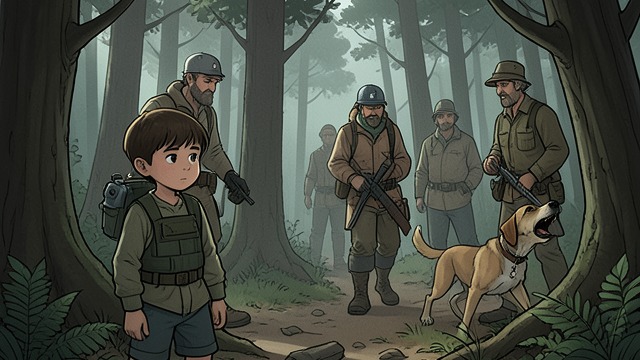
The Search for a Named Child
A family’s private emergency
The search at Ringwood State Park brings police, reporters, dogs, and volunteers into one crowded landscape. Patricia McWaid watches the adults coordinate the effort and tries to continue believing that her sister is merely away on an adventure.
When the possibility that Haley may be dead becomes difficult to avoid, Patricia’s silence and attention to the search dogs show how children can absorb fear without having language for it. The public spectacle surrounds her, but it cannot soften what the search might mean to her family.
Grief and public attention
The case has drawn national coverage, yet the news attention does not reduce the McWaids’ uncertainty. It places their private anguish before a public that can move on when a story stops producing new developments.
The novel contrasts the sustained labor of a family with the brief focus of the media. Haley is not a symbol to her relatives; she is a daughter and sister whose absence has changed the shape of their days.
One Family’s Fatal Panic
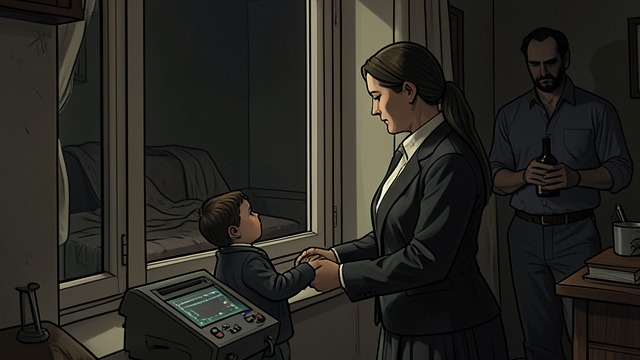
One Family’s Fatal Panic
Protecting a child at another child’s cost
Jenna Wheeler and Noel Wheeler host a drinking party because they believe their daughter Amanda Wheeler is isolated and because they think a supervised house is safer than an unsupervised night elsewhere. The intention to protect their family places Haley McWaid in a dangerous setting where she drinks heavily.
When Haley dies from alcohol poisoning, the Wheelers panic. They imagine prosecution, family ruin, and the impossibility of bringing the girl back. Rather than call for help, they conceal her body and allow her parents to live without knowing what happened.
The burden transferred to others
Their fear is understandable, but the concealment makes the McWaids bear months of uncertainty and shapes the investigation around false assumptions. The Wheelers protect their own children and future by transferring the cost of their choice to another family.
The novel refuses to make parental love automatically virtuous. Protecting one’s child can become an excuse for withholding truth, and a frightened decision can inflict prolonged harm on people who had no part in the original accident.
Whose Grief Counts
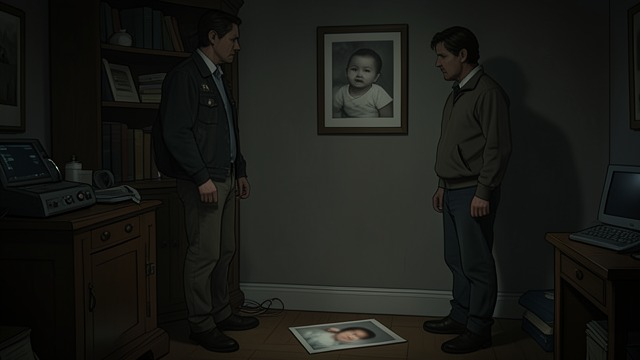
Whose Grief Counts
A detective confronts unequal attention
Frank Tremont reflects on a murdered young woman whose death attracts little public notice, then compares that obscurity with the intense search for Haley McWaid. He has lost his own daughter, Kasey Tremont, and understands the devastation left behind when a child dies.
His thoughts expose a hierarchy in how communities and media respond to victims. Haley receives national attention, while the other girl is reduced by strangers to a category and a few paragraphs in the local paper.
The value of the unseen
Tremont recognizes that the difference cannot be justified by claiming that one life matters and another does not. Family, class, visibility, and the ability to attract sympathy shape whose story becomes widely mourned, but public attention is not a reliable measure of human worth.
His reflection complicates the novel’s own focus on a missing suburban girl. It asks the reader to notice those whose suffering remains outside the spotlight, even as it affirms the particular devastation experienced by parents who are still waiting for their child.
The morning Marcia McWaid discovers Haley is missing
During Ted McWaid’s late-season lacrosse game
As the search reaches Ringwood State Park
At the graduation of Haley’s final night
During Frank Tremont’s investigation of a murdered teenager
