
Wendy and Charlie: Holding On Through Change
CaughtThis thread follows Wendy’s fiercely protective bond with Charlie as her career, the investigation, and his approaching adulthood test how they support one another.
increasing Bearing strength in each event
 decreasing
Bearing strength in each eventdecreasingA Mother and Son
A Small Household Under Strain
The Daily Bond
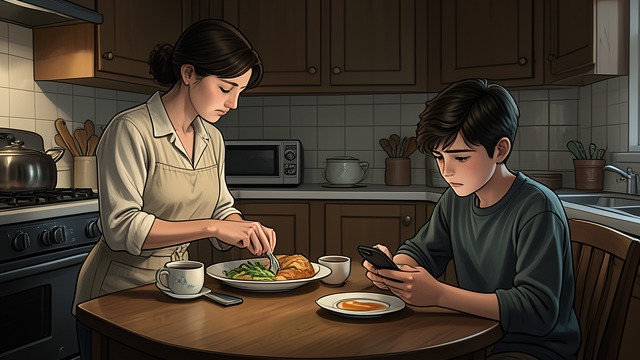
Wendy’s life is organized around Charlie, her only child and the person she most fears losing. Their home is full of ordinary exchanges—reminders about homework, dinner orders, and feeding the dog—that can sound like nagging but give their relationship its familiar rhythm.
Charlie is seventeen, moody, and often distracted by his phone. Wendy knows that he is nearing the end of high school and feels the approaching separation acutely, wishing she could preserve this exact version of him before he leaves for college.
A Shared Vulnerability
Wendy has raised Charlie alone since John Morrow died, so their closeness is both an affection and a practical dependence. Her work as a reporter gives her a public identity, but at home she is still a mother measuring the day by whether her son is safe and present.
When Wendy is fired after the Dan Mercer case collapses, Charlie’s blunt response—“Sucks”—does not mean he is indifferent. His offer to pick up dinner is a small, unshowy act of care that steadies their household at a moment when Wendy’s professional future has suddenly vanished.
Routine as Reassurance

Care in Everyday Habits
The Morning Drive
Wendy makes Charlie breakfast and drives him to Kasselton High School. The traffic and familiar silence in the car are part of their shared routine, even when Charlie spends the ride texting rather than talking.
She calls after him to thank her for the ride, teasing him when he forgets. His quick apology is slight, but it matters to her: their connection survives through small gestures rather than long conversations.
Listening for What He Does Not Say
Wendy understands that Charlie’s reserve is normal for his age. She does not demand a confession of his feelings every time they are together; instead, she watches for the moments when he lets her see a little more of himself.
The routine becomes especially valuable because Wendy’s working life is in upheaval. Even after she has lost her job, the school run gives her a place beside her son, a dependable interval in which he remains part of her day.
A Father’s Shadow

Memory Inside the Family
Charlie’s Resemblance
As Wendy confronts painful news about her career and the investigation, Charlie’s smile reminds her of John Morrow. The resemblance is comforting and piercing at once: she sees the person she lost in the child who is still growing beyond her reach.
Her memories of John do not make Charlie a substitute for his father. Rather, they reveal how grief remains woven into Wendy’s everyday attachment to her son, especially when she notices a familiar expression or hears a thought that sounds like John’s.
A Son’s Moral Clarity
When Charlie refuses to attend Haley McWaid’s funeral because he did not know her, Wendy initially sees his distance from the event. His explanation changes her view: he believes some classmates attend such tragedies to make themselves part of the spectacle, not to honor the dead.
Wendy recognizes John in the seriousness of that judgment. Their exchange shows the intimacy of their bond: she can hear her late husband’s values in their son without confusing the two, and she tells Charlie that she loves him.
Protection Without Possession
Keeping Charlie Safe
A Threat to the Household
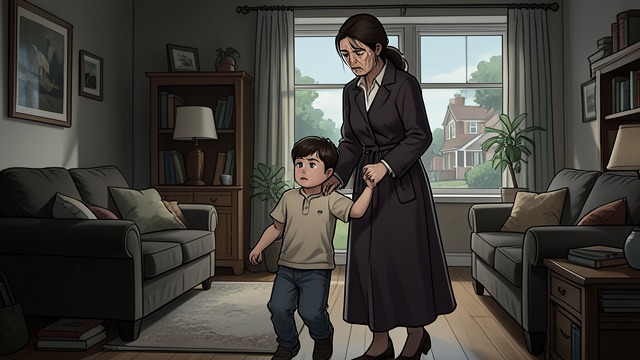
When fabricated online accusations begin damaging Wendy’s reputation, she worries that their effects will travel beyond her workplace and reach Charlie at school. Her fear is not simply for her career: the rumors threaten the security and privacy of the home they share.
Wendy asks Pops to take Charlie away for a few days, explaining that she does not want her son to have to prove he is strong by absorbing the town’s reactions. Her protectiveness is active and sometimes anxious, but it is rooted in a clear understanding of how public cruelty can affect a child.
Charlie’s Steadiness
Charlie has already seen the rumors, but he does not accuse his mother or demand explanations. When Wendy assures him the claims are false, he tells her he already knows, offering the reassurance she needs without making her perform a defense.
His calm does not remove the strain around them, yet it helps Wendy understand that their relationship is not held together by her protection alone. Charlie trusts her, and that trust gives him room to face an ugly public story without letting it define their family.
An Honest Letter
Facing the Past Together
A Choice to Share
After Pops tells Wendy that he intends to forgive Ariana Nasbro for killing John, Wendy acknowledges that she cannot offer the same forgiveness. She respects his decision without pretending that her own grief has reached the same place.
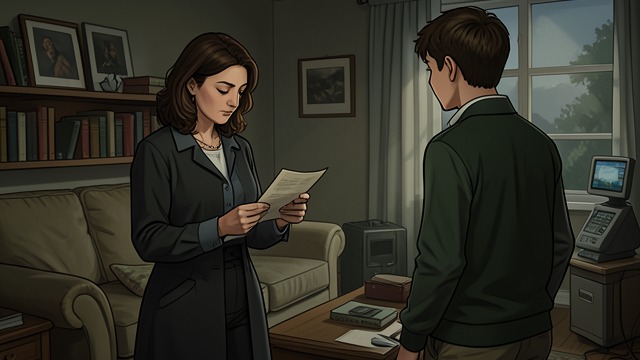
Pops later reveals that he has brought a letter from Ariana for Charlie. Wendy chooses to give it to her son, allowing him to meet the painful history directly rather than keeping the letter hidden from him.
Space for Charlie’s Response
Wendy does not tell Charlie what to feel about the letter or require him to discuss it immediately. She says that she will be upstairs if he wants to talk, then leaves him space to read and think on his own.
Charlie says he wants time alone. Wendy accepts that boundary, even though the subject is bound to reopen their shared loss. Their bond is marked here by a hard-won balance: she makes difficult information available and remains close, while trusting him to decide when he is ready to speak.
Three months after Haley McWaid disappears
The morning after Wendy loses her job
During Wendy’s investigation of the Princeton roommates
After Wendy’s online defamation spreads
The night Pops leaves New Jersey
