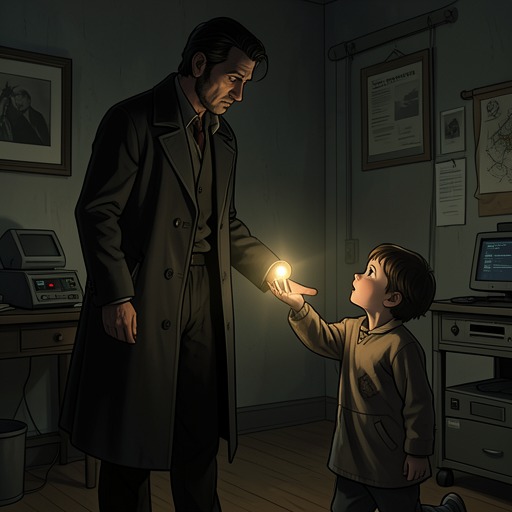
Arthur Slugworth
Charlie and the Chocolate FactoryArthur Slugworth is one of Willy Wonka’s principal commercial rivals and an important offstage presence in the history of Wonka’s Chocolate Factory. He represents the threatened outside world of competing manufacturers: factories that want the advantages of Wonka’s inventions without accepting the uncertainty, secrecy, or imaginative labor behind them. His name therefore enlarges the factory’s mystery beyond its locked gates, making its extraordinary sweets part of a struggle over knowledge, imitation, and commercial power.
Identity and Industrial Rivalry
Arthur Slugworth is identified as a chocolate maker whose factory competed with Willy Wonka’s. Grandpa Joe places him alongside Fickelgruber and Prodnose in the story of the jealous manufacturers who sought to discover how Wonka’s products were made. The rivalry is not described as a simple contest between similar businesses. Wonka’s sweets are so unusual that their recipes become valuable secrets, and Slugworth belongs to the group prepared to obtain those secrets through covert means.
The evidence associates Slugworth’s factory with sugar balloons that could be blown up to enormous sizes and then popped with a pin before being eaten. This product is presented as an imitation that appeared after spies had worked inside Wonka’s factory and learned how particular specialities were produced. Slugworth’s name thus carries a double significance: he is both a conventional manufacturer in the confectionery market and a beneficiary of stolen technical knowledge.
The Spy Network and the Factory’s Closure
According to Grandpa Joe’s account, the other chocolate makers became jealous of the wonderful sweets made by Willy Wonka and began sending spies into the factory. The spies pretended to be ordinary workers, but each one discovered how a particular special product was made before the information reached a rival factory. Slugworth is named as one of the manufacturers whose production soon displayed the consequences of this infiltration.
The theft of recipes transformed Wonka’s success into a security crisis. After rival factories began producing imitative wonders, Willy Wonka declared that spies were everywhere and that he would have to close the factory. He dismissed all the workers, shut the main gates, and fastened them with a chain. The chimneys stopped smoking, the machines stopped whirring, and no chocolate or sweet was made in public view. Slugworth’s rivalry is therefore part of the causal background to the factory’s disappearance from ordinary commercial life.
Secrecy, Competition, and the Locked Factory
The factory did not truly cease operating. Although nobody appeared to enter or leave, it continued producing chocolates and sweets for ten years, with its products becoming more fantastic and delicious over time. The secrecy that protected Wonka’s work also deprived Slugworth and the other manufacturers of the opportunity to copy each new invention. In this arrangement, the locked gates function as both a physical barrier and a commercial weapon: they conceal the workforce, the methods, and the source of continual innovation.
The only visible output is merchandise delivered through a special trap door in the wall, packed, addressed, and collected daily by Post Office trucks. This hidden production system makes the factory simultaneously absent and omnipresent. Slugworth cannot be shown entering it, and no evidence in the supplied episodes places him inside, but the continuing circulation of Wonka’s products demonstrates that the rivalry has not ended. The factory’s mystery is maintained precisely because competitors such as Slugworth cannot inspect its processes.
The Factory Tour and the Value of Invention
When Willy Wonka announces that five children may visit the factory, the invitation explicitly promises access to its secrets and magic. The Golden Tickets convert those secrets into the prize of a worldwide contest, while preserving strict scarcity: only five children will be admitted, and each will receive enough chocolates and sweets to last for the rest of life. Slugworth’s earlier presence in the history of stolen recipes explains why such access is so carefully limited and theatrically controlled.
The same concern appears when the visitors reach the Inventing Room. Willy Wonka calls it the most important room in the factory because his newest inventions are being developed there, and he names Fickelgruber, Prodnose, Slugworth, and the other chocolate makers as people who would give almost anything to enter it, even briefly. The warning against touching, meddling, or tasting is therefore not merely a safety instruction for children. It also dramatizes the economic value of the room as a protected source of products that rivals would eagerly penetrate.
Narrative Role and Significance
Arthur Slugworth’s role is primarily structural rather than scenic. He does not receive a developed personal history in the supplied material, nor does he directly confront Charlie Bucket or Willy Wonka. Instead, his name is repeatedly used to make the factory’s secrecy intelligible. The locked gates, hidden workers, unexplained machinery, and guarded inventions are not arbitrary eccentricities; they have emerged from a history in which rival manufacturers copied Wonka’s achievements through espionage.
His association with sugar balloons also establishes a contrast between invention and reproduction. Wonka’s factory continues to produce sweets that competitors cannot duplicate, while Slugworth’s factory is remembered through a product that followed the discovery of another maker’s secret. That contrast supports the book’s larger pattern of treating chocolate as both an object of intense desire and a medium of power. For Charlie Bucket, chocolate is scarce enough to be treasured like solid gold, with a single birthday bar carefully nibbled over more than a month. For the manufacturers, the cacao-based product is also a contested source of profit, prestige, and technological advantage. Slugworth stands at the edge of that conflict, embodying the commercial pressure against which Willy Wonka’s guarded imagination defines itself.