Grandpa Joe
Charlie and the Chocolate FactoryGrandpa Joe is Charlie Bucket’s grandfather on Mr Bucket’s side and one of the four very old people living with the Bucket family. He is far more than a bedridden relative: he is Charlie’s principal source of knowledge about Willy Wonka, the family’s most animated interpreter of wonder, and the adult who converts Charlie’s improbable hope into action. His loyalty culminates in accompanying Charlie to Wonka’s Chocolate Factory and witnessing Willy Wonka’s decision to make the boy its future owner.
Identity and Place in the Bucket Family
Grandpa Joe is the father of Mr Bucket and the husband of Grandma Josephine. He shares the family’s severe poverty, which leaves everyone with an almost constant empty feeling in their stomachs. Mr Bucket is the only family member with a job, working at a toothpaste factory as a cap-screwer, yet his low wages cannot provide enough food for the household. The family survives on bread and margarine, boiled potatoes and cabbage, and cabbage soup; Sundays are marked by the small privilege of a second helping.
This deprivation gives Grandpa Joe’s relationship with Charlie particular force. Charlie suffers most intensely from hunger because he is a growing boy, and the chocolate he longs for is both an actual food and the object around which his imagination gathers. His parents often surrender their own portions to him, but even that sacrifice is insufficient. Grandpa Joe belongs to the same hungry household, yet he helps keep its emotional life from collapsing into mere scarcity. His presence supplies memory, conversation, and the possibility that the world contains something larger than the family’s daily meals.
Storyteller of Willy Wonka’s World
Grandpa Joe is the family member who most passionately explains Willy Wonka’s importance. When Charlie asks whether Willy Wonka’s factory is really enormous and whether its owner is truly the cleverest chocolate maker in the world, Grandpa Joe answers with unqualified amazement. He calls Willy Wonka the most amazing, fantastic, and extraordinary chocolate maker the world has ever seen, then intensifies the praise by describing him as a magician with chocolate who can make anything he wants.
His account establishes the factory as a place where ordinary limits do not apply. Through Grandpa Joe, Charlie learns to see Willy Wonka not merely as a businessman but as a figure of almost impossible inventive power. The old man’s confidence also gives Charlie’s private love of chocolate a larger imaginative setting: the boy’s hunger is connected to a hidden realm of invention, secrecy, and abundance. Grandpa Joe therefore functions as a bridge between the family’s cramped home and the mysterious factory that has been closed to the public for ten years.
That bridge becomes public news when Mr Bucket returns from the toothpaste factory waving an evening newspaper. Its headline announces that the factory will finally be opened to a lucky few. Willy Wonka’s notice promises that five children will be shown the factory’s secrets personally and will receive enough chocolates and sweets to last the rest of their lives. Grandpa Joe’s earlier wonder is suddenly attached to a concrete opportunity, and the family’s private storytelling is absorbed into a worldwide contest for Golden Tickets.
The Hidden Sixpence and the Fifth Ticket
The Golden Ticket hunt produces a global chocolate-buying frenzy. Adults buy Wonka bars in batches, children smash piggy banks, a gangster spends a thousand pounds stolen from a bank on chocolate, and even a machine designed to detect gold without opening wrappers ends in chaos when it grabs a duchess’s gold tooth. Against this extravagant competition, the Bucket family possesses almost nothing. Charlie’s birthday chocolate is normally a single sixpenny bar, carefully stored in a small wooden box and eaten by tiny nibbles over more than a month.
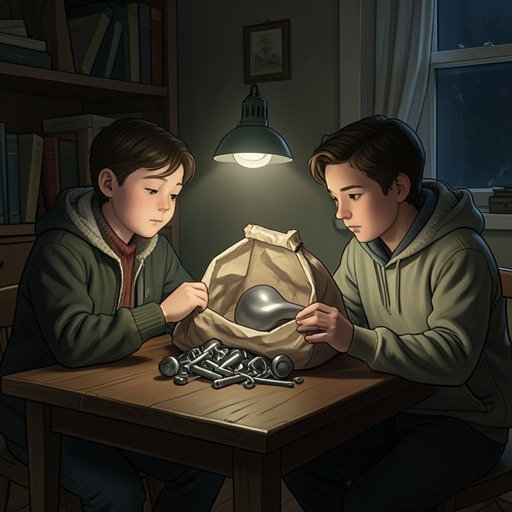
When the world is still searching for the last ticket, Grandpa Joe reveals that he has preserved a secret resource of his own. Finding Charlie alone with him while the other grandparents sleep, he rummages beneath his pillow and produces an ancient leather purse. From it falls a single silver sixpence, his secret hoard, which the others do not know he has. Rather than protect this final coin, he proposes that he and Charlie spend it on one more attempt to find a Golden Ticket. The gesture is important because it makes hope reciprocal: Charlie is not merely dreaming about chocolate while the adults observe him; Grandpa Joe joins the dream and risks his own tiny reserve for the boy.
He sends Charlie to the nearest shop to buy the first Wonka bar available and plans to open it together with him. The attempt is an act of companionship as much as a gamble. Grandpa Joe cannot overcome poverty through money, but he can offer trust, excitement, and shared courage. Charlie eventually finds the fifth Golden Ticket, and Grandpa Joe’s hidden sixpence becomes part of the chain of events that leads the family out of passive deprivation and into public attention.
Companion to Charlie at the Factory
The discovery of the ticket brings swarms of newspapermen and photographers to the Bucket home. They have tracked down the finder and demand the story for the morning papers, creating several hours of pandemonium before Mr Bucket can send them away. Grandpa Joe’s private encouragement thus precedes a sudden transformation in Charlie’s social position: the neglected boy becomes a celebrated ticket holder, while the family home becomes a temporary media spectacle.
When the great day arrives, Charlie cannot be accompanied by both parents and all four grandparents. Mrs Bucket explains that she cannot leave the other three old people alone in bed for a whole day, and the choice is made that Grandpa Joe should go with Charlie. Grandpa Joe responds with jubilant delight, shouting “Hallelujah!” His excitement is not ornamental. He is the adult who understands the emotional and imaginative importance of the journey, and his participation recognizes that Charlie’s entry into the factory is also the fulfillment of the old man’s own long-nurtured belief in Willy Wonka.
Outside the factory gates, enormous crowds push and shout while policemen hold them back. The five children stand with their accompanying adults in a group shielded from the crowd, and the tall, bony figure of Grandpa Joe stands quietly among them, holding Charlie’s hand. The physical gesture defines their relationship more clearly than any declaration: amid fame, noise, impatience, and public pressure, Grandpa Joe gives Charlie steadiness. Unlike the other children, who have both parents present, Charlie arrives with only one adult companion, and that companion’s hand makes the boy’s place in the extraordinary procession secure.
Witness to the Factory’s Contradictions
Grandpa Joe’s perspective remains tied to wonder, but the factory also exposes the complicated machinery behind its marvels. Willy Wonka introduces the Oompa-Loompas as workers imported directly from Loompaland, a country described as a dangerous jungle inhabited by hornswogglers, snozzwangers, and whangdoodles. The Oompa-Loompa tribe supposedly survives on revolting green caterpillars mixed with beetles, eucalyptus leaves, and bark, while longing above all for cacao beans, the essential ingredient of chocolate.
Willy Wonka says that he offered the tribe’s leader unlimited cacao beans, chocolate, and even wages in cacao beans, after which he shipped every man, woman, and child to his country in large packing cases with holes in them. He praises them as wonderful workers who speak English, love music and dancing, and continually invent songs, while also describing their mischievousness and their insistence on wearing the clothes of the jungle. Grandpa Joe does not challenge this account in the supplied scenes; his presence instead places the story’s celebration of chocolate beside the concealed labor and unequal power that make the factory’s abundance possible.
His response to Willy Wonka’s later invention shows another side of his character. When Willy Wonka imagines a television commercial that would send a chocolate bar through the screen to a viewer sitting at home, Grandpa Joe calls the idea terrific and says it will change the world. His enthusiasm reveals how readily he embraces Wonka’s fusion of confectionery, spectacle, and technology. For a man whose grandson once had to make one birthday bar last more than a month, the promise of instant chocolate delivery appears as the ultimate reversal of scarcity.
Change and Narrative Significance
Grandpa Joe begins as an elderly man in a poor household, apparently confined to bed, but the Golden Ticket awakens a more active identity. He possesses a secret hoard, makes a decision, urges Charlie to act, celebrates the successful search, and leaves home to enter the factory. His movement is therefore not simply geographical. He shifts from a keeper of memories about Willy Wonka to a participant in the new chapter of the factory’s history.
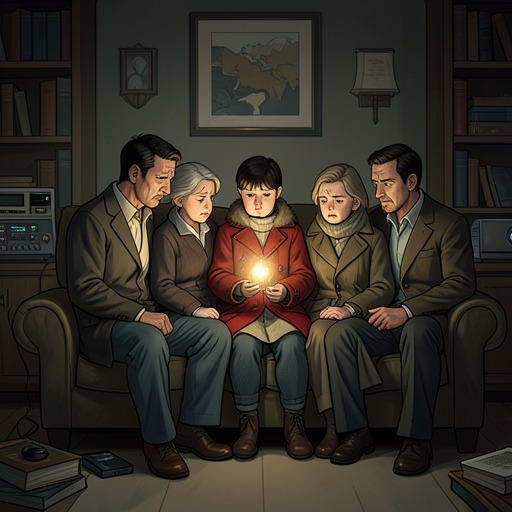
At the conclusion of the supplied evidence, Grandpa Joe stands beside Charlie when Willy Wonka asks whether the boy loves the factory. Charlie answers that it is the most wonderful place in the world. Willy Wonka then explains that he has decided to give Charlie the entire factory once the boy is old enough to run it. Charlie stares, and Grandpa Joe opens his mouth but cannot find words. His silence is the fitting endpoint of his role: the storyteller who once praised Willy Wonka’s magic now confronts an event beyond even his own extravagant descriptions.
Grandpa Joe’s narrative importance lies in the way he makes Charlie’s inheritance emotionally legible. He shares the boy’s hunger for chocolate, supplies the history that makes the factory meaningful, sacrifices his hidden coin, accompanies Charlie through the crowds, and witnesses the final gift. In a story organized by abundance and deprivation, he represents memory and faith as forms of wealth. His belief does not erase poverty by itself, but it helps Charlie recognize opportunity when it appears and ensures that the boy does not enter the factory alone.