Mike Teavee
Charlie and the Chocolate FactoryMike Teavee is the fourth Golden Ticket winner and the most extreme embodiment of television addiction among the children admitted to Willy Wonka's factory. He does not merely enjoy television: it organizes his attention, language, ambitions, and physical behavior. His attempt to enter Willy Wonka's experimental broadcast system turns that dependence into a literal bodily transformation, shrinking him to less than an inch and making him the final child whose behavior is corrected through the factory's dangerous wonders.
Identity and Introduction
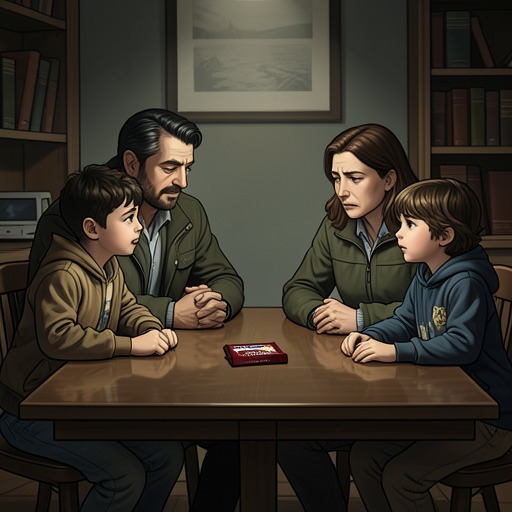
Mike Teavee is introduced as a nine-year-old boy who does nothing but watch television. His identity is therefore established through a single, consuming habit rather than through a balanced set of interests. When the fourth Golden Ticket is announced, the newspaper describes him as a winner who is irritated by the visitors gathered to celebrate him. Instead of receiving the news with pleasure or curiosity, he resents the interruption because his attention is fixed on a program.
The contrast between Mike and the Golden Ticket contest is immediate. Willy Wonka has offered five children the chance to visit his factory, see its secrets, and receive enough sweets to last for the rest of their lives. The contest produces a worldwide buying frenzy: adults purchase bars in batches, children break open their piggy banks, and even a bank robber spends a thousand pounds on chocolate. Mike, however, treats the ticket not as a rare invitation but as an annoyance that has invaded the private world of his screen. The contest promises access to reality; Mike values the televised substitute more highly.
Television Addiction and Conduct
The Teavee household presents television as the center of domestic life. Mike sits before an enormous television set with his eyes fixed on a film in which gangs shoot one another with machine guns. His imitation of the screen is physical as well as imaginative: eighteen toy pistols hang from belts around his body, and he repeatedly jumps up to fire several rounds from them. The toys turn passive viewing into a performance of televised violence, while the screen supplies the vocabulary by which he understands excitement.
Mike's speech reveals the intensity of this dependence. He insists that he watches every program every day, including those he considers bad, although he prefers gangsters and their shooting, knives, and knuckledusters. He declares that he wishes he could be doing such things himself. The attraction is not presented as a momentary fascination but as a routine that has colonized his time and his sense of what is admirable. His repeated demands that people be quiet show how viewing has displaced ordinary conversation and made other people obstacles.
His behavior also exposes a reversal of authority. Adults come to his home as reporters and guests, yet Mike orders them not to interrupt. Even his parents cannot redirect him easily: when Mr Teavee tells him to stop interrupting Willy Wonka, the command itself confirms that Mike's interruptions are habitual. The adults remain physically present, but the television possesses the boy's attention more effectively than they do.
The Factory and Television Chocolate
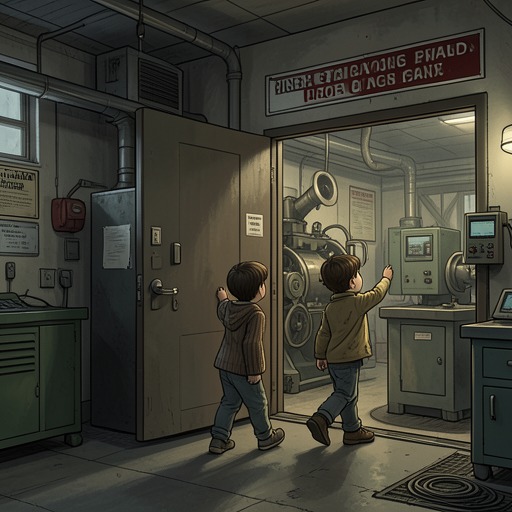
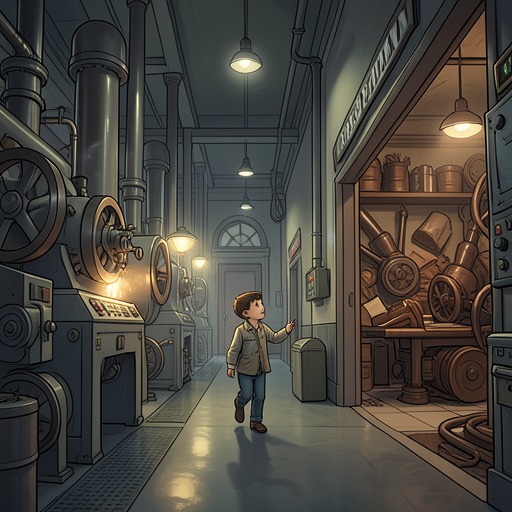
At the factory, Mike encounters an invention designed around the very medium that controls him. In the Testing Room, Willy Wonka presents Television Chocolate, a system that uses television to transmit a chocolate bar from one place to another. A large black camera occupies one end of the room, while an Oompa-Loompa in a space suit watches a very large television screen at the other. The arrangement makes the process resemble a broadcast studio, but its product is tangible: the image of a chocolate bar can become the bar itself.
Willy Wonka explains that he dislikes television in excessive doses because children want to sit all day staring at the screen. Mike immediately recognizes himself in this description. The invention therefore creates an ironic fit between the boy's vice and the factory's technological fantasy. Television is criticized as a form of passive consumption, yet it is also converted into a spectacular commercial tool. Willy Wonka imagines a viewer seeing an advertisement and reaching out to take a real chocolate bar from the screen, a future in which attention, advertising, and physical goods collapse into one gesture.
Mike does not remain a spectator of this process. When he asks whether a person could be transported by television and hears Willy Wonka admit that it might be possible, he treats uncertainty as permission. He runs toward the camera, announcing that he will be the first person in the world to be sent by television. Willy Wonka and Mrs Teavee warn him to stop, with Mrs Teavee specifically fearing that he will be turned into a million tiny pieces, but Mike's desire to become part of the broadcast overwhelms both warning and parental authority.
Transformation and Consequences
The transmission succeeds in one sense and fails in another. Mike is not destroyed; Willy Wonka celebrates that he is in one piece and completely unharmed. Yet the result is far from the triumphant technological breakthrough Mike imagines. He is reduced to a tiny speck who runs across his mother's palm while waving his pistols, and he is no more than an inch tall. His toy weapons remain part of the image, but their apparent power has become absurd beside the altered scale of his body.
The transformation converts Mike's metaphorical condition into a visible one. Before the experiment, television has made the world of the screen seem larger than ordinary life. Afterward, Mike himself has become small enough to fit within a hand. The medium he wants to master instead determines his size and movement. His confidence produces not independence but dependence on the adults who must handle the consequences of his impulsive act.
The scene also completes the pattern by which the factory exposes the children's defining excesses. Mike's television addiction is not corrected through an argument about moderation; it is rendered physically undeniable. The boy who wants to enter television is absorbed into its machinery and emerges diminished. The Oompa-Loompas' later song states that children must never let television dominate them, turning Mike's individual mishap into a general moral lesson.
Narrative Role and Significance
Mike functions as a sharply drawn warning about media consumption, violent imitation, and the fantasy that technological images can replace direct experience. His behavior is repeatedly framed through screens, toy weapons, interruption, and impatience. Unlike Charlie Bucket, whose entry into the factory is associated with wonder and restraint, Mike approaches the factory as another opportunity for stimulation and self-display. He sees an invention and immediately seeks to make himself its star.
His fate is especially revealing because Television Chocolate has both a benevolent and a commercial promise. It could let someone receive a chocolate bar from a television, and Willy Wonka imagines using the system across the country through advertisements. Yet Mike's reckless experiment exposes the danger concealed beneath that promise. The same apparatus that could make a product instantly available can also violate the user's bodily scale. In Mike's case, the factory does not simply condemn television from outside; it demonstrates how a medium built to seize attention can become dangerous when desire outruns judgment.
By the end of his factory visit, Mike remains recognizable through the very objects and habits that defined him at home, but their meaning has changed. The pistols no longer make him look powerful, and television no longer offers him a stage on which to imitate gangsters. His shrinking is comic, frightening, and instructive at once: it makes visible the reduction already implied by a life spent staring at the screen. The final lesson places him within the book's larger contrast between children ruled by appetite or spectacle and Charlie Bucket, whose patience and modesty allow him to move safely through Willy Wonka's extraordinary world.