Mr Bucket
Charlie and the Chocolate FactoryMr Bucket is Charlie Bucket’s father, Mrs Bucket’s husband, and the only employed adult in a large, impoverished household. He works relentlessly for inadequate wages, yet his care helps sustain Charlie and the rest of the family through hunger, cold, overcrowding, and uncertainty. His decisive significance lies in the contrast between the dignity of his labor and the narrow economic world it can buy: the family’s fortunes change not because his work is suddenly rewarded, but because Charlie’s moral character brings an extraordinary opportunity to the door.
Identity and Family Position
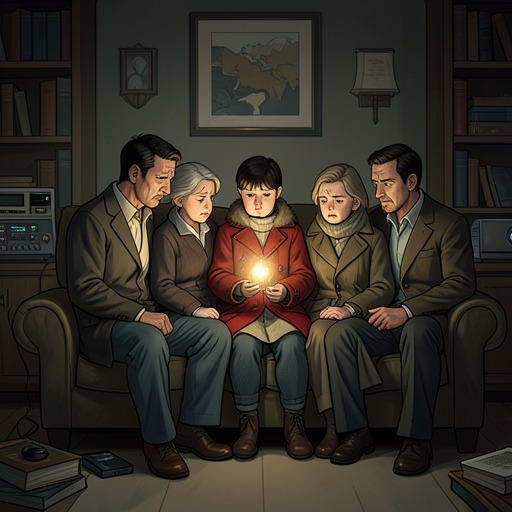
Mr Bucket is identified as Charlie Bucket’s father and as the husband of Mrs Bucket. He belongs to a household that also includes Grandpa Joe, Grandma Josephine, Grandpa George, and Grandma Georgina. The family sleeps in cramped conditions: Mr and Mrs Bucket and little Charlie Bucket share the other room on mattresses laid across the floor, while winter draughts blow over them through the night. The household cannot afford a better house or even another bed, making Mr Bucket’s role as provider inseparable from the family’s material vulnerability.
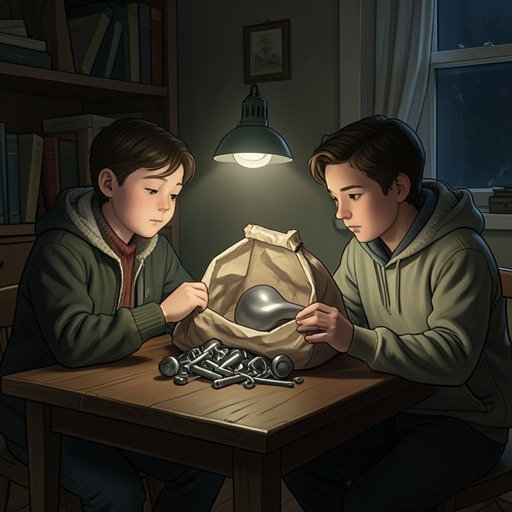
He is the only person in the family with a job. The work is repetitive and poorly paid: at a toothpaste factory, he sits at a bench and screws the small caps onto filled toothpaste tubes. However hard and quickly he works, his wages cannot cover even half of what such a large family needs. The result is not merely a general condition of poverty but a carefully measured diet of survival: bread and margarine for breakfast, boiled potatoes and cabbage for lunch, and cabbage soup for supper. Sundays offer the small consolation of a second helping of the same food.
Work, Poverty, and Care
Mr Bucket’s labor does not lift the family out of deprivation. The household does not starve outright, but every member carries the persistent sensation of an empty stomach, and Charlie suffers most severely because he is a growing boy. In this setting, Mr Bucket’s fatherhood is expressed through renunciation. He and Mrs Bucket frequently give Charlie their own share of lunch or supper, although even their sacrifice cannot provide him with enough filling food.
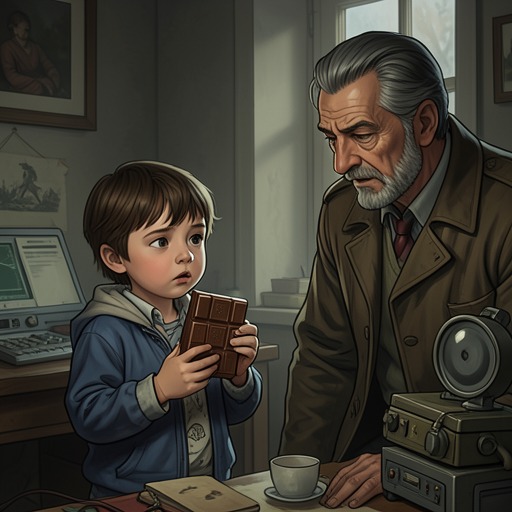
Charlie’s hunger becomes focused on chocolate, which he sees in shop windows and watches other children eat. Mr Bucket cannot make such a luxury part of ordinary life. The family saves throughout the year so that Charlie can receive one small chocolate bar on his birthday, and Charlie treats that bar as a treasure, making a sixpenny bar last for more than a month through tiny, deliberate nibbles. The birthday chocolate therefore records both the family’s affection and the limits imposed by Mr Bucket’s wages: love is abundant, but food and money are not.
Mr Bucket’s economic position also shapes the family’s judgment of Charlie’s chances in the Golden Ticket contest. Grandpa George observes that the children who find tickets will be those able to buy Wonka bars every day, whereas Charlie receives only one bar a year. The remark exposes a structural disadvantage rather than a lack of desire. Mr Bucket’s work keeps the family alive, but it cannot provide the repeated purchases, abundance, or access to goods that the contest appears to require.
The Golden Ticket and the Factory Visit
When Mr Bucket returns from the toothpaste factory waving an evening newspaper, he brings the news that the Wonka factory will finally open to a lucky few. His excitement turns the household’s ordinary evening into a moment of shared possibility. The announcement reaches the family through the newspaper, and Mr Bucket becomes the immediate carrier of a public event into the cramped private space of the Bucket home.
The contest’s unequal economic structure is dramatized by Veruca Salt’s success. Her father, Mr Salt, buys thousands, possibly hundreds of thousands, of Wonka bars and redirects about a hundred peanut-shelling workers to remove the wrappers. The Golden Ticket is thus obtained through wealth, labor control, and industrial scale—resources unavailable to Mr Bucket. Against that spectacle, Charlie’s eventual chance depends on finding money rather than deploying it. When Charlie finds fifty pence in the snow, he understands it first as food money, plans to buy one bar of chocolate, and intends to take the remainder home to his mother. His choice places family need before the hope of winning.
Mr Bucket is present at the factory gates with the other adults when the five ticket holders gather before the tour. Unlike the other children, Charlie has only one accompanying parent: Grandpa Joe stands among the group, and Charlie holds tightly to his hand. Mr Bucket’s absence from that particular outing emphasizes the practical constraints of his life and work, while the family’s emotional investment remains visible in Grandpa Joe’s presence and in the importance of the event to the entire household.
Reactions to Danger and Reversal
Mr Bucket enters one crucial domestic scene cold and tired after spending the day shovelling snow in the streets. He has come home from exhausting work into a burst of extraordinary celebration, and the family must explain what has happened to him. His condition embodies the ordinary hardship against which Charlie’s miraculous discovery is set: while Charlie’s fortune rises, his father is still returning from manual labor worn down by the weather.
The factory tour also reveals a grotesque reversal of the family’s relationship to food. In the Chocolate Room, Willy Wonka displays a river made entirely of hot melted chocolate, with enormous glass pipes sucking it away to supply other rooms. The factory produces chocolate in thousands of gallons an hour, while the Bucket household has been restricted to cabbage soup and carefully rationed birthday chocolate. Yet the factory’s abundance is not harmless. Augustus Gloop kneels beside the Chocolate River and scoops the hot chocolate into his mouth, after which he is drawn up a pipe leading toward the room where Wonka makes strawberry-flavoured chocolate-coated fudge. The incident makes food both promise and danger, while Mr Bucket’s family background gives the scene an especially sharp social contrast.
Change and Ending
Mr Bucket’s decisive change comes through Willy Wonka’s announcement that Charlie will receive the factory. Wonka explains that he is old, has no children or family, and needs someone to continue the factory, partly for the sake of the Oompa-Loompas. He rejects the idea of handing it to an adult, arguing that a grown-up would not listen or learn in the required way, and seeks instead a good, sensible, loving child to whom he can reveal his most precious sweet-making secrets.
The offer transforms Mr Bucket’s status without erasing the hardship that preceded it. When the Great Glass Lift arrives at the Bucket home, Mr Bucket sees the house in ruins and cries out over its condition. Wonka warmly assures him that he will never need the house again. The statement converts the family’s central emblem of poverty—the inadequate, damaged home—into a problem that no longer governs their future. Mr Bucket is not granted a new identity through personal ambition or professional advancement; he becomes the father whose family is carried beyond poverty because Charlie has been chosen as Wonka’s successor.
Mr Bucket’s narrative role is therefore grounded in an ethical and economic contrast. He works hard but remains poor; he loves his son but cannot feed him adequately; he participates in the family’s hopes while recognizing how wealth determines access to the contest. His presence makes Charlie’s victory more than a private reward. The factory’s inheritance reverses the conditions that defined Mr Bucket’s adult life, promising that the labor, hunger, and cramped domesticity of the past will no longer determine what the Bucket family can possess or provide.