Spoiled child
Charlie and the Chocolate FactorySpoiled child is presented as a condition produced by indulgence rather than as a flaw created by the child alone. The clearest embodiment is Veruca Salt, a girl whom the book defines through the fact that her parents spoil her. Her behavior gives the condition a visible pattern: desire becomes demand, demand becomes screaming, and adult wealth turns every demand into an immediate possibility. The narrative contrasts her with Charlie Bucket, whose family is too poor even to buy enough food and whose longing for chocolate is shaped by scarcity, patience, and gratitude rather than entitlement.
Definition and Social Formation
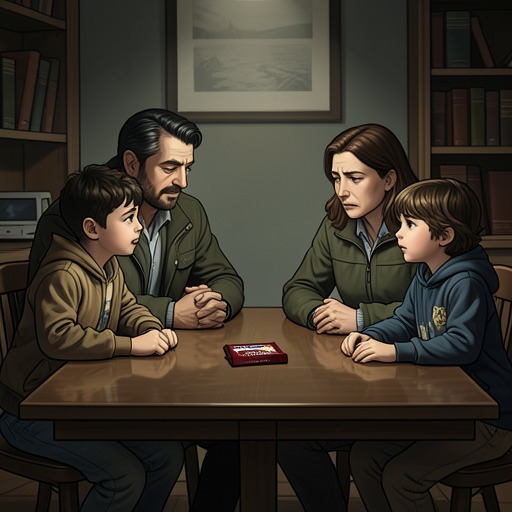
Spoiling appears in the story as a relationship between a child’s appetite and parental power. Veruca does not merely want desirable objects; she expects them to be obtained for her, regardless of ownership, effort, cost, or the inconvenience imposed on others. The adult world surrounding her treats this expectation as both a spectacle and a social warning. A crowd describes her as the girl whose father bought hundreds of thousands of chocolate bars and ordered workers at his peanut factory to unwrap them until they found a Golden Ticket. Her identity is therefore inseparable from the resources mobilized to satisfy her.
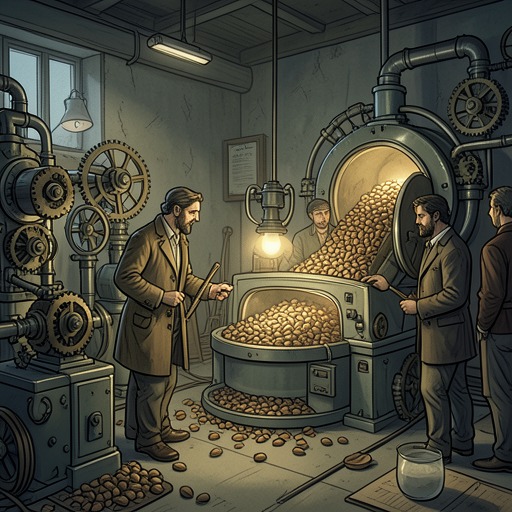
The story makes the mechanism of spoiling unusually explicit through Mr Salt’s account of the ticket search. After Veruca said she had to have a Golden Ticket, he bought Wonka bars on an enormous scale, had them transported to his factory, and redirected about one hundred peanut-shelling workers to remove the wrappers. The search lasted three days without success. During that time Veruca screamed for the ticket and lay on the floor kicking and yelling. Rather than setting a limit, her father vowed to continue until he had obtained what she wanted. On the fourth evening, a worker found the ticket, and Mr Salt delivered it to Veruca, declaring that the household was happy again. The episode shows that her tantrum is not an isolated loss of control: it is an effective instrument because her father has taught her that distress will produce compliance.
Veruca Salt as the Pattern’s Emblem
Veruca’s Golden Ticket is introduced as the product of parental purchase and labor rather than of her own chance. She appears in the newspaper between her beaming parents, waving the ticket and grinning, while the surrounding publicity turns family indulgence into a public image. Her father’s pride and her mother’s participation make the behavior appear normal within the household, even as the grandparents observing the report call the girl repulsive and insist that she needs discipline.
Her demands intensify during the factory visit. When Willy Wonka explains that he has brought the entire Oompa-Loompa tribe from Loompaland to work in the factory, Veruca immediately demands an Oompa-Loompa of her own and insists that her father take one home. Mr Salt initially asks her not to interrupt, but when she continues screaming, he promises that she will have one before the day is over. The exchange repeats the domestic pattern established by the ticket search: a prohibition is voiced, the child rejects it, and the parent replaces discipline with a promise of acquisition.
The same pattern recurs in the Nut Room. After seeing squirrels test walnuts by tapping their shells and discard bad ones down a rubbish chute, Veruca decides that she wants one. Her demand ignores the fact that the squirrels belong to Willy Wonka. She answers that objection by declaring that she does not care, then lists the many animals already kept at home—two dogs, four cats, six rabbits, two parakeets, three canaries, a green parrot, a turtle, goldfish, white mice, and a hamster. The abundance of existing pets does not satisfy her; instead, it makes her dissatisfaction more revealing. The problem is not deprivation but the expectation that every newly noticed object must immediately become hers.
Parents, Wealth, and Responsibility
The narrative assigns responsibility for Veruca’s condition to her parents, especially because they possess the means to reward unreasonable behavior. Grandpa Joe tells Charlie that Mr Salt spoils his daughter and warns that no good can come from spoiling a child in that way. Charlie himself recognizes the unfairness of the Golden Ticket search, noting that Veruca’s father did not play fairly. The adult comments provide an interpretive frame before the factory’s punishments make the principle physical.
The book’s moral distinction is direct: Veruca is spoiled, but she cannot spoil herself. The Oompa-Loompas’ song asks who pandered to her every need and who turned her into a brat, then answers that the guilty parties are her loving parents, her mother and father. Their responsibility is not merely that they gave her expensive things. They trained her to understand love as unconditional surrender and parental care as the removal of every obstacle between desire and possession.
This condition stands in sharp contrast to the Bucket family. Mr Bucket is the only family member with a job, and his low-paid work in a toothpaste factory cannot provide adequate food or housing. The family eats bread and margarine, boiled potatoes and cabbage, and cabbage soup; on Sundays they are allowed a second helping. Charlie’s hunger makes chocolate his greatest longing, yet even his birthday bar is treated as a treasure. He stores it in a small wooden box and takes tiny bites over several days. Veruca’s relationship to chocolate and prizes reverses this economy: objects are not treasured because they are rare, but consumed as proof that her wishes command the household.
Entitlement and the Factory’s Tests
Veruca’s behavior turns the factory tour into a sequence of tests of ownership. The factory contains abundance on a scale that could seem to justify limitless desire: the Chocolate River is made entirely of hot melted chocolate, and thousands of gallons flow through glass pipes each hour to supply other rooms. Yet the existence of plenty does not mean that everything may be possessed. Willy Wonka distinguishes between marveling at a thing, using it within the factory’s rules, and taking it home.
Veruca repeatedly refuses those distinctions. She treats the Oompa-Loompas as objects available for personal acquisition and the working squirrels as another commodity to add to her collection. Her demands also expose the limits of wealth. Mr Salt can buy chocolate bars, hire workers, and secure a Golden Ticket, but his money cannot make every object legitimately his. The factory therefore confronts a social habit learned in the household with a space governed by another person’s rules.
Her eventual fall down the rubbish chute, together with her parents, completes the pattern of consequence. The Oompa-Loompas’ song states that the parents are glad to have fallen into the chute as well, because the adults who produced the spoiled child share responsibility for the result. The punishment is comic and grotesque, but its logic is consistent: Veruca’s demand to own what belongs to others becomes a descent into the factory’s refuse system, while her parents are carried into the same fate rather than remaining innocent bystanders.
Moral and Narrative Significance
Spoiled child functions as both a character condition and a social critique. Through Veruca, the story examines how wealth can turn parental affection into indulgence, labor into a tool for private whim, and consumption into a measure of emotional security. The Golden Ticket episode is especially important because it places a child’s tantrum beside the organized labor of a factory: a hundred workers are made to strip chocolate wrappers because one girl refuses to accept disappointment.
The condition also helps establish the book’s larger contrast between children who are evaluated by their habits and the adults who shape those habits. Augustus Gloop is identified by greed, Violet Beauregarde by compulsive gum chewing, and Mike Teavee by television addiction, but Veruca’s case is distinctive because the narrative insists that her defect is relational. Her parents have manufactured the behavior through repeated capitulation. The ideal child implied by the story is not one who has no desires, but one who can live within limits, listen to adults, and distinguish wanting from having.
That distinction ultimately explains why Charlie Bucket is considered for the future of Wonka’s factory. Willy Wonka says that he has no children or family of his own and needs a successor who is sensible, loving, and willing to learn. He rejects grown-ups who would insist on doing things their own way and seeks a child worthy of receiving his sweet-making secrets. Against that standard, Veruca represents the child whose desires have been made sovereign, while Charlie represents the possibility of disciplined wonder: someone who can enter a world of abundance without assuming that every marvel exists for personal possession.