Starvation
Charlie and the Chocolate FactoryStarvation is not a single moment in Charlie Bucket's story but a gradually tightening condition that governs the Bucket family's bodies, choices, and hopes. It begins in chronic poverty, intensifies when Mr Bucket loses his job, and reaches Charlie most severely: hunger makes him visibly skeletal, forces him to conserve his strength, and gives the discovery of fifty pence the immediate meaning of food. Against this deprivation, the abundance promised by Willy Wonka's factory appears almost supernatural, while the factory's own grotesque food imagery exposes how closely nourishment, appetite, consumption, and bodily danger are linked.
Definition and Material Causes
Starvation develops inside a household already unable to secure adequate shelter or food. The family is too poor to buy a better house or even another bed, and seven people must endure winter cold as well as insufficient meals. Mr Bucket is the only family member with employment, working at a toothpaste factory by screwing small caps onto filled tubes. The work is hard and poorly paid, however, and his wages cannot provide enough food for the household.
Their ordinary diet is reduced to bread and margarine for breakfast, boiled potatoes and cabbage for lunch, and cabbage soup for supper. Sundays offer only a small ritual of relief: everyone receives the same food as usual, but each person is allowed a second helping. The family does not immediately die of hunger, yet every member carries a persistent empty feeling, establishing starvation as a continuous physical pressure rather than an isolated emergency.
Charlie Bucket's Hunger and the Meaning of Chocolate
Charlie Bucket experiences the deprivation most intensely because he is a growing boy. His parents frequently surrender their own portions of lunch or supper to him, but even their sacrifice does not provide enough nourishment. His strongest desire is for chocolate, which represents both a richer food and a world of abundance closed to him by poverty.
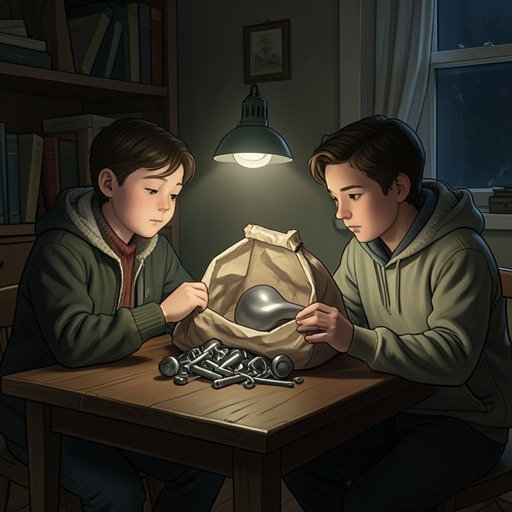
Chocolate is therefore encountered through painful contrast. On the way to school, Charlie sees large slabs of it in shop windows and presses his nose against the glass, while other children eat creamy bars in front of him. Only once a year, on his birthday, can the family afford a small chocolate bar for him. Charlie treats that bar as if it were solid gold: he stores it in a small wooden box, looks at it for several days without touching it, and then makes tiny nibbles so that a sixpenny bar lasts for more than a month. His careful consumption turns a confection into a treasured reserve, showing how scarcity transforms eating into delayed pleasure and disciplined survival.
Winter, Unemployment, and Bodily Decline
The winter crisis makes the family's hunger dramatically worse. Heavy snow surrounds the tiny house, a freezing gale continues for days, and cold air enters through the windows and beneath the doors. The family can think of little besides keeping warm and finding enough to eat. Cold also increases appetite, creating a cruel mismatch between the body's demand for rich, hot food and the household's inability to provide it.
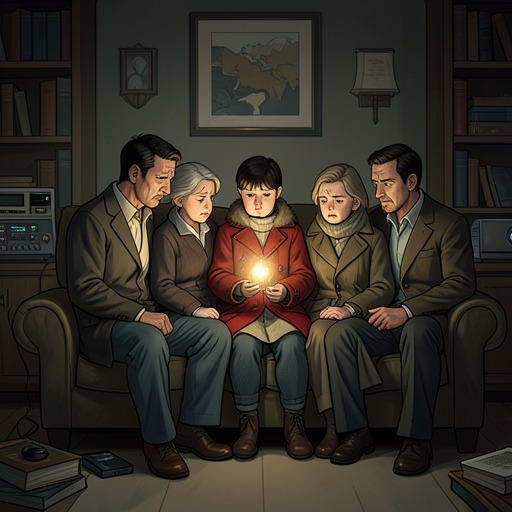
Charlie has already consumed both available chocolate bars—the one from his birthday and the one bought by Grandpa Joe—and is left with thin cabbage-based meals three times a day. Then the meals become even thinner because the toothpaste factory closes after going bust. Mr Bucket searches unsuccessfully for another job and eventually earns only a few pennies by shovelling snow. That income cannot buy even a quarter of the food required by seven people. Breakfast falls to one slice of bread per person, lunch to perhaps half a boiled potato, and the entire household slowly begins to starve.
The consequences are written directly onto Charlie's body. He grows thinner each day; his face becomes frighteningly white and pinched, and the skin over his cheeks is drawn so tightly that the shapes of the bones show beneath it. His condition appears close to becoming dangerously ill. Charlie responds with quiet practical intelligence rather than dramatic protest. He leaves home ten minutes earlier so that he can walk to school without running, rests during classroom break while other children play outside, and performs every activity slowly and carefully to conserve energy.
Hunger as Motive and Turning Point
Starvation gives decisive force to Charlie's discovery of fifty pence in the snow. When he pulls the damp, dirty coin from the gutter, he holds it in his shivering fingers and understands it as food. His first plan is immediate but not selfish: he will buy one luscious bar of chocolate and eat it at once, then take the remaining money home for his mother.
This response distinguishes Charlie's hunger from the uncontrolled consumption displayed elsewhere in the story. His desire is intense, but it remains bounded by sharing and responsibility. The coin briefly offers both bodily relief and a chance to support the household, making starvation the material pressure behind the event that changes Charlie's prospects.
The same condition also explains why the Golden Tickets seem unattainable. Grandpa George observes that the children likely to find them are those who can afford to buy chocolate bars every day, whereas Charlie receives only one bar a year. The nationwide search confirms that judgment: adults buy ten Wonka bars at a time, children smash piggy banks, a gangster spends a thousand pounds stolen from a bank on chocolate, and people tear wrappers open in frantic pursuit of the tickets. For the Bucket family, the contest is not merely a game of luck; it is structured by unequal access to the commodity that conceals the prize.
Abundance, Consumption, and Grotesque Reversal
Willy Wonka's announcement reverses the logic of starvation by promising permanent supply. The five ticket holders are promised enough chocolates and sweets to last for the rest of their lives. The invitation to the factory goes further: trucks will carry enough food to last each winner's household for many years, and the Golden Ticket can later be used to refill the cupboard whenever supplies run out. For a starving family, this is not simply a reward of sweets but an imagined end to insecurity.
The factory presents abundance on an enormous scale. Its Chocolate River is made entirely of hot melted chocolate, with enough to fill every bathtub and swimming pool in the country. Glass pipes draw thousands of gallons an hour into other rooms, while a waterfall churns and aerates the chocolate. Even the landscape participates in edible excess: trees, bushes, grass, and buttercups are made from different delicious substances, including a soft minty sugar called swudge.
Yet the factory's abundance does not make consumption harmless. Augustus Gloop, already associated with relentless eating, kneels at the riverbank and scoops hot melted chocolate into his mouth. His appetite carries him into danger, and he is sucked up a pipe leading to the room where Willy Wonka makes strawberry-flavoured chocolate-coated fudge. The possibility that Augustus could be transformed into food turns the starvation theme inside out: the hungry body is no longer merely deprived of food but risks being absorbed into an industrial food process.
Starvation thus frames the novel's larger contrast between need and excess. The Bucket family's thin meals, Charlie Bucket's month-long preservation of a birthday bar, the frantic global buying spree, the promised lifetime cupboard, and Augustus Gloop's uncontrolled ingestion all treat food as more than nourishment. Food marks class position, organizes family sacrifice, exposes appetite, and finally threatens to erase the boundary between consumer and consumed.