Unemployment
Charlie and the Chocolate FactoryUnemployment is presented as a sudden collapse in the Bucket family’s already fragile livelihood, and its consequences reach far beyond the loss of a wage: it reduces food, intensifies Charlie Bucket’s hunger, and exposes how little protection the family possesses against economic change. The state also sharpens the social contrast between Charlie’s household and the wealthy families who can pursue Golden Tickets through vast purchases of chocolate.
Economic Conditions Before the Job Loss
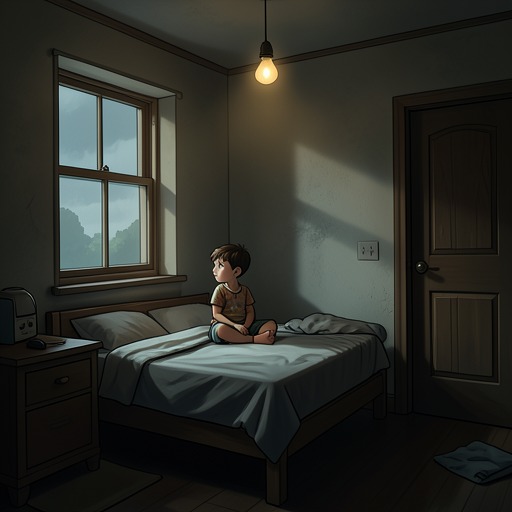
Even before unemployment begins, the Bucket family lives in extreme poverty. There is no possibility of buying a better house or even an additional bed, so Mr Bucket, Mrs Bucket, and little Charlie Bucket sleep on mattresses on the floor. The family’s limited income provides only bread and margarine for breakfast, boiled potatoes and cabbage for lunch, and cabbage soup for supper; Sundays offer the small privilege of a second helping. This deprivation means that unemployment does not create poverty from nothing. It removes the single support keeping an already impoverished household barely supplied.
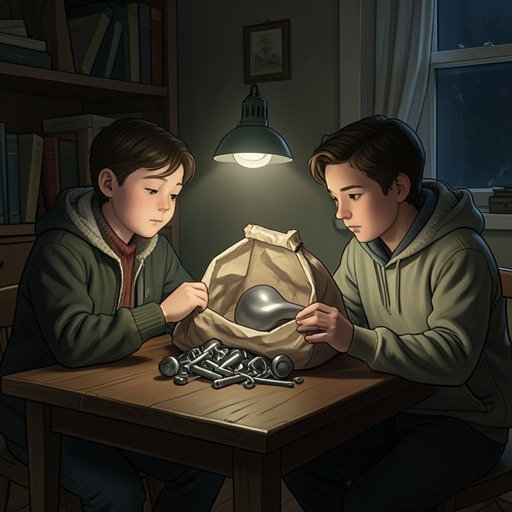
Mr Bucket’s former employment is itself a sign of economic vulnerability. He works in a toothpaste factory, spending the day screwing small caps onto filled toothpaste tubes. However hard or quickly he works, a toothpaste cap-screwer’s wages cannot meet the needs of such a large family. The family therefore has little economic reserve, and the loss of this job immediately threatens food rather than merely comfort.
The Factory Closure and Descent into Starvation
The toothpaste factory suddenly goes bankrupt and closes. Mr Bucket quickly searches for another job but finds none. His only available means of earning a few pennies is shovelling snow in the streets, a form of temporary manual labor that yields less than a quarter of the food needed by the seven members of the household. Breakfast falls to a single slice of bread per person, while lunch may consist of only half a boiled potato.
The narrative describes the resulting condition as a gradual process: everyone in the house begins to starve. Unemployment therefore operates as an ongoing state rather than a single dramatic incident. Each reduced meal records the continuing failure of the household’s income, turning economic statistics into bodily hunger shared by the two grandfathers, the two grandmothers, Mr Bucket, Mrs Bucket, and Charlie.
The crisis is especially severe for Charlie because he is still growing. Grandpa Joe insists that Charlie needs more food even if the older members of the family can endure deprivation. The boy is said to be beginning to look like a skeleton, making unemployment visible in his body. The family’s affection does not remove the material crisis; it instead makes the shortage more painful, because everyone recognizes that love cannot purchase the nourishment Charlie needs.
Unemployment and the Unequal Golden Ticket Hunt
The loss of Mr Bucket’s job also clarifies why Charlie has virtually no chance in the Golden Ticket competition. Grandpa George observes that the children who find tickets are likely to be those who can afford to buy chocolate bars every day, whereas Charlie receives only one bar a year. His family cannot convert money into repeated chances, so the competition’s apparent openness conceals a strong economic inequality.
This inequality is dramatized by Veruca Salt’s discovery of the second Golden Ticket. Her father, Mr Salt, buys thousands—possibly hundreds of thousands—of Wonka bars and diverts about a hundred women in his peanut business from shelling peanuts to removing chocolate wrappers. The search lasts three days without success, while Veruca screams and throws herself on the floor demanding the ticket. On the fourth day, one of the workers finds it, and Mr Salt gives it to his daughter. Veruca’s success is therefore produced by wealth, hired labor, and parental willingness to reorganize an entire workplace around a child’s demand, not by the ordinary purchasing power available to Charlie’s family.
When the five ticket holders gather at the gates of Wonka’s Chocolate Factory, Charlie stands with Grandpa Joe, while the other children are accompanied by both parents. The arrangement makes his economic and familial position visible: he participates in the same public event, but he arrives with fewer resources and less adult support. Unemployment belongs to the background of this scene even when the factory tour itself becomes the focus, because Charlie’s presence there has been achieved against the economic conditions that should have excluded him.
Labor, Secrecy, and the Contradiction of Abundance
The story places the Bucket family’s unemployment beside the hidden labor system of Willy Wonka’s factory. Grandpa Joe recalls that thousands once worked there, until Willy Wonka dismissed every worker because rival chocolate makers had planted spies to steal his recipes. He shut the gates, chained them, and allowed the chimneys and machines to fall silent. Although the factory later resumes production, no ordinary workers return to public view. Chocolates and sweets emerge through a special trapdoor, packed, addressed, and collected daily by Post Office trucks, while nobody sees Willy Wonka or knows who works inside.
The factory’s mysterious productivity contrasts sharply with Mr Bucket’s failed search for work. At the family level, one closed factory means thinner meals and starvation; at Wonka’s factory, closure conceals a new organization of labor that continues producing goods beyond the public’s sight. The contrast suggests that employment is not distributed according to need. Charlie’s family lacks the income required for basic food, while the most prosperous producer in the region can make labor invisible behind locked gates and a delivery system.
Willy Wonka explains that the hidden workers are tiny people, later identified as the Oompa-Loompas. He says that they came from Loompaland, where they lived in tree houses, feared hornswogglers, snozzwangers, and whangdoodles, and survived on revolting green caterpillars supplemented with whatever they could find. Their greatest desire was cacao, yet an Oompa-Loompa might find only three or four cacao beans a year. Wonka offers cacao beans, chocolate, and wages in cacao beans in exchange for their coming to live and work in his factory.
Wonka then says that he transports every man, woman, and child of the Oompa-Loompa tribe in large packing cases with holes in them. He calls them wonderful workers, notes that they now speak English, and describes their dancing, music, songs, mischievousness, and distinctive clothing. This account presents labor as a solution to scarcity, but it also reveals a sharp power imbalance: the workers are removed from their homeland, enclosed in containers during transport, and made part of a production system controlled entirely by Wonka. Against this hidden workforce, Mr Bucket’s unemployment appears not as a lack of work in the world but as exclusion from the forms of labor that generate wealth.
Narrative and Social Significance
Unemployment changes how the novel’s central oppositions are read. Chocolate is not merely a marvelous object for Charlie; its smell reaches him while he is starving. Every day on his way to school, he passes Wonka’s factory, raises his small nose, and breathes deeply of the melting chocolate, standing outside the gates as though he could eat the smell itself. The factory thus becomes both promise and accusation: it contains limitless sweetness while Charlie’s household receives ever thinner portions of bread, potatoes, and cabbage.
The condition also frames the moral economy of Charlie’s eventual encounter with Willy Wonka. Wonka states that he has no children or family and needs someone to continue the factory, especially for the sake of the Oompa-Loompas. He rejects the idea of handing control to an ordinary grown-up, whom he believes would refuse to learn his methods and do things differently. His search for a child is therefore connected to succession, labor management, and the preservation of a private industrial system. For Charlie, whose family has been exposed to the harsh consequences of lost employment, the factory represents a reversal of economic vulnerability: the place whose products once reached the family only as rare treats may become the source of their security.
Unemployment consequently functions as both material reality and narrative pressure. It reduces the Bucket family’s meals, makes Charlie’s hunger physically visible, limits his access to the Golden Ticket contest, and intensifies the symbolic power of the factory gates. At the same time, the concealed workforce inside Wonka’s operation complicates any simple opposition between having a job and having none. The novel’s world contains labor, wealth, and production in abundance, yet access to them is governed by ownership, secrecy, family resources, and power.