Veruca Salt
Charlie and the Chocolate FactoryVeruca Salt is one of the five children selected to visit Willy Wonka’s factory, and her decisive narrative function is to make spoiled privilege visible in action. Introduced as a girl spoiled by her parents, she receives a Golden Ticket not through chance or patience but through an extraordinary campaign of buying and forced labor. Inside the factory, her demands escalate from possession to trespass, until the squirrels of the Nut Room classify her as a bad nut and send her down the rubbish chute. Her episode converts entitlement into a literal mechanism of judgment.
Identity and Introduction
Veruca is identified from the outset by a single governing trait: she is a girl spoiled by her parents. That description is not merely background information; it predicts the way she understands the world. Where Charlie Bucket experiences chocolate as a rare pleasure made precious by poverty, Veruca approaches desirable things as possessions that should immediately become hers. Her character is therefore defined less by scarcity than by the absence of limits.
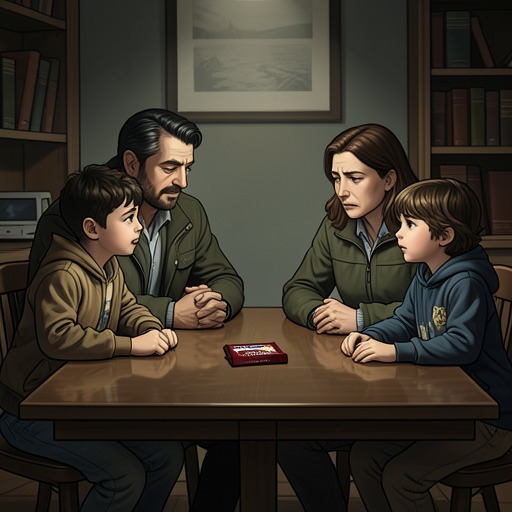
Her appearance in the Golden Ticket story makes that privilege public. The announcement that the Wonka factory will be opened to five children creates a contest structured around scarcity: only five tickets exist, and only their finders may enter. Veruca’s father responds by treating scarcity as a problem money can overwhelm. After Veruca declares that she must have a ticket, Mr Salt buys thousands, perhaps hundreds of thousands, of Wonka bars, transports them to his own factory, and orders roughly one hundred peanut-shelling workers to remove the wrappers from morning until night. The ticket is thus presented as the product of family wealth, organized labor, and parental submission to a child’s demand.
The Golden Ticket and Family Power
Veruca’s ticket becomes a spectacle of status. Newspapers show her sitting between her parents in their living room, smiling broadly and waving the Golden Ticket above her head. The image places the child at the center while her parents frame and celebrate her, turning a private family indulgence into a public performance. Her father’s account also reveals that the family’s resources do not simply satisfy Veruca’s wishes; they reorganize adult work around them. The peanut business is temporarily converted into a chocolate-wrapper operation because Veruca wants entry to the factory.
This method sharply contrasts with Charlie Bucket’s position. Charlie longs for chocolate while his family struggles to afford proper food, and he receives only one small chocolate bar on his birthday. The Golden Ticket contest intensifies that contrast: the same commodity is, for Charlie, an object of hunger and patient reverence, while for Veruca’s family it becomes material for a massive purchasing operation. The contest appears to reward lucky finders, yet Veruca’s ticket exposes how wealth can multiply the chances of being called lucky.
The ticket also makes Veruca part of Willy Wonka’s carefully staged game. His notice promises five children a personal tour, access to the factory’s secrets, and enough sweets to last for the rest of their lives. Grandpa Joe sees the announcement as a brilliant commercial event that will make the whole world buy more Wonka chocolate. Veruca’s family participates in that consumption frenzy most aggressively, treating the Golden Ticket not as an unexpected discovery but as a prize that must be manufactured through spending.
Conduct Inside the Factory
At the factory gates, Veruca stands among the five children and their accompanying adults, in a group protected from the crowds by the police. The children are so eager to enter that their parents must physically restrain them from climbing over the gates. Veruca’s impatience therefore begins before the tour itself: even the formal boundary of the factory is experienced as an interruption between her and what she wants.
Willy Wonka greets her warmly and examines her ticket before admitting her. His playful attention to her name and his remark about the mink coat emphasize the visible signs of her privileged upbringing. Yet the factory operates according to rules that money cannot simply erase. In the Inventing Room, Wonka warns the children against touching, meddling, or tasting anything, explaining that the room contains his most secret inventions and that nobody else, not even an Oompa-Loompa, has previously been allowed inside. The warning establishes a direct conflict between Veruca’s acquisitive habits and Wonka’s controlled environment.
That conflict reaches its clearest form in the Nut Room. The squirrels there test walnuts by tapping the shells with their knuckles, rejecting bad nuts by throwing them into a hole in the floor. Veruca watches this specialized process and immediately converts it into a demand for personal ownership. She insists that her mother get her one of the squirrels, listing the numerous animals already kept at home—two dogs, four cats, six rabbits, two parakeets, three canaries, a green parrot, a turtle, goldfish, white mice, and a hamster—as if abundance itself proves that another possession is necessary. Her catalogue of pets does not satisfy desire; it demonstrates desire’s ability to expand after every acquisition.
The Rubbish Chute and Consequences
Mrs Salt initially tells Veruca not to be silly because the squirrels belong to Willy Wonka. Veruca rejects that limit outright, declaring that she does not care about ownership. Her demand is no longer a request for a gift from her parents; it is an attempt to transfer someone else’s living workers into her private collection. When Wonka refuses to treat the squirrels as ordinary commodities, Veruca kicks and screams, but the animals’ tiny, strong paws hold her tightly.
The factory’s judgment is expressed through its own working system. Wonka explains that Veruca is going where all the other bad nuts go: down the rubbish chute. Mr Salt watches through the glass door as his daughter is taken away, while Mrs Salt cries for someone to save her. The consequence is both comic and severe. Veruca has imagined herself as a customer whose money and tantrums can command any object; the Nut Room reclassifies her as defective material and routes her with the waste.
After Veruca’s removal, Wonka observes that two naughty little children are gone and three good little children remain. The remark places her episode within the factory’s larger pattern of behavioral testing and elimination. Her disappearance is not an accidental interruption but a result that the tour’s logic has prepared: each child’s dominant vice encounters a room that turns that vice against the child.
Narrative Role and Significance
Veruca is a deliberately concentrated character, built around spoiled entitlement rather than psychological complexity. Her actions remain consistent from the ticket search to the Nut Room: she wants, commands, rejects explanations, and expects adults to make reality yield. That consistency makes her instantly legible, while the escalating scale of her demands gives the character dramatic force.
Her episode also exposes the relationship between child and parent more clearly than a simple label such as spoiled could do. Mr Salt transforms an industrial workforce into a tool for obtaining the ticket, and Mrs Salt initially negotiates with Veruca in the language of indulgence rather than firm restraint. The parents’ wealth gives Veruca unusual access, but their willingness to serve her wishes helps create the behavior that later places her in danger. The story therefore presents indulgence as a family system, not merely as a child’s personal flaw.
Veruca’s fate gains additional significance through its contrast with Charlie Bucket. By the time Willy Wonka asks how many children remain, Grandpa Joe answers that only Charlie is left. Veruca has been removed because she treats the factory’s wonders as extensions of private ownership, whereas Charlie’s poverty has taught him to recognize value, limits, and wonder differently. Her fall down the rubbish chute marks the collapse of a consumer identity that assumes every desire deserves fulfillment, while the survival of Charlie’s restraint advances the contest toward its final reward.