Wanka TV ban
Charlie and the Chocolate FactoryThe Television prohibition is the Oompa-Loompas' explicit rule against allowing children near television sets, given its fullest expression after Mike Teavee's encounter with Television Chocolate. It transforms Mike's television addiction from a comic character trait into a cautionary principle: the screen may keep children quiet, but the song argues that prolonged exposure leaves them mentally passive, imaginatively impoverished, and unable to value books.
Definition and Immediate Context
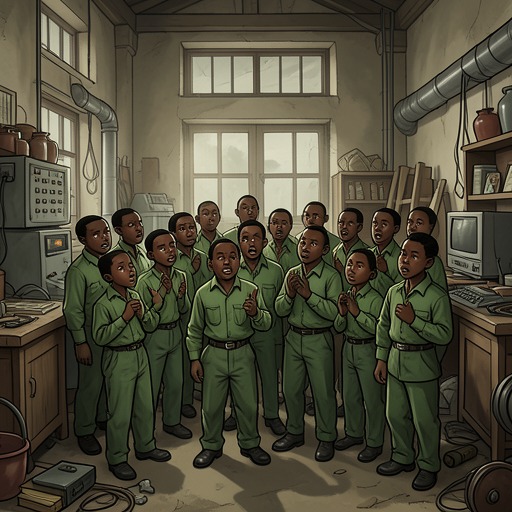
The rule is delivered as a collective song rather than as a formal notice or spoken command. Little Charlie Bucket and Grandpa Joe stand beside Willy Wonka in the bright testing room while the Oompa-Loompas beat their drums and begin another performance. The song announces its central instruction in unmistakable terms: "The most important thing we've learned, / So far as children are concerned, / Is never, NEVER, NEVER let / Them near your television set — / Or better still, just don't install / The idiotic thing at all." Its repeated "NEVER" makes the prohibition sound absolute, while the alternative of not installing a television turns a warning about use into a recommendation about ownership.
The immediate occasion is the Television-Chocolate experiment. Willy Wonka identifies the room as the testing area for his latest invention, Television Chocolate, which operates through television. He also states that he dislikes television except in small doses and observes that children generally want to sit in front of the screen all day. Mike Teavee immediately identifies himself with that pattern, openly acknowledging that continuous viewing describes him. The prohibition therefore follows a concrete demonstration of the danger it condemns rather than appearing as detached moral instruction.
The Habit It Condemns
The Oompa-Loompas' argument begins with the domestic convenience of television. They acknowledge that it keeps children still, prevents them from climbing out of windows, and stops them from fighting, kicking, or punching, leaving adults free to cook lunch and wash dishes. This concession gives the rule a deliberately practical structure: television is attractive partly because it disciplines children without requiring sustained attention from their parents.
The song then turns that convenience against the adults who depend on it. It asks whether they have considered what the screen does to their beloved child, shifting attention from household quiet to the child's interior development. The television set appears not simply as entertainment but as a device that produces stillness by occupying the child's senses. The contrast between a peaceful room and a damaged mind is the rule's central irony.
The song's imagery grows increasingly physical. Television is said to rot the senses in the head, kill imagination, clog and clutter the mind, make a child dull and blind, and leave the brain as soft as cheese. Its starkest formulation is "HE CANNOT THINK — HE ONLY SEES!" The line reduces television viewing to passive reception: looking survives, but independent thought has disappeared. Through exaggeration, rhyme, repetition, and shouted capitals, the performance turns an abstract educational concern into a grotesque bodily process.
Reading as the Alternative
The adults' predictable objection is represented directly: if the television set is taken away, what will entertain the children? The Oompa-Loompas answer by recalling what children used to do before television occupied this role. Their reply is emphatic and repetitive: "THEY … USED TO … READ! They'd READ and READ, / AND READ and READ, and then proceed / TO READ some more." Reading is presented not as a minor substitute but as an activity capable of sustaining attention through repeated effort.
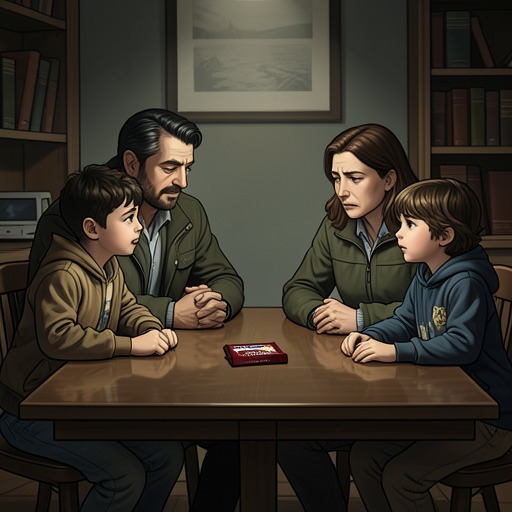
The alternative becomes concrete in the song's domestic instruction. The singers ask adults to throw the television set away, install a lovely bookshelf on the wall, and fill the shelves with books. The prohibition thus does more than condemn a medium; it proposes a rearrangement of the household. The empty space left by the screen should become a visible place for books, making reading part of the child's daily environment rather than a vague recommendation.
The final appeal also gives the rule a social and emotional justification. The song promises that each child will later love the adults more for removing the television. That promise reframes parental discipline as an investment in a future relationship, though the song keeps its comic, coercive energy through the description of the screen as nauseating, foul, unclean, and repulsive.
Application to Mike Teavee
Mike Teavee embodies the behavior the rule condemns. When the fourth Golden Ticket is reported, he is not excited by the chance to visit the factory. He is annoyed that visitors interrupt his viewing and tells them, "Can't you fools see I'm watching television?" The nine-year-old sits before an enormous television with his eyes glued to the screen while watching gangsters shoot one another with machine guns.
His attachment is represented through both speech and costume. Mike wears eighteen toy pistols of various sizes around his body and repeatedly leaps up to fire several rounds from them. He praises gangster violence, including machine guns, stilettos, and knuckledusters, and says that he wishes he could be doing it himself. Television has therefore shaped not only his schedule but also his language, fantasies, gestures, and desired identity.
The rule's force increases because Mike does not merely watch television occasionally. He says that he watches every day and watches all the programmes, even the bad ones without shooting. His own admission confirms Willy Wonka's claim that children do not take television in small doses. Mike's fate in the factory then gives the prohibition a material consequence: the boy is sent through the television process and is left at risk of never regaining his proper height. The Oompa-Loompas close their song by saying that they can only wait to see whether they can restore him, adding that if they cannot, he deserves the result.
Narrative and Ethical Significance
The prohibition is voiced by the Oompa-Loompas, whose songs repeatedly follow the factory's punishments and convert individual misbehavior into public instruction. Their performance begins with drums and collective singing, so the rule operates as ritual, verdict, and entertainment at once. Mike's individual case is expanded into a lesson addressed to families generally, while the direct appeal to adults makes the audience participants in the question of how children are occupied and controlled.
The warning also exposes a tension between protection and punishment. Television is criticized for making children quiet and manageable, yet the factory's own response to Mike is severe and uncertain. The song can therefore be read as an educational command that invites readers to mock Mike's excesses, but its underlying concern is broader: adults may use a screen as a convenient substitute for attention, then discover that the convenience has helped shape the child's capacities and desires.
At the same time, the rule is not simply anti-technology in the abstract. Willy Wonka is himself experimenting with Television Chocolate, a product that uses the very medium he distrusts to transmit chocolate. The factory consequently treats television as both dangerous influence and exploitable mechanism. That contradiction sharpens the prohibition's meaning: the problem is not only the existence of a screen, but the uncritical surrender of thought, imagination, and choice to it.
The concluding image of the bookshelf supplies the rule with its positive ideal. Against the television's passive visual consumption, books represent sustained reading, mental activity, and access to fantasy and fairyland. The prohibition therefore establishes a hierarchy of childhood practices: silence achieved by a screen is inferior to the active inward life cultivated by reading. Its comic song, exaggerated punishments, and emphatic repetition make that hierarchy memorable while turning Mike Teavee's personal disaster into a general warning about television addiction.