Wonka's Chocolate Factory
Charlie and the Chocolate FactoryWonka's Chocolate Factory is the largest and most famous chocolate factory in the world, an immense and secretive place whose gates, machinery, products, and hidden workers transform chocolate from a scarce object of desire into an apparently limitless realm of invention. It dominates Charlie Bucket's imagination before he ever enters it, drives the Golden Ticket contest, and finally becomes the inheritance that determines his future.
Public Wonder and Private Mystery
The factory stands within sight of Charlie Bucket's home, making its abundance a daily torment for a boy whose family can afford little more than bread and margarine, boiled potatoes and cabbage, and cabbage soup. Charlie longs above all for chocolate, yet receives only one small bar on his birthday, which he preserves in a wooden box and eats by tiny nibbles over more than a month. Twice each school day he passes the factory gates, slowing down to breathe the rich chocolate scent that surrounds the building for half a mile. The factory is therefore both a physical landmark and a sharply unequal presence: its smell promises extraordinary plenty while Charlie's household lives with constant hunger.
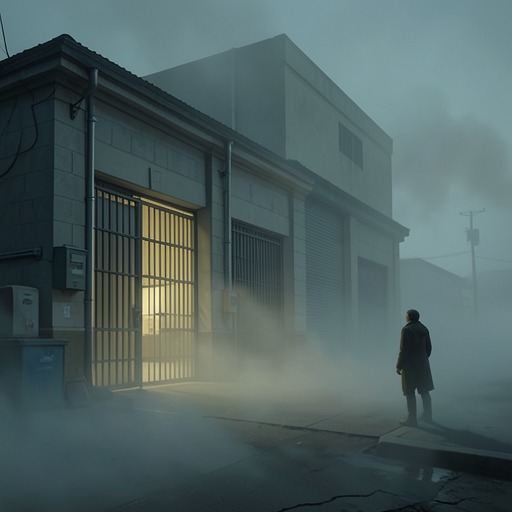
Its exterior establishes a deliberately contradictory image. Huge iron gates and a high surrounding wall mark it as inaccessible, while smoke pours from its chimneys and strange whizzing sounds rise from within. For ten years, however, nobody has seen Willy Wonka, and the public has been unable to discover how the factory continues to operate. The mystery becomes more intense because the building does not merely remain active; its chocolates and sweets grow increasingly fantastic and delicious, while rival makers such as Mr Fickelgruber, Mr Prodnose, and Mr Slugworth can no longer copy Wonka's inventions.
Closure, Secrecy, and Production
The factory's secrecy begins when Willy Wonka dismisses every worker after rival chocolate makers send spies into the workforce to steal his recipes. The spies pretend to be ordinary employees, learn how particular products are made, and pass the knowledge to competing factories. Wonka responds by shutting the main gates, fastening them with a chain, and removing all visible human activity. The chimneys stop smoking, the machines stop whirring, and no chocolate or sweet is made in public view. Even Wonka disappears, encouraging the town to assume that his career has ended.
The apparent death of the factory proves deceptive. Months later, white smoke rises again from the chimneys, but the gates remain locked. People see signs of life inside without seeing anyone enter or leave, creating the persistent question of who performs the work. The factory has continued operating for ten years, and its production has become more astonishing throughout that period. Its closed boundaries protect Wonka's recipes, but they also turn production itself into a spectacle of absence: the products circulate widely, while the people and processes that create them remain hidden.
The Factory Tour and Its Spaces
Willy Wonka eventually opens the factory to five children chosen through five Golden Tickets hidden beneath the wrappers of ordinary chocolate bars sold anywhere in the world. His notice promises that the winners will see the factory's secrets and magic, receive enough chocolate and sweets to last the rest of their lives, and be personally escorted through the building. The announcement converts the factory from an inaccessible rumor into the destination of a worldwide search, sending adults and children into a frantic chocolate-buying spree. Newspapers, counterfeit claims, smashed piggy banks, a bank robbery, and even a failed machine designed to detect gold beneath wrappers all demonstrate how powerfully the factory's secrecy and promise of access reorganize public behavior.
When Charlie Bucket and Grandpa Joe enter with the other winners, the iron gates close behind them with a clang, cutting off the crowds and making the factory a world separate from the one outside. Willy Wonka leads the group through heated interiors, explaining that his workers are accustomed to an extremely hot climate and would perish in the cold outdoors. The first major destination identified by name is the Chocolate Room, where the industrial process is presented as a landscape of wonder rather than as an ordinary production floor.
At its center runs a great brown river made entirely of hot melted chocolate of the finest quality. A waterfall churns, pounds, beats, and mixes the chocolate, making it light and frothy; Wonka insists that no other factory mixes chocolate in this way. Enormous glass pipes hang from above and suck the liquid from the river, carrying thousands of gallons an hour to other rooms where it is needed. The surrounding trees, bushes, grass, and buttercups are edible as well: the vegetation is made from different sweets, and the grass is a soft minty sugar called swudge. The room thus fuses natural imagery with industrial control, presenting a manufactured environment in which every attractive surface is also a consumable product.
Hidden Workers and the Cost of Wonder
The factory's secret workforce is the Oompa-Loompas, whom Willy Wonka says he imported directly from Loompaland. He describes their homeland as a dangerous jungle inhabited by hornswogglers, snozzwangers, and whangdoodles, and says that the Oompa-Loompas lived in tree houses while surviving on revolting green caterpillars mixed with beetles, eucalyptus leaves, and tree bark. Their greatest desire was cacao beans, the essential ingredient of chocolate, yet an Oompa-Loompa might find only three or four in a year.
Wonka gains their agreement to relocate by offering unlimited cacao beans, chocolate, and wages in cacao beans if they wish. He then ships every man, woman, and child of the Oompa-Loompa tribe to his country in large packing cases with holes in them. He describes them as excellent workers who now speak English, love dancing and music, compose songs, and enjoy jokes, while also retaining the clothing associated with their jungle life. The account makes their labor central to the factory's continued operation, but presents that labor through Wonka's ownership and explanation: the workers are indispensable to the miracle, yet their lives and voices are initially mediated by the factory's proprietor.
This arrangement gives the factory an unresolved economic and ethical tension. Its abundance depends on cacao, specialized knowledge, and a relocated workforce, while its public image emphasizes enchantment, entertainment, and Wonka's individual genius. The Oompa-Loompas are treated as both a community with desires and a labor force secured through access to the commodity they most crave. The factory's magic therefore does not erase production; it conceals and theatricalizes the labor, materials, and unequal power that make the magic possible.
Brand, Inheritance, and Narrative Significance
The factory is also the engine of Wonka's public identity. His announcement, printed in the Evening Bulletin, limits access to exactly five children, promises lifelong supplies, and turns ordinary chocolate bars into vehicles for a global contest. The scarcity of the Golden Tickets intensifies desire, while the factory's secrecy gives every wrapper the potential to contain entry into a hidden world. After Charlie Bucket finds the fifth ticket, newspapermen and photographers flood his small house for hours, showing how the factory's publicity extends beyond its gates and turns its visitors into news and advertising.
Inside the factory, Wonka imagines pushing this commercial logic even further through Television Chocolate: a viewer would see an advertisement and immediately reach out to take a Wonka bar from the television screen. The fantasy joins technological novelty to brand expansion, promising not merely that chocolate can be sold everywhere, but that the distance between promotion and possession can disappear.
The factory's decisive transformation occurs above the town in the Great Glass Lift. Willy Wonka tells Charlie Bucket that he has no children or family and is too old to run the factory forever. He rejects the idea of handing it to an adult, whom he believes would refuse to learn his methods and would try to do things differently. Instead, he wants a sensible, loving child to whom he can reveal his most precious sweet-making secrets while he is still alive. The Golden Ticket contest is consequently revealed as a selection process: five children were invited, and the one Wonka liked best would become the winner.
Wonka then gives Charlie the entire factory, to become his when he is old enough to run it. The building's meaning changes at that moment. It is no longer only the sealed source of mysterious abundance, the object of worldwide consumer longing, or the stage on which other children are tested. It becomes a promised home, workplace, inheritance, and education for Charlie Bucket. The factory's final significance lies in this convergence: its walls separate a hidden system of production from the outside world, yet its inheritance offers Charlie a passage from hunger and exclusion into control of the very abundance he once could only smell through the gates.