Wonka's factory secretly resumes production
Charlie and the Chocolate FactoryWonka's factory secretly resumes production after Willy Wonka dismisses every worker and seals the building against spies. Its locked gates, unseen workforce, renewed output, and unexplained shadows transform a failed factory into the central mystery behind Willy Wonka's public disappearance and the later Golden Ticket contest.
Causes and Closure
Grandpa Joe explains that Wonka's original workforce numbered in the thousands, but rival chocolate makers had become jealous of his extraordinary sweets. They sent spies into the factory disguised as ordinary employees. Each spy learned how a particular invention was made and carried the secret back to a competing business.
The consequences appeared quickly. Fickelgruber's factory began producing ice cream that would not melt in the hottest sun, Mr Prodnose's factory released chewing gum that never lost its flavour, and Mr Slugworth's factory made sugar balloons that could be inflated to enormous sizes before being popped and eaten. Facing the theft of his recipes, Willy Wonka concluded that spies were everywhere and that he would be ruined.
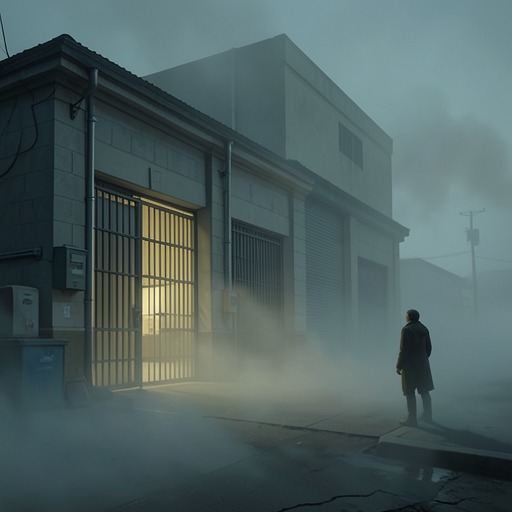
He therefore told every worker to go home and never return. The main gates were shut and fastened with a chain. The transformation was absolute: the chimneys stopped smoking, the machines stopped whirring, no chocolate or sweets were made, and nobody entered or left. Willy Wonka himself disappeared from public view, while the town assumed that his career and factory were finished.
The Secret Restart
Months passed before the first sign of reversal appeared. One morning, thin columns of white smoke rose from the tall chimneys. Townspeople stopped to stare and hurried to the gates, expecting them to stand open and expecting Willy Wonka to welcome his workers back.
That expectation was immediately denied. The great iron gates remained locked and securely chained, and Willy Wonka was nowhere to be seen. Yet the factory was unmistakably active: people outside could hear the machines whirring again and smell melting chocolate in the air. The event therefore produces a striking reversal in the factory's status. It is publicly closed but materially alive, inaccessible yet industrious.
The most unsettling evidence comes from the frosted windows. At times, especially late at night when the lights are on, small dark shadows move behind the glass. From the street, observers can see what appear to be workers, even though nobody has watched anyone enter. The shadows never resolve the mystery; they sharpen it. The town can confirm production without identifying its producers.
Hidden Labor and Controlled Access
For ten years the factory continues running, and its products become increasingly fantastic and delicious. The secrecy now serves a practical purpose. Because no spies can enter to inspect the processes, rival manufacturers can no longer copy Willy Wonka's new sweets. The factory's locked boundary functions as both physical security and control over knowledge: the products leave, but the methods remain inside.
The only things visibly emerging from the building are chocolates and sweets. They pass through a special trap door in the wall, already packed and addressed, and Post Office trucks collect them every day. This delivery system allows the factory to participate in ordinary commerce while keeping its production and management hidden. Its goods circulate widely; its labor remains invisible.
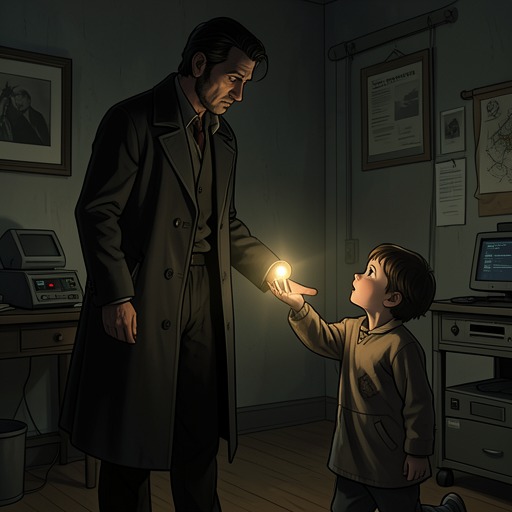
The workers' identity is eventually described only in terms of scale. Grandpa Joe says that the shadows belong to tiny people no taller than his knee, though Charlie initially rejects the possibility that such people exist. The account preserves the factory's secrecy by replacing the absent adult workforce with a nearly fantastic image of miniature laborers.
Later, Willy Wonka identifies these workers as the Oompa-Loompas, imported directly from Loompaland. He describes Loompaland as a dangerous jungle inhabited by hornswogglers, snozzwangers, and whangdoodles, and says that the Oompa-Loompas lived in tree houses to escape them. Their diet consisted largely of revolting green caterpillars mixed with other unpleasant ingredients, while cacao beans were the food they desired above all else. An Oompa-Loompa might find only three or four cacao beans in a year, yet the beans occupied their dreams and conversations.
Willy Wonka says he recruited the Oompa-Loompa tribe by offering unlimited cacao beans, chocolate, and wages that could even be paid in cacao beans. He transported every man, woman, and child to his country in large packing cases with holes in them. At the factory they became workers who speak English, love music and dancing, invent songs, and retain the clothing customs of the jungle. Willy Wonka also calls them mischievous and fond of jokes, a description that links the hidden workforce to the strange performances and moral songs encountered during the factory tour.
The Golden Ticket Reopening
The secret restart remains unexplained to the public until Willy Wonka announces that the factory will be opened to five children. A newspaper headline declares, "WONKA FACTORY TO BE OPENED AT LAST TO LUCKY FEW," while the notice identifies Willy Wonka as the confectionery genius whom nobody has seen for ten years.
Willy Wonka's invitation is tightly restricted: five children, and no more, will be shown around personally by him and allowed to see the secrets and magic of the factory. Each child will also receive enough chocolates and sweets to last for the rest of life. The access mechanism is the Golden Ticket contest. Five tickets printed on golden paper are hidden beneath the ordinary wrappers of five ordinary Wonka chocolate bars, which may be sold in any shop, street, town, or country where Wonka's Sweets are available.
The announcement converts the factory's secrecy into a worldwide spectacle. Grandpa Joe sees the plan as brilliant and imagines the whole world buying Wonka's chocolate bars in pursuit of the tickets. The scarcity of five invitations creates a buying frenzy: adults purchase multiple bars and tear open the wrappers immediately, children smash piggy banks, a gangster spends a thousand pounds stolen from a bank on chocolate, and a professor's ticket-detecting machine is destroyed after its mechanical arm grabs the gold filling in a duchess's tooth. The factory's hidden production is thus paired with an unusually visible marketing campaign.
As the tickets are found, the reopening becomes a sequence of public revelations. The first ticket intensifies global attention, and the second is found by Veruca Salt, who is photographed between her wealthy parents while waving the ticket. When Charlie Bucket finds the fifth Golden Ticket, reporters and photographers track down his family home. Their arrival produces hours of pandemonium before Mr Bucket can send them away near midnight. The factory's controlled opening therefore begins before the children cross its threshold: it first opens as news, rumor, competition, and mass consumption.
Consequences and Significance
The resumed production changes the meaning of the factory's apparent abandonment. What the town interpreted as defeat was in fact a deliberate withdrawal from public access. Willy Wonka sacrifices an ordinary workforce and visible business operation in order to protect invention, then maintains production behind sealed gates. The result is a powerful contradiction: the factory is deserted in its public appearance but crowded with activity in its hidden interior.
The event also establishes the factory as a place where knowledge, labor, and spectacle are carefully rationed. Chocolate and sweets are released continuously, but the people who make them cannot be seen; the gates remain closed, but the machines speak through their noise; Willy Wonka vanishes, yet his name becomes more powerful through the products and the Golden Ticket notice. The factory's mystery is not a pause before the plot begins. It is the mechanism that makes the later visit desirable.
Finally, the secret restart provides the commercial foundation for the Golden Ticket contest and for Willy Wonka's wider imaginative reach. The factory's production already supplies the goods, the sealed building protects the recipes, and the five tickets turn restricted access into a global hunt. Even Willy Wonka's later idea for Television Chocolate follows the same logic of collapsing distance between product and audience: a television commercial would invite viewers to reach out and take a chocolate bar directly from the screen. Across these developments, the factory is both a workplace and a communications system, converting secrecy into anticipation and anticipation into demand.