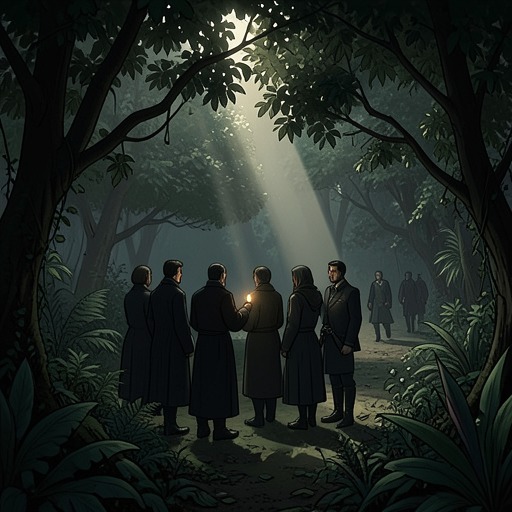
Glass sabotage spheres
Chasing SunlightGlass sabotage spheres are small glass devices used to sabotage the Endeavor by hiding inside its zint tanks. They matter not because their physical size is imposing, but because their concealment transforms the ship’s vital machinery into a site of uncertainty: a vessel built to carry an expedition toward sunlight may already contain the means of its destruction. Their discovery is the first concrete sign that opposition to Jonathan Heights’s work is deliberate, technically informed, and not limited to ordinary resentment.
Discovery and Physical Design
Eleanor McAvey recovered a trio of glass baubles from the Endeavor’s zint tanks and brought them to Jonathan Heights for examination. She could not identify who had placed them there or how they were intended to activate, but she recognized them as more than innocent fittings. The spheres were associated with the ship’s zint equipment, where their presence made the sabotage especially dangerous: the devices had been planted inside a system essential to the Endeavor’s operation rather than left openly where they could be easily found.
Jonathan understood only the basics of zint mechanisms, since the deepest secrets of luminiferous terrestrite were beyond ordinary knowledge. Even with that limited expertise, he could reconstruct the spheres’ operating principle. A tiny internal mechanism drove a single spike outward from within, breaking the glass sphere and releasing its contents. The design therefore depended on concealment and delayed activation. The glass was not merely a container but part of the trigger sequence: once pierced, it ceased to be passive and became the opening through which the device’s destructive contents could escape.
From Isolated Devices to a Wider Threat
The spheres immediately altered Jonathan’s interpretation of the danger surrounding the expedition. He concluded that the Endeavor had attracted the attention of someone unpleasant and expressed surprise that Eleanor’s discovery represented only one instance of sabotage. His concern proved justified. Eleanor reported that further attempts had been frustrated over the following months, although those incidents led only to minor suspects: jealous individuals, and at least one person motivated by hostility toward Crowley, Stanford, and Moore rather than toward Jonathan himself.
The later attempts did not produce another appearance by whoever had left the glass devices in the zint tanks. That absence made the spheres more, rather than less, ominous. Other saboteurs could be identified and dealt with, but the maker or planter of the spheres remained unknown. Their recurrence as a remembered threat, even without a second confirmed device, kept Jonathan worried that something had escaped detection.
The sabotage also intersected with the Endeavor’s political entanglements. Eleanor had encountered both a Crown agent and a Council agent aboard the ship, each pretending not to know about the other, and she connected the expedition with smuggling, artifacts, bribery, and spying. Jonathan later found the smell of the boarders’ equipment comparable to the odor associated with the devices discovered in the zint tanks. He therefore considered the Illuminated King and the Reflected Council as possible sources of the attack, while acknowledging that both had interests at stake and that neither institution was politically monolithic.
Suspicion, Knowledge, and Sunlight
The spheres become significant beyond their immediate mechanical danger because they sharpen the central mystery of the expedition. Eleanor suspected that the attackers had made an unusually great effort and might know something that the explorers did not. Jonathan admitted that he knew sunlight existed and knew how to reach it, but that even Reginald Heights had learned little about what sunlight was or what a sun might be. The sabotage could therefore have been committed by someone who possessed information about sunlight and feared what Jonathan and his companions might do with it.
This possibility gives the glass devices a double function. On the surface, they are instruments of destruction hidden in fuel or power equipment. Structurally, they are clues: their unfamiliar mechanism, their unexplained origin, and their association with competing political authorities delay the identification of the true threat. The spheres do not reveal who placed them, but they make ignorance itself dangerous. The expedition is not simply entering unexplored regions; it is proceeding through a conflict in which unseen actors may understand the destination more fully than the people trying to reach it.
Narrative and Material Significance
The glass sabotage spheres embody the expedition’s dependence on systems that Jonathan can use without fully understanding. He can explain the spike, the glass, and the release mechanism, just as he can operate sophisticated navigational equipment, yet the larger principles behind the technology remain partly inaccessible. The devices consequently expose a tension between practical mastery and genuine knowledge: a machine may be deciphered enough to survive, while its origin and purpose remain obscure.
Their material presence also changes how the Endeavor is perceived. The ship is not only a vehicle under attack from outside; it may already be compromised from within. That distinction explains why Jonathan remains vigilant during later dangers and why Eleanor’s intelligence work is indispensable. The spheres force the crew to treat ordinary infrastructure as suspect, turning inspection, repair, and preparation into acts of security. Even after the devices themselves disappear from the immediate narrative, their trace persists in the unexplained sabotage, the attack on the ship, and the fear that an informed enemy is attempting to prevent the expedition from bringing sunlight into the known world.