Jonathan Heights's Social Exile
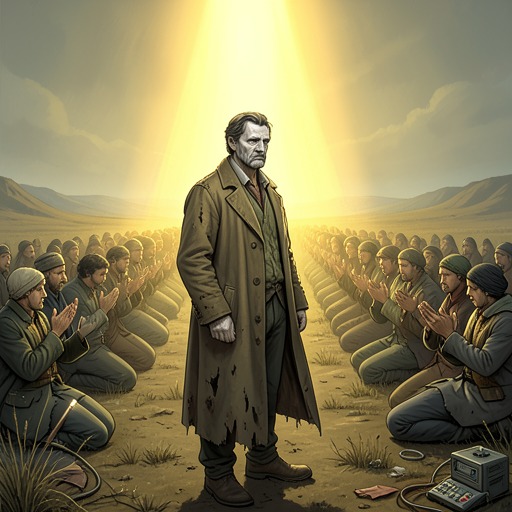
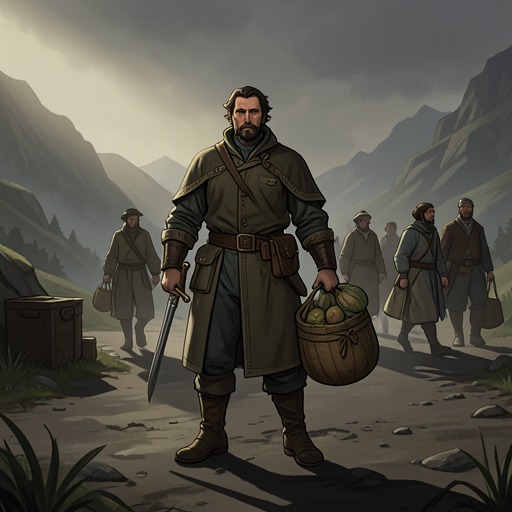
Chasing SunlightJonathan Heights's Social Exile describes Jonathan Heights's loss of standing in Beacon after the disaster of his previous expedition and his decision to leave the city rather than seek reintegration. It is not simple solitude: his professional reputation still attracts rivals, crown agents, the Reflected Council, and companions who need his expertise, but his social credit has been exhausted. The resulting condition gives his eastward journey its emotional and political force, making the Endeavor both an instrument of exploration and a vehicle for permanent separation from the society that has rejected him.
Causes and Conditions
Jonathan Heights's exclusion follows the failure of his last expedition, in which everyone involved except him died. The disaster burned away the friendships and social connections that once might have gathered around his departure. When the Endeavor is prepared to leave Beacon, there is no welcoming crowd, not even a modest group of well-wishers. Only the Crown and the Reflected Council show practical interest, and their representatives possess no more personal loyalty toward Jonathan than he does toward them.
The loss is social, professional, and institutional at once. Jonathan describes his social credit as mortgaged or burned, while his reputation as a veteran explorer serves chiefly to set rivals against him. Ordinary avenues of assistance have closed, and even a comparatively minor dispute involving widow Hardiman must be managed through private messages and indirect arrangements. The ease with which that immediate problem is solved does not restore his position; instead, it confirms that he can still manipulate practical networks without belonging securely to them.
Exile and Departure from Beacon
Jonathan does not intend to return to Beacon. His decision is active rather than merely imposed: he is willing to burn the remaining bridges because the city has become an obstacle to the expedition and because his real objective lies far to the east. Yet exile has operational costs. Petty hostility makes it harder to identify genuine threats, including the sabotage that Eleanor McAvey has already neutralized, while Antomine represents a more serious danger that will worsen if left to develop. Jonathan therefore concludes that the Endeavor must leave as soon as possible.
The departure's silence makes the change in his status visible. In earlier times, even an expedition into the unknown would have drawn a small crowd, but the failed expedition has transformed a public venture into an uncelebrated exit. Jonathan boards with Eleanor McAvey, Antomine, their attendants and guards, and Captain Montgomery's crew, yet none of these companions replaces the civic world he has lost. Their presence is functional, suspicious, or politically motivated; it does not amount to a restored community.
Exile Beyond the Human Boundary
The journey east places Jonathan in spaces where Beacon's social categories lose their authority. At Danby's Point, the illuminated track reaches the easternmost terminus of human civilization, ending beneath a zint-lit tower built into bruised-purple rock. Human light occupies one side of the plateau, while the lights and constructions of other races press against it. Trade requires contact, but the Inquisition attempts to contain that contact, leaving the frontier in a state where human power is simultaneously strongest and weakest.
Crossing the great metal gate intensifies Jonathan's position between worlds. The architecture beyond it bends human forms into alien angles, and the denizens include the Fractured, whose bodies shift from one moment to the next, as well as black, many-limbed tar-like beings with unsettlingly human eyes. Jonathan's ability to move through this environment depends on knowledge unavailable to ordinary Beacon society: he reads maps, understands local dangers, and communicates across cultural boundaries. His exile thus becomes paradoxical. The society that distrusts him has made him an outsider, but the frontier makes precisely that estranged expertise valuable.
Knowledge, Authority, and Conflict
Jonathan's marginal position does not free him from the institutions that govern Beacon and its colonies. The expedition operates under competing pressures from the crown, the Reflected Council, and the Inquisition, while Jonathan's own purpose remains focused on finding sunlight. At Danby's Point he relies on Tiuni for intelligence about the shifting forces and beasts of the Verdant Expanse, trading human literature for information that narrows the expedition's possible routes. His maps and accumulated experience allow him to act as a mediator between human plans and eastern realities, even as Antomine challenges the reliability of the information before him.
The conflict with Antomine also exposes two incompatible definitions of responsibility. When Antomine argues that a possible nest of Umbraught in Angkor Leng must be purged before the creatures can learn about zint and threaten the west, Jonathan refuses to redirect the expedition. He insists that they are not a navy and lack the time and resources to survey and cleanse a city of Angkor Leng's size. Antomine answers that civilization is built by doing more than the minimum for immediate survival. Jonathan's exile therefore places him against not only Beacon's social order but also its missionary conception of civilization: he will use the knowledge and infrastructure of that order when they serve his journey, while rejecting its demand that he become an agent of its expansion.
The Exile's Working Identity
Jonathan's isolation is sustained by competence. He knows that the dangers encountered on the journey cannot always be fought, and when the Endeavor disturbs an unknown force in ancient ruins, his long experience makes him certain that retreat is the only viable response. He leads the withdrawal while the heat rises behind the expedition and the creatures of the ruined city flee in the same direction. Such judgment gives him authority among companions who may distrust him but cannot easily replace him.
The same pattern appears when the Endeavor encounters a caravaneer in the Verdant Expanse. Jonathan addresses the enormous reptilian traveler in its own language, a whistle-and-click tongue learned in his youth, and uses the exchange to secure contact with the caravan. His knowledge does not erase the cultural distance between the parties, but it lets the expedition pass through a world Beacon cannot simply command. The carcass of a huge beast, seized and devoured by the caravaneers in a sudden frenzy, further reminds the human party that Jonathan's maps and language provide access, not mastery.
Consequences and Significance
Social exile makes Jonathan simultaneously freer and more vulnerable. Because he no longer expects a place in Beacon, he can pursue sunlight without the ordinary obligations of reputation, reciprocity, or civic approval. Because he has burned those connections, however, he must depend on a small and unstable circle aboard the Endeavor, where Eleanor McAvey's hidden affiliations, Antomine's mandate, and Captain Montgomery's practical authority continually complicate his control.
The condition also shapes how Jonathan understands belonging. Even in the most remote east, he does not become simply a member of another community. He remains an observer, negotiator, mapmaker, and expedition leader, moving among human settlements, alien markets, caravans, ruins, and powers beyond ordinary human understanding. When the Players reveal themselves aboard the Endeavor, Penelope's calm movement toward them helps Jonathan decide to approach the Game, but the scene does not restore him to any human social order; it places his isolation against cosmic intelligences whose knowledge exceeds human categories.
The aftermath confirms that Beacon absorbs extraordinary violence as gossip rather than transformation. After the Endeavor's return, the combined incidents are variously called the Winter of Blood or, with some mockery, the Winter of the Shadow. The city acknowledges unusual excitement but treats it as no more than an intensified season of rumor. When Captain Montgomery later outfits the Endeavor for another expedition, the departure attracts little comment. Jonathan's exile thus becomes part of a broader civic pattern: even events that destabilize the boundaries of the known world are domesticated by a society accustomed to darkness, bureaucracy, and controlled forgetting.