Jonathan Heights–Eleanor relationship
Chasing SunlightThe Jonathan Heights–Eleanor relationship is a progression from suspicion and coercive alliance to companionship, ideological fracture, and final severance. Eleanor joins Jonathan’s expedition partly because the Reflected Council wants a spy placed near him, while Jonathan values her ability to survive and contribute in the field. Their connection is therefore never free of surveillance, resentment, or unequal knowledge. It becomes decisive when Jonathan’s pursuit of sunlight changes him so profoundly that the shared history he once carried with Eleanor can no longer compete with the truth he has chosen.
Suspicion and the Expedition Bargain
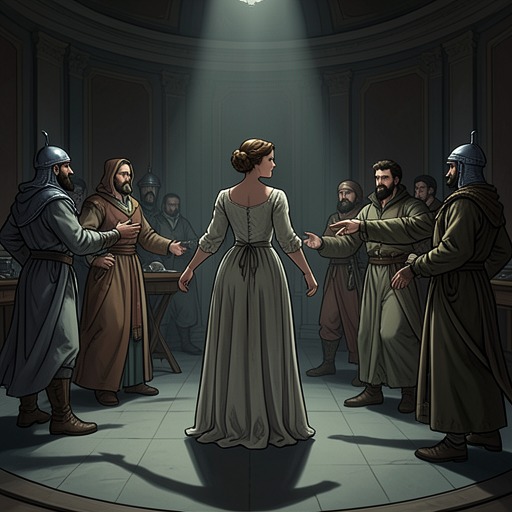
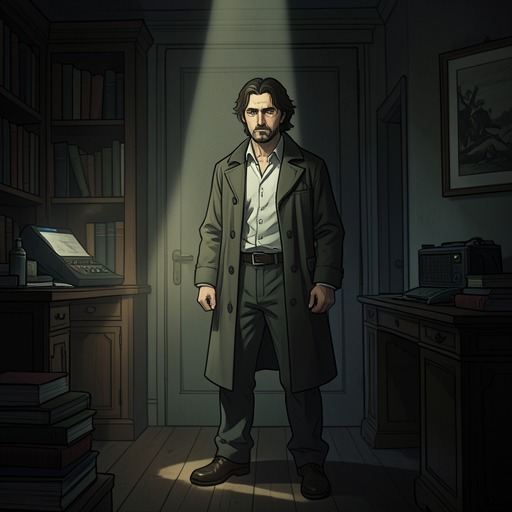
Eleanor’s first substantial position in the relationship is that of a skeptical observer who knows Jonathan’s reputation and remembers the cost of his previous expedition. When Jonathan invites her to join the Endeavor, he openly acknowledges that the Reflected Council wants someone watching him and presents Eleanor as the useful version of that spy: someone who can also pull her weight. She answers by accusing him of having left her to die with Stoneface. Jonathan reacts with sudden violence, gripping her throat and pinning her against a chair before warning that an attack on his honor will create trouble. His denial that he abandoned or betrayed anyone does not erase the threat; it establishes the relationship’s earliest pattern, in which Eleanor tests Jonathan’s moral claims and Jonathan answers by asserting control.
The scene also marks the change in Jonathan that Eleanor recognizes. He is no longer the more tolerant younger man she remembers. Having seen sunlight, he has acquired a purpose that makes obstacles, including people, seem removable. Eleanor’s fear is therefore not merely fear of physical force. It is an early perception that Jonathan’s pursuit has reorganized his values, making the former explorer increasingly difficult to reach through ordinary loyalty or affection.
Companionship Under the Shadow of Sunlight
Despite its hostile beginning, the relationship develops through shared travel and repeated exposure to the same dangers. Eleanor remains close enough to Jonathan to read his moods and challenge his decisions, while Jonathan continues to rely on her presence even as his attention narrows around sunlight. Their practical intimacy appears in the way she notices his restlessness aboard the Endeavor and asks whether he is having second thoughts before the final approach to Bright Defile. Jonathan insists that he is only checking whether he has forgotten anything, but Eleanor’s question identifies the emotional pressure surrounding the journey more accurately than his guarded answer does.
Eleanor’s own hesitation is rooted in what the expedition has already done to her. She says that she does not want to become like Jonathan, someone with no interest in anything else, no real life, and no freedom because knowledge controls him. She also recalls that the last journey did not end well for her. Her concern is not simple cowardice: she fears the transformation that accompanies forbidden understanding. Jonathan tells her that she cannot be forced to continue and suggests that she may turn away when they reach the destination. He does not fully trust her motives, but he expects her curiosity to prevail. His assessment is correct. Although the Black Garden has damaged her, it has not destroyed her desire to know.
Their exchange preserves a remnant of familiarity amid alienation. Eleanor can still make a joking observation about the unnaturally pressed appearance of Jonathan’s suit, and Jonathan responds with modestly offered technical knowledge. Yet the lightness is unstable. The conversation occurs while the Endeavor is battered and being repaired, and while both characters understand that the coming threshold will expose whatever they have concealed from themselves and one another. Their companionship survives as habit, wit, and shared history, but not as an unquestioned emotional home.
Divergent Moral and Political Horizons
The relationship is also shaped by opposed ideas of responsibility. Jonathan repeatedly treats the expedition as a singular obligation to reach sunlight, while Eleanor remains alert to the personal and political costs of the truths he pursues. His impatience with other duties appears elsewhere in his conflict with Antomine over Angkor Leng: Jonathan refuses to interrupt the journey to cleanse a city of Umbraught, insisting that the Endeavor is not a navy and lacks the time and resources for such a campaign. The same concentration that makes him effective also makes him increasingly unavailable to claims that do not serve his final objective.
Eleanor, by contrast, remains positioned at the unstable boundary between human civilization and the darkness beyond it. At Danby’s Point, she reacts with immediate unease to the alien architecture and the nonhuman inhabitants encountered beyond the great gate. She is capable of curiosity toward the eastern world, but she does not possess Jonathan’s conviction that every other concern must yield to revelation. Her relationship with him therefore dramatizes a conflict between knowledge pursued as absolute truth and a life organized around freedom, attachment, and limited human choices.
The difference is not absolute at first. Eleanor continues to accompany him through encounters with caravaneers, unfamiliar species, and the lethal environments of the Verdant Expanse. Jonathan’s expertise gives her access to routes, languages, maps, and dangers that would otherwise remain closed. But his mastery also carries the imperial and exploratory habits of Beacon: he maps the eastern lands, trades information about their forces and migrations, and treats the far east as a region to be understood for the purposes of human passage. Eleanor’s proximity lets her participate in that movement while also retaining enough distance to question what it is doing to them.
The Sunlight Trial and the Break
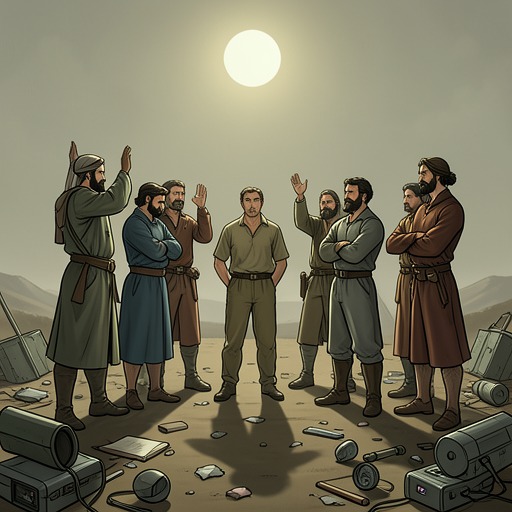
The decisive rupture occurs at Bright Defile. Jonathan explains that each person will eventually meet a limit and that moving closer to sunlight has consequences, citing the failures of Captain Hardiman and Stoneface. Eleanor reaches her own limit before the threshold. She tries to shield her eyes, but sunlight casts no shadows and cannot be blocked. Under its force, the secret knowledge that has shaped her is stripped away, leaving her pale, exposed, and almost insubstantial. She says that the light is not for her and retreats into darkness; Sarah follows her, while Marie remains nearer the threshold.
Eleanor’s retreat becomes a direct accusation when she asks whether Jonathan has drawn her into his crusade in order to judge her. Sunlight makes it impossible to call the vision false or illusory, so the accusation falters before it can become a denial of what they are seeing. Jonathan answers that he is not there to judge her, only himself. Under the light, he apologizes for not intending to hurt her through the secrets of the Black Garden and tells her to go and live her life as she wishes. He offers no further advice because, in his judgment, a gulf now separates them: Eleanor is of the dark, while he is of the light.
The relationship ends not through a dramatic act of betrayal but through Jonathan’s deliberate surrender of attachment. He releases both his ire toward Eleanor and his fondness for her. The text presents this as an act of severance rather than reconciliation: whatever connection existed from their first meeting to their last is burned away by the revelation. Eleanor’s presence becomes phantom-like and fades as Jonathan takes another step toward the deeper truth. Sunlight does not merely expose facts; it changes the scale by which Jonathan measures human bonds, making even a long and dangerous companionship appear secondary to the knowledge ahead.
Aftermath and Reversal of the Bond
The separation is not the simple disappearance of Eleanor from the eastern story. After the Endeavor returns, she remains connected to its world and to its unfinished routes. When Captain Montgomery takes the Endeavor out again, Eleanor stands on the bridge with Sarah and Marie, no longer presenting themselves as maids but still operating within her orbit. She has acquired maps of the east through both legitimate and illicit means, including occult maps capable of leading to places that no longer exist. She explains that, now that she understands the Green Garden, she should be able to find it herself when the ship draws near.
This later expedition reverses the earlier arrangement. Eleanor is no longer simply Jonathan’s companion or the Council’s observer on his expedition. She has her own knowledge, maps, objective, and capacity to direct an eastern journey. Jonathan’s departure into sunlight leaves her not powerless but changed into an independent seeker, still oriented eastward but no longer following his path. Her continuing curiosity proves that retreat from the threshold was not a surrender of agency. It was a refusal to accept Jonathan’s form of knowledge and the loss of freedom that accompanied it.
The relationship therefore closes in contradiction. Eleanor does not become what Jonathan has become, yet she does not abandon the eastern world or the knowledge gained there. Jonathan, meanwhile, reaches the truth he pursued but loses the emotional connection that once made the expedition a shared human venture. Their bond begins as a contest over trust, matures through danger and mutual usefulness, and ends when sunlight turns difference into an ontological division. The later image of Eleanor choosing eastward movement on her own makes the break final without making it empty: what Jonathan calls darkness remains, for Eleanor, a realm in which life, freedom, and further discovery are still possible.