Terminus
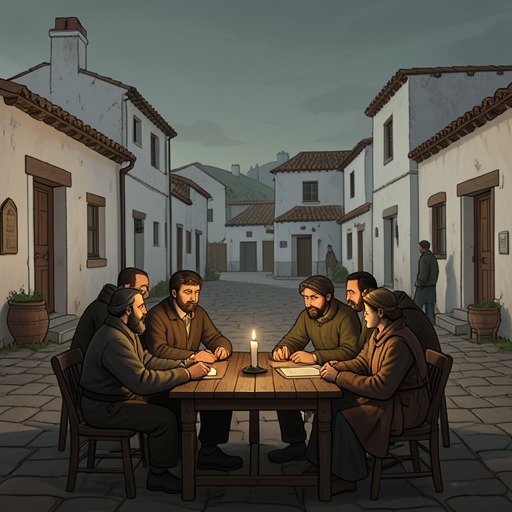
Chasing SunlightTerminus is an apparently legitimate human settlement in the eastern wilderness, and its decisive narrative function is to turn safety, comfort, and civilization into a trap. Reached after the Endeavor discovers an unexpected terrestrite vein, the town appears to offer everything an exhausted expedition needs: bright streets, functioning infrastructure, fuel, provisions, hospitality, and a temporary refuge from the dangers of the dark. Yet nothing in Terminus is quite credible. Its existence is too orderly, its welcome too complete, and its promise of permanence too attractive. The settlement tests whether Jonathan Heights is pursuing sunlight as an absolute commitment or merely traveling until a tolerable substitute for it appears.## Discovery and Impossible Setting Terminus is encountered when the Endeavor is seeking to replenish supplies after damage sustained during its eastern journey. The ship has accumulated a long list of needed items, while repairs reveal that entire crates of tools and supplies are empty, the result of embezzlement somewhere along the supply chain. The sight of a dull terrestrite glow therefore initially promises a practical solution. As the ship approaches the vein, however, the crew finds not exposed rock and wilderness but rumbling machinery, a new-looking settlement, walls, mooring towers, busy streets, and bright lights. Far from Beacon and deep within the wilderness, an apparently established city shines as an impossible flame of civilization.
The settlement’s infrastructure is especially suspicious because a town of such quality could not have appeared in only a few years without extensive transport, labor, and advance knowledge. Montgomery asks whether the sight is real, and Jonathan confirms that it is no illusion. Antomine immediately distinguishes reality from legitimacy, questioning where the people, stone, metal, and other supplies came from when an airship would have had to ferry every pound of construction material into such a remote location. Terminus is therefore not merely a strange place in the wilderness; it is a challenge to ordinary assumptions about how settlements are produced and maintained.
The town’s position makes it a threshold between human civilization and the eastern unknown. It is close enough to Beacon in appearance to reproduce familiar urban life, but remote enough that its presence cannot be explained by the normal expansion of human infrastructure. The clean streets and operating port seem to deny the surrounding darkness rather than merely resist it. Terminus occupies the unsettling middle ground between a genuine refuge and an imitation of one.## Appearance, Hospitality, and Everyday Normality The people of Terminus appear entirely normal, perhaps suspiciously so. Under abundant zint light they look clean, healthy, and happy, while workers maintain the port and prepare for the Endeavor even though it is the only ship currently present. Carriages cross smooth flagstones, the streets are bright and tidy, and the settlement lacks the stench associated with less civilized towns. The portmaster, Connor Freeman, greets Jonathan Heights and Antomine with a firm handshake and exuberant friendliness, praises the Endeavor, and assures them that they may moor wherever they please. His manner is open and apparently guileless, which makes the settlement more troubling rather than less.
Connor Freeman also promises ordinary commercial cooperation. Terminus has lifting gas and terrestrite for the ship’s tanks, and he offers a fair price without the gouging Jonathan would expect in a remote port. He completes the docking paperwork in a clean, organized office, accepts Beacon-minted coins without hesitation, and invites the travelers to relax. His final suggestion that they might even stay causes Jonathan to look sharply at him, although Connor appears to mean only that he is proud of his town. The invitation nevertheless articulates the settlement’s central temptation: Terminus does not need to imprison visitors physically when it can persuade them that remaining is sensible.
Jonathan wanders through the town and finds only ordinary details. He visits a bookstore, purchases volumes connected to the secrets and histories he once pursued, and experiences a powerful recollection of his younger intellectual life. A woman walks a furry six-legged pet past him; people work, drink, become happy or sad, and move through alleys and storefronts as they would in a small town near Beacon. Clocks chime the hour in a ragged chorus, marking the end of the day. This accumulation of mundane signs offers no visible evidence of danger, yet every friendly detail deepens Jonathan’s suspicion. The more Terminus resembles a safe human community, the more terrible the hidden purpose seems likely to be.
The town’s normality also affects the expedition’s human relationships. The crew longs for shore leave among the taverns, inns, and presumed brothels, while Jonathan is forced to admit that he can identify no concrete reason to forbid it. The absence of direct opposition becomes part of the threat: an obvious attack would confirm the trap, but Terminus provides no such clarity. Its power lies in making suspicion appear unreasonable.## The Temptation to Stay Terminus’s danger becomes explicit when members of the Endeavor’s crew refuse to return to the ship. Martin and Oscar choose to remain behind, and Captain Montgomery describes their decision as abandonment. Antomine agrees that no occult force appears to be controlling them. Instead, the town is simply pleasant while the world outside is terrifying. Their refusal demonstrates how Terminus works without needing supernatural coercion in the immediate scene: comfort, order, and apparent safety can produce the same practical result as compulsion.
Jonathan understands that this is the settlement’s real risk. Whether Terminus is natural or artificial, genuine or synthetic, he concludes that its purpose is malign because it offers the expedition a good-enough alternative to its stated destination. The town does not need to threaten travelers; it can weaken their desire to leave. In this sense, Terminus is more dangerous than a visible enemy because it converts fear into preference and exhaustion into surrender. The external wilderness becomes not merely hazardous but morally and psychologically discredited, while the settlement presents withdrawal as prudence.
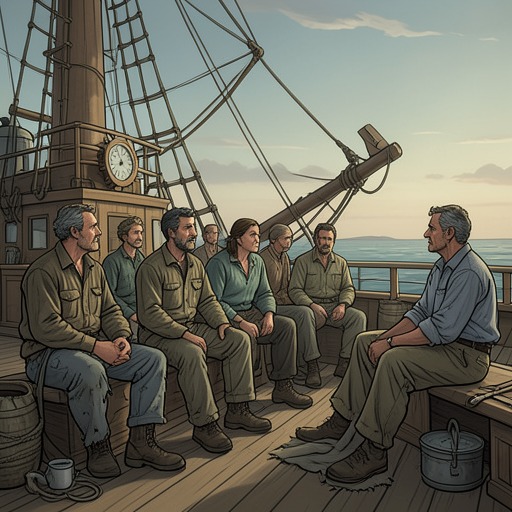
Jonathan orders the Endeavor to depart while it still can. No force bars the ship’s way, and no public resistance materializes. Yet he recognizes that the damage has already been done: the crew has seen a possible life of ease, and two men have chosen it over the expedition. Once the ship is moving away, Jonathan takes the books he bought in Terminus onto the top deck and throws them into the darkness one by one. The act rejects not only the town’s material comfort but also the version of his past that the settlement briefly revived. Terminus has shown him the shape of a life built around manageable knowledge and ordinary pleasure; he destroys its souvenirs because he has decided that such a life belongs to the past, not the future.
The contrast between Terminus and the expedition’s purpose is later made explicit in Jonathan’s inner trial at Bright Defile. The memory of Terminus appears among the places and choices that sunlight exposes, identified as the temptation to settle for merely good enough. Alongside the temptation of the Players and their Game, it represents a wrong or diminished dream: not an openly evil desire, but a comfortable substitute that would end the search before its decisive truth was reached.## Narrative Role and Aftermath Terminus marks a change in the expedition’s understanding of danger. Before reaching it, the crew expects hazards to take the form of storms, hostile creatures, damaged machinery, or foreign powers. At Terminus, the threat is environmental and psychological at once. The settlement’s infrastructure works; its people behave normally; its port is prepared; its commerce is fair. The menace is therefore located in the relation between appearance and purpose rather than in any single monster or act of violence.
The settlement also functions as a counterpoint to Beacon. Beacon possesses white stone, bright lights, and a vast urban population, but Jonathan Heights distrusts the honesty of its illumination and regards the lethal darkness outside as more truthful than the city’s artificial glow. Terminus extends that problem into the wilderness. It offers an even cleaner and more concentrated image of civilization, apparently rescued from the dark, yet its very perfection makes it less credible than the imperfect city Jonathan already dislikes. The place exposes the instability of the opposition between civilization and wilderness: a settlement can look civilized while remaining ontologically suspect, and safety can conceal a demand for surrender.
Terminus continues to haunt the expedition after departure. When Captain Montgomery later mentions hearing mutters about the town, Jonathan answers that it is dangerous, distinguishing it from another place whose dangers are more obvious. The ship’s later routes are also shaped by the encounter. Terminus had allowed the Endeavor to travel much farther than expected without scavenging, but no equivalent friendly port is expected before Ukaresh, if Ukaresh can be called friendly at all. The temporary abundance therefore carries a logistical cost: leaving means returning to scarcity, repairs, and exposure, while staying would have made the journey easier.
The town’s significance is completed by its place in the broader post-expedition memory of Beacon. After the Endeavor returns, the mixture of violence, wealth, disappearances, and gossip is called by some the Winter of Blood, while others mockingly propose the Winter of the Shadow. Terminus is part of the expedition’s chain of unsettling encounters, but it remains distinctive because its horror is quiet. It produces no openly spectacular catastrophe in the available account. Instead, it offers a perfectly lit town, a fair transaction, a bookstore, a welcoming portmaster, and a choice that reveals how close the travelers are to abandoning the darkness. Its most consequential act is not attacking the Endeavor but asking whether anyone still has a reason to leave.