
Joe’s Costly Return
CherryThis thread traces Joe from an impulsive young man who chooses military service to a friend whose wartime losses and civilian aftermath mark the limits of the narrator’s ability to stay connected.
increasing Bearing strength in each event
 decreasing
Bearing strength in each eventdecreasingA Marine Enlistment
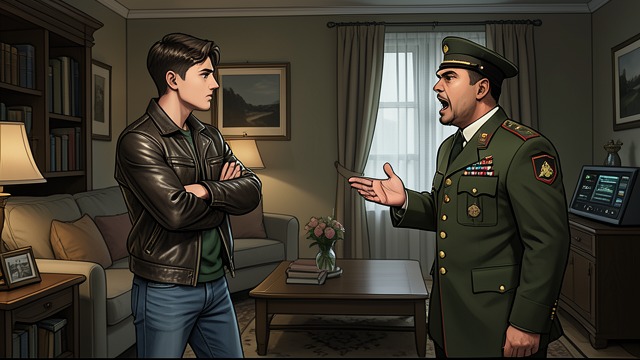
A decisive choice
The toughest friend
Joe is presented as physically fearless, sexually impulsive, and quick to prove himself in fights. In the household shared with Roy and James Lightfoot, his toughness gives the group a clear measure of who can take and deliver a blow.
He decides to join the United States Marine Corps, despite the objections of James Lightfoot, who tries to persuade Roy to stop him. Joe’s enlistment is not treated as a carefully debated career plan; it is a bold choice made within a circle that measures adulthood through risk and action.
Friendship before departure
Joe’s decision places the narrator’s own uncertainty beside a more committed form of military departure. The narrator watches his friends move toward service while he struggles to imagine any future that feels genuinely chosen.
Joe leaves for training as the group’s familiar life continues around him. The separation begins quietly, but the war will soon make his return a matter of survival rather than a routine homecoming.
A Unit in Danger
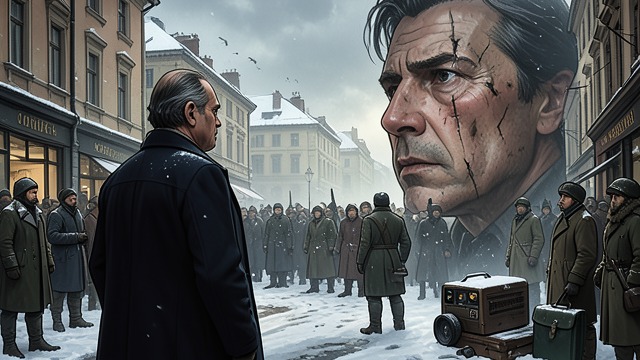
Distance makes news ominous
Casualties from home
The narrator learns through the news that Joe’s battalion has suffered a devastating week, with nineteen soldiers killed. The deaths are especially frightening because the casualties are young men from Ohio, making the distant war feel close to the narrator’s own neighborhood.
He tries to contact Joe by email but receives no answer. In the absence of direct news, the silence becomes its own source of fear.
Waiting on a friend’s word
Roy tells the narrator that Joe is still alive and uninjured. The reassurance matters, but it cannot remove the threat or restore ordinary communication between the friends.
Joe’s fate is temporarily carried through other people’s reports. His survival remains uncertain enough that the narrator has no way to experience it as safety.
The Narrator Follows
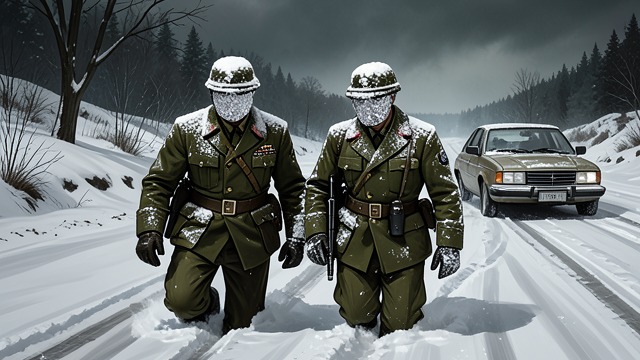
Friendship becomes imitation
Enlistment under pressure
The narrator enlists in the United States Army after telling friends he will do so. Joe’s earlier choice helps make military service seem like a path already opened within the group, even though the narrator’s motives are less settled.
The two men are not in the same service or on the same immediate route, but their choices bind their lives to the same war. The narrator’s enlistment turns the prospect of Joe’s danger into a danger he will face himself.
Separation becomes shared risk
Before the narrator leaves for training, Joe and Roy help take him to Elba so that he can spend time with Emily. The drive through snow and heavy traffic is marked by the group’s careless confidence that they will not be the ones killed.
That confidence becomes a poignant contrast to the casualty reports that follow. Joe and the narrator have entered different military tracks, but both are now exposed to a conflict that will reshape the narrator’s understanding of survival.
A Friend Lost to the Group
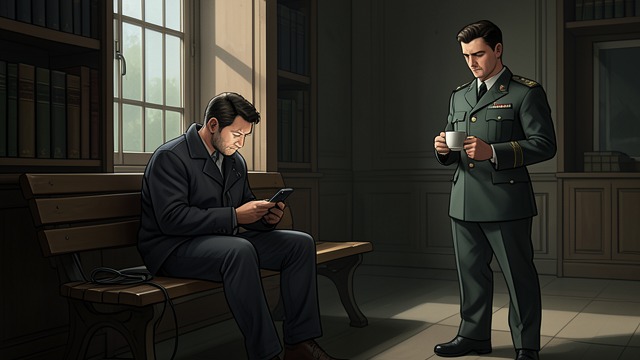
Friendship survives in memory
A changed relationship
The narrator hears from Joe again after more than a year without contact. Joe asks whether the narrator has robbed a bank, an awkward opening that brings the narrator’s criminal life into a friendship shaped by years of separation.
They do not resume the closeness of their earlier household. Their exchange is brief, and the narrator promises to call back, suggesting an intention to reconnect that has not yet become action.
The cost of drifting apart
The narrator’s memories of Joe are tied to the period before enlistment, when military service seemed like a dramatic choice and the friends believed they were tougher than they were. After the war, their lives have diverged, and the narrator is increasingly consumed by drugs and crime.
Joe remains a recognizable friend but no longer a constant presence. His reduced role in the narrator’s life registers as another loss that has happened through distance, damaged circumstances, and the narrator’s inability to maintain ordinary bonds.
A Civilian Life Interrupted
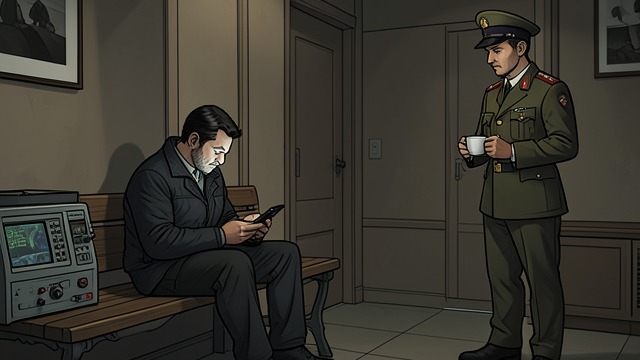
Ordinary contact grows difficult
News arrives from outside the spiral
Joe visits the narrator on Saint Patrick’s Day and tells him to slow down on drugs. He is not speaking as a distant moral authority; he is a friend who has seen enough to recognize that the narrator is damaging his life.
The narrator rejects the warning, saying drugs are the one thing he does not have a problem with. Joe answers that he wishes the narrator could hear how disturbed he sounds when he speaks.
A boundary that cannot rescue him
Joe explains that he is speaking because he cares. The narrator says he is tired of having friends, pushing away the very person trying to intervene.
Joe accepts the rejection with a final wish of good luck and leaves. The scene marks the practical limit of friendship: Joe can name the danger, but he cannot make the narrator accept help or choose a different path.
Before 2005, while Joe lives and works with the narrator’s circle
Summer 2005, while Joe’s battalion is deployed
Early 2005, shortly after Joe begins his military path
After the narrator’s return from Iraq, during the following civilian years
During the narrator’s postwar decline, before Joe’s last meaningful contact
