
Beauty Amid Violence
CherryThis thread traces how the narrator’s responsiveness to beauty persists beside brutality, gradually becoming both a source of tenderness and a measure of what war and addiction have damaged.
increasing Bearing strength in each event
 decreasing
Bearing strength in each eventdecreasingA Heart Open to Beauty
A Heart Open to Beauty
Sensitivity as Vulnerability
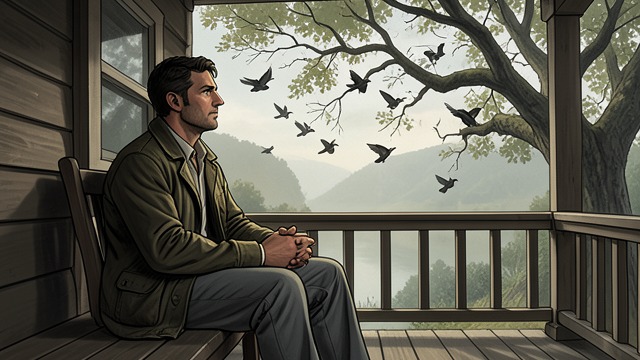
The narrator describes beauty as something that overwhelms rather than comforts him. Trees, weather, and ordinary surroundings can make his heart feel as though it might break, an intensity that sets him apart from people who seem able to move through the world without questioning it.
The First Intimacy
When he meets Emily, her voice, humor, and way of swearing captivate him. His attention to her is not merely physical: he listens to stories about her hometown and recognizes a complicated inwardness in her that attracts him.
The same openness that allows him to love her also makes him vulnerable to pain. Beauty offers no protection from betrayal or loss; it makes those possibilities feel more consequential.
The World in Passing
The World in Passing
A Fugitive’s Attention
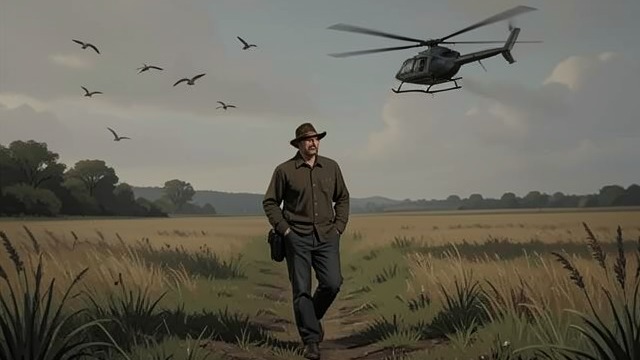
After robbing a bank, the narrator walks rather than runs, carrying stolen money and a gun while sirens approach. His attention drifts from the danger toward grass, porches, birds, and the sky, as if the world’s ordinary life remains visible even at the edge of capture.
Beauty Without Absolution
He does not mistake this perception for innocence. He knows he has robbed people, yet the beauty around him still reaches him with force, making the moment feel strangely peaceful instead of triumphant.
The scene establishes a persistent contradiction: he can recognize the loveliness of the world while taking part in its harm. Sensitivity survives, but it cannot by itself make him good or keep him safe.
A Promise Under Rotor Wash
A Promise Under Rotor Wash
First Contact with Death
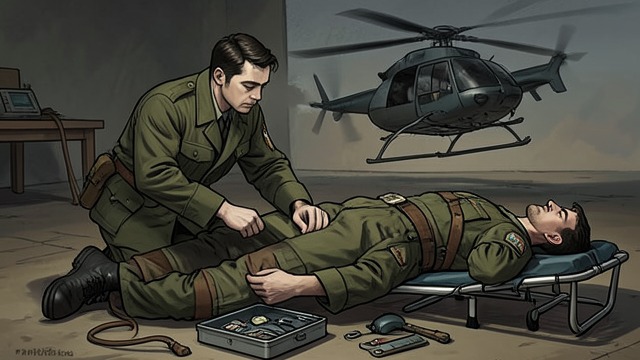
When the narrator helps carry a wounded soldier toward a medical helicopter, he meets the man’s frightened gaze and promises, “I’ll take care of you.” The words strike him as sentimental even as he speaks them, but they express a sincere impulse to make another person less alone.
Compassion Meets Limits
The narrator later learns that the wounded men have died. His confidence in his own ability to help collapses into the question of what he and the other medics failed to notice.
The promise matters because it is both humane and inadequate. In war, the desire to care for someone cannot guarantee survival; the narrator’s tenderness remains real, but it operates inside circumstances that routinely defeat it.
A Child Beside the Checkpoint
A Child Beside the Checkpoint
The Name Pépite
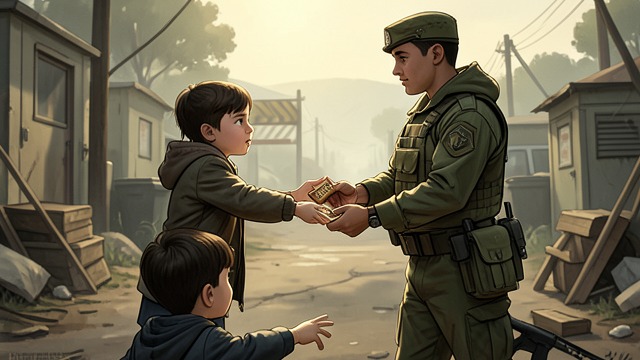
At a bridge near a checkpoint, the soldiers encounter hungry children asking for combat rations. The narrator remembers a particularly small girl, whom the unit calls Pépite, as a child whose thinness and disordered hair make her difficult to forget.
Kindness and Its Betrayal
North teases Pépite by holding a ration beyond her reach and shutting the armored door as she approaches. Later, the narrator gives her food, only to see another child strike her and take it away.
These moments expose how easily the language of protection coexists with casual cruelty. The narrator’s pity does not transform the conditions around her, but it preserves a moral distinction between recognizing another person’s need and treating that need as entertainment.
A World Still Worth Seeing

A World Still Worth Seeing
Domestic Light and Ruin
In the later addiction years, the narrator and Emily sometimes dance together in their living room after finding a supply of heroin. The dances are awkward and spontaneous, small bright intervals within a life increasingly organized around withdrawal, debt, and searching for drugs.
Beauty Without Rescue
The narrator continues to notice Emily’s face, the warmth of home, and the dog they adopted. Yet the ability to perceive tenderness does not stop their shared self-destruction; the beautiful moments are real without being a cure.
The novel refuses to make beauty a moral reward or an easy route to recovery. It remains a fragile human capacity, capable of making damaged life feel precious even when the characters cannot yet preserve it.
During the narrator’s first years at college
During the narrator’s first bank robbery, before his Iraq deployment
During the unit’s first fatal roadside-bomb response in Iraq
During the unit’s patrols to the Shiite city in Iraq
After the narrator and Emily begin living together again
