
Sonny, the Company Dog
CherryThis thread traces how a puppy adopted by Caves becomes a source of tenderness for the soldiers, then is killed by officers and deepens the narrator’s alienation from the Army.
increasing Bearing strength in each event
 decreasing
Bearing strength in each eventdecreasingA Puppy in the Company Area
A Small Life at the Base
Caves takes him in
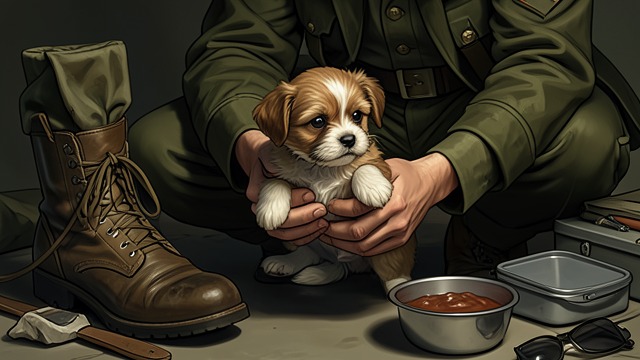
Caves finds a very young puppy wandering in the company area. The animal is small enough to fit in a palm and needs food; Caves feeds him, adopts him, and names him Sonny.
An unexpected companion
The adoption introduces a vulnerable, nonmilitary life into a base organized around patrols, weapons, and danger. Sonny is not an operational asset or a mascot imposed by command. He is a puppy whom one soldier chooses to care for.
That simple choice gives the soldiers something gentle to protect in a setting where their daily work exposes them to death and often leaves them unable to help the people around them. Sonny’s beginnings make his later fate more than a minor disciplinary incident.
The Squad Keeps Sonny
Care After Loss
The first section takes over
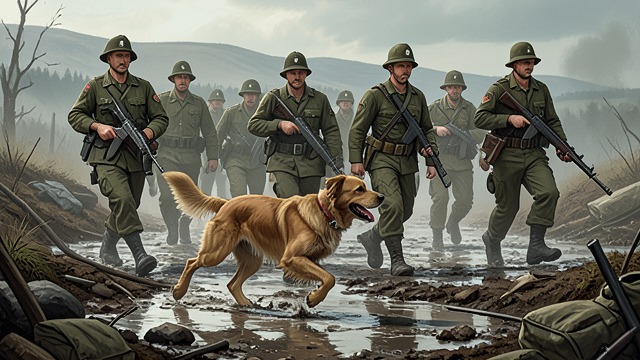
After Caves is killed, the first section continues looking after Sonny. The puppy remains at the base, and the soldiers come to like him for being both brave and gentle.
A fragile routine
During daytime foot patrols, Sonny sometimes runs alongside the soldiers, back and forth from the front of the group to the rear. His presence becomes part of the unit’s ordinary rhythm: a living companion moving through a place where the men expect sudden attacks and casualties.
The soldiers’ care does not erase their grief, but it gives them an uncomplicated responsibility. In a war shaped by orders and risk calculations, feeding and keeping a dog safe is one of the few forms of protection they can enact without pretending to control the larger conflict.
A Complaint to Command
The Dog Becomes a Problem
Teague passes the company area
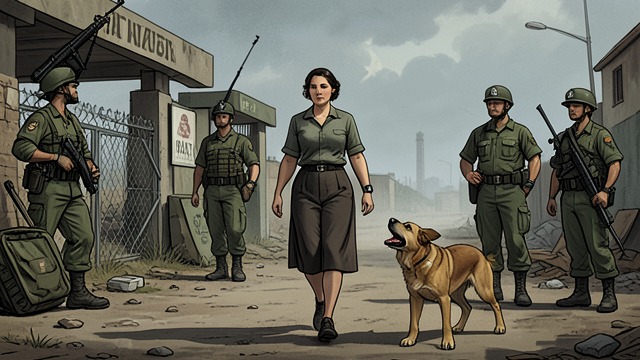
Teague, a noncombatant from another company, walks past the soldiers’ area during her morning stroll. Sonny barks at her, and she is sufficiently distressed to complain to the battalion tactical operations center.
The command response
Instead of resolving the complaint by moving Teague or managing the dog, two officers volunteer to go to Echo Company and shoot Sonny. The decision transforms an ordinary encounter—a puppy barking at a passerby—into an irreversible exercise of institutional authority.
The contrast is stark: the soldiers have treated Sonny as a companion, but the officers treat him as a nuisance that can be removed by force. The complaint is the immediate cause of the killing, while the command’s choice of solution exposes how readily life at the base is governed through blunt orders.
Sonny Is Shot
A Needless Killing
The officers approach
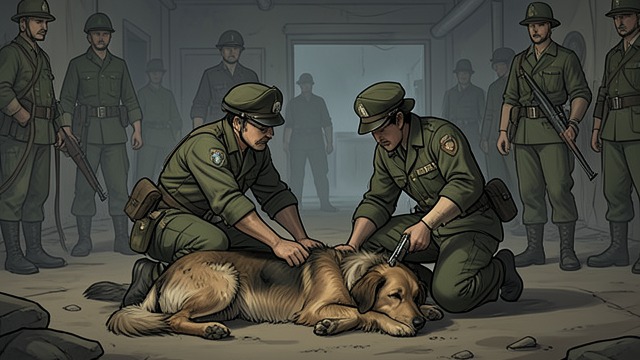
The two officers find Sonny resting in his favorite spot beneath trees near the horseshoe-pitch area. He does not run away, because he is used to soldiers and seems to expect that they have come to bring him food.
The chase and the second shot
Instead, they shoot him in the muzzle. Sonny runs and tries to hide beneath boards, so the officers have to get down on the ground to finish killing him. The narrator is not present when this happens and cannot intervene.
The killing is horrifying precisely because Sonny has no understanding of the danger. The officers arrive with the authority and equipment of the Army, while the puppy approaches them with trust. Their formal compliance with regulations does nothing to make the act feel necessary or humane.
The QRF He Refuses
Staying Behind
A call to prepare
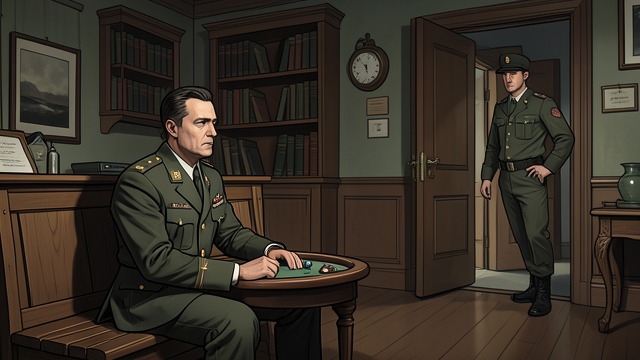
The narrator is exhausted after a night patrol and is playing poker when Arnold comes to tell him that the quick reaction force has been called. The narrator is not assigned to that shift, and he directs Arnold to find Garcia, the substitute for Shoo.
Anger and withdrawal
When Arnold hesitates, the narrator lashes out and refuses to leave the perimeter. He explains that he is not on duty and does not want to go. Garcia takes the mission instead, and the narrator remains behind, later learning that he has missed a major battle.
The refusal is not just fatigue. The Army has killed Sonny, and the narrator feels no obligation to volunteer himself for another dangerous operation on its behalf. Sonny’s death sharpens an existing estrangement: the narrator’s decision is both a personal limit and a rejection of the institution’s claim on his loyalty.
About a month before Caves is killed in Iraq
After Caves is killed on Route Polk
Several weeks after Caves’s death
One morning during the narrator’s deployment in Iraq
The day after Sonny is killed
