
War as a Theatrical Enterprise
CherryThis thread follows the gap between military performance and actual warfare, as the narrator moves from enlistment rituals through battlefield confusion to the conviction that the deployment was profoundly futile.
increasing Bearing strength in each event
 decreasing
Bearing strength in each eventdecreasingChoosing a Script
Choosing a Script
An Answer Without a Plan
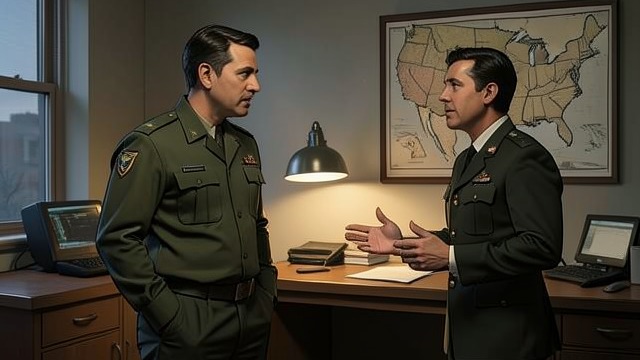
The narrator enlists in the United States Army after drifting through college, low-paid work, and drug dealing without a clear sense of what to do next. Military recruiters turn his uncertainty into an apparently practical decision, presenting training, benefits, and a specialty as a ready-made future.
The Convenient Promise
He believes he may remain near Ohio and return home often. The assurances make enlistment seem less like a commitment to war than a route to structure, education funding, and a tolerable life.
The choice begins the novel’s inquiry into performance: the narrator accepts a role before understanding what it demands. His uncertainty is not resolved so much as given a uniform and a schedule.
The Army’s Rehearsal
The Army’s Rehearsal
Manufactured Authority
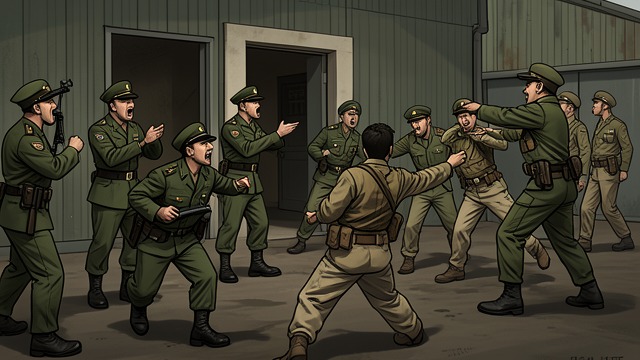
At Fort Leonard Wood and later Fort Sam Houston, instructors use shouted commands, punishments, slogans, and staged emergencies to produce disciplined soldiers. The narrator sees how much of the institution depends on everyone acting as though its rituals are self-evident and its authority unquestionable.
A Role Called Warrior Medic
He is trained to treat simulated injuries, recite procedures, and accept the identity of a Warrior Medic. Yet he repeatedly doubts his competence, and the exercises cannot prepare him for the human consequences of real casualties.
The training’s theatricality is not harmless: it teaches obedience while disguising uncertainty as confidence. The narrator learns the gestures of a role whose real meaning will emerge only after deployment.
The Illusion of Control
The Illusion of Control
Orders and Contradictions
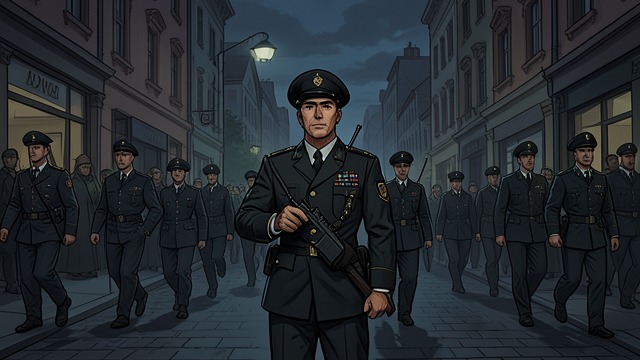
Once deployed, the narrator’s unit patrols within rules shaped by ceasefires, curfews, and restrictions on entering the city. Soldiers are expected to protect people while sometimes ordered to shoot those who remain outside after dark; armed power is vast, but freedom of action is narrow.
A Peace That Is Not Peace
The unit’s mission shifts between escorting, guarding, searching, and waiting. In the Shiite city, the Mahdi militia holds practical power, while American soldiers and Iraqi institutions operate under uneasy arrangements.
The gap between mission language and actual authority becomes impossible to ignore. The deployment promises control, yet the soldiers often cannot explain what they control, whom they protect, or what lasting purpose their presence serves.
Friendly Fire in the Dark
Friendly Fire in the Dark
A Search Turns Inward
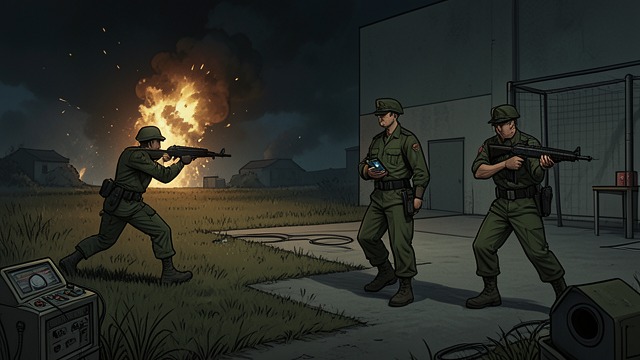
A night operation to locate missing paratroopers is nearly derailed when Jeffries gives an erroneous radio report that brings an airstrike close to friendly soldiers. The narrator witnesses how a single mistake, amplified through the chain of command, can transform supposedly coordinated forces into potential threats to one another.
Violence Without an Enemy
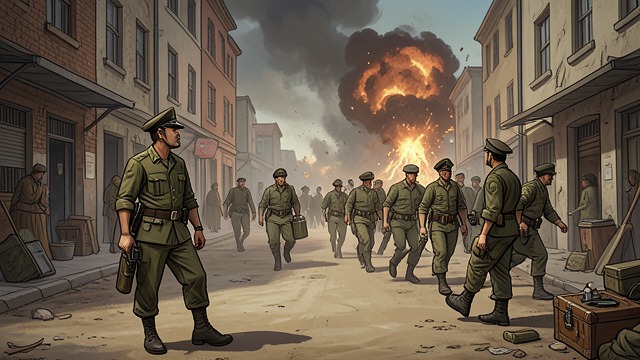
Later, soldiers from two American infantry companies mistake each other’s shots for enemy fire and exchange gunfire. In the confusion, an interpreter places an explosive device inside a gym, adding another layer of danger to a scene already shaped by misidentification.
The episodes strip the war of clean dramatic boundaries. Technology, hierarchy, and weapons do not guarantee clarity; the machinery meant to organize violence can turn it back on the people operating it.
The Empty Aftermath
The Empty Aftermath
Repetition Without Progress
The narrator describes patrols, raids, roadside bombs, and replacement soldiers arriving after deaths. Grandly named operations promise decisive movement, but often amount to more doors kicked open, more roadside hazards, and more hours spent waiting for the next attack.
A Retrospective Verdict
By autumn, he sees the unit as expendable infantry sent to look busy, absorb bomb attacks, and keep moving through a landscape whose political outcome remains beyond its control. He does not present this as a single revelation; exhaustion and accumulated losses make the judgment unavoidable.
The war’s theatrical quality is therefore also a critique of its human cost. The soldiers perform purpose under conditions that repeatedly deny them a meaningful result, and survival itself can look less like achievement than luck.
Early 2005, before the narrator’s basic training
During basic training and medical training in 2005
During the first months at the Iraqi forward base
During the nighttime search for missing paratroopers
During the final months of the narrator’s Iraq deployment
