
Pépite at the Bridge
CherryThis thread follows the narrator’s repeated encounters with Pépite, a malnourished child begging near a military crossing, as his small gestures of generosity meet indifference and violence.
increasing Bearing strength in each event
 decreasing
Bearing strength in each eventdecreasingThe Child at the Checkpoint
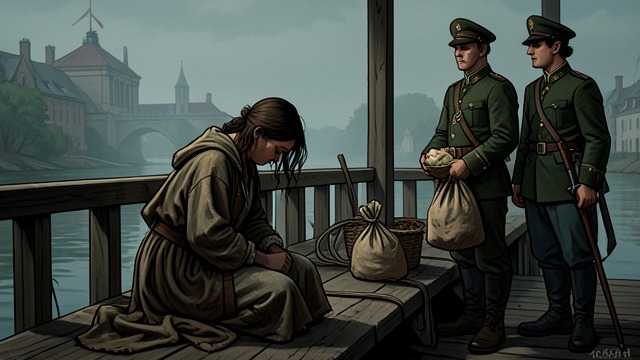
A Child at the Crossing
The route through the city
The unit travels by road toward a large Shiite city, crossing a river on a temporary floating bridge because the original bridge was destroyed during the invasion. Soldiers from Bravo guard the crossing, where children gather to beg for combat rations.
A distinctive figure
Among the barefoot, thin boys is a girl the soldiers see from time to time. She appears to be around seven or eight, though malnutrition makes her age difficult to judge. Her tangled brown hair and rough dress make her conspicuous even among children living in deprivation.
The narrator and the soldiers call her Pépite. The nickname gives her a place in the soldiers’ shared vocabulary, but it does not change the conditions that bring her to the bridge: she waits near armed strangers in the hope of getting food.
A Nickname at the Bridge
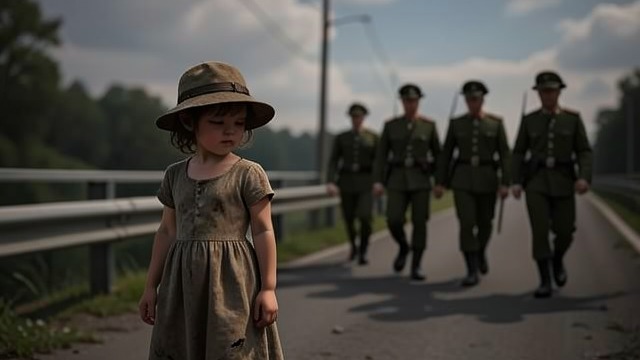
Familiarity Without Safety
Repeated sightings
The soldiers regularly pass the bridge while traveling between their base and the police station in the city. Pépite is sometimes there with the other children, asking the soldiers for rations.
A child turned into a landmark
Because the crossings recur, the soldiers begin to recognize her. The nickname makes her seem familiar to them, a small point of continuity in an environment where patrol routes, checkpoints, and threats are otherwise difficult to distinguish.
But recognition is not protection. Pépite remains on the roadside, dependent on whatever food a passing soldier may choose to give her and exposed to the other children who compete for the same scraps. Her thread develops through brief encounters rather than through any power to change her situation.
North’s Cruel Joke
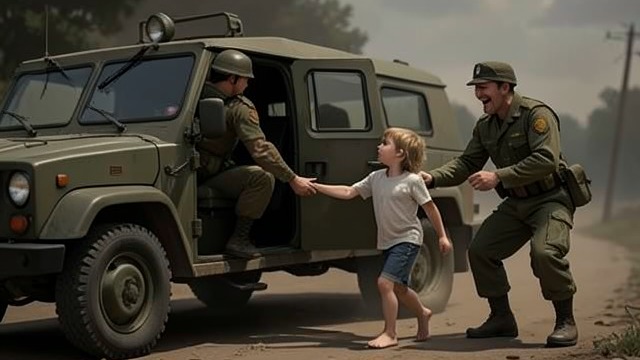
Food Withheld
An apparent offer
On the way back across the bridge, North notices the children and Pépite. He opens his armored vehicle door and holds out a combat ration, making a gesture that draws her toward him.
A gesture of humiliation
As Pépite hurries over to take the food, North pulls it out of reach, closes the armored door, and laughs. The soldiers return to the base without giving her the meal.
The act is small in material terms and revealing in moral ones. North has food, protection, and control of the encounter; Pépite has only the hope that the offered ration is real. His joke converts a child’s hunger into entertainment for an armed adult.
The Narrator Offers a Ration
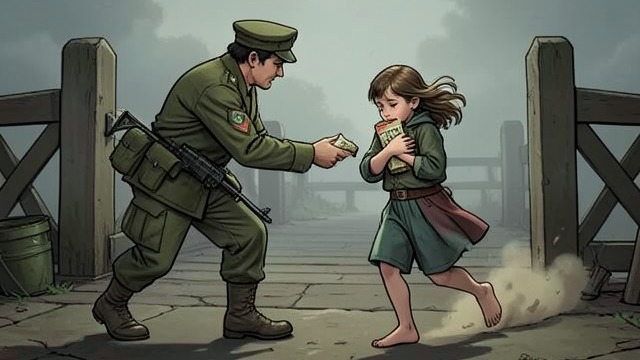
A Meal Given Freely
The end of the vigil
After the soldiers spend Ashura security duty near the city, they return over the bridge. The narrator sees Pépite and the barefoot children again, at the same crossing where they have repeatedly begged for food.
A deliberate correction
He gives Pépite a combat ration. Unlike North’s earlier feint, the offer is real; she clutches the meal to her chest and runs away with it.
For the narrator, the gesture is limited but concrete. He cannot change the ceasefire, the military restrictions, or the poverty surrounding the bridge, but in this moment he can give the child food rather than make her hunger a joke. The brief success, however, does not secure the ration for her.
The Ration Is Taken
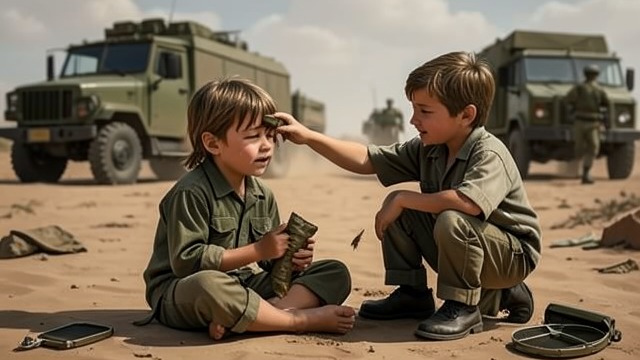
Generosity Interrupted
Another child intercepts her
As the vehicles pull away, one of the barefoot boys catches Pépite, strikes her on the head, and takes the ration she has just received. The girl is left sitting in the dust as the soldiers continue on.
The limits of a passing gesture
The narrator’s gift has briefly placed food in Pépite’s hands, but it cannot protect her from the competition and violence among children who are all hungry. The incident closes the encounter without a rescue or a resolution: the ration changes hands, while the conditions that made it valuable remain.
The episode complicates the narrator’s small act of kindness. It matters that he gave the food, but the scene refuses the comforting idea that a good intention is enough to make anyone safe.
Early in the unit’s deployment in Iraq
During recurring trips to the city police station
During a return crossing after a city patrol
On the final evening of Ashura security duty
Moments after Pépite receives the meal
