
The Narrator’s Descent and Survival
CherryThis thread traces how the narrator moves from troubled student to soldier, addict, and bank robber while repeatedly mistaking survival for recovery.
increasing Bearing strength in each event
 decreasing
Bearing strength in each eventdecreasingA Troubled Student
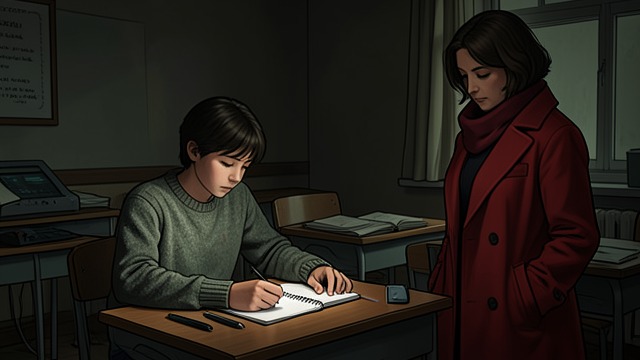
A life already coming apart
Early drift
The narrator remains in college largely because his family expects it, not because he can imagine a future there. He skips classes, sells drugs, and works at a shoe store he does not care about, moving through ordinary obligations with a persistent sense that the world is built on nothing.
His relationship with Madison Kowalski reinforces his confusion about intimacy. Even after learning that she has been unfaithful, he forgives her and continues to treat attachment as something he must endure rather than understand.
A different attachment
When he meets Emily, he is drawn to her voice, her sharpness, and the feeling that she sees through him. His attraction begins with desire, but it gradually becomes a need for her presence and reassurance.
He is not yet able to name the danger in his habits. Drug use, shame, and emotional dependence are already shaping his choices, but he still imagines that affection might give those choices a direction.
Choosing the Army
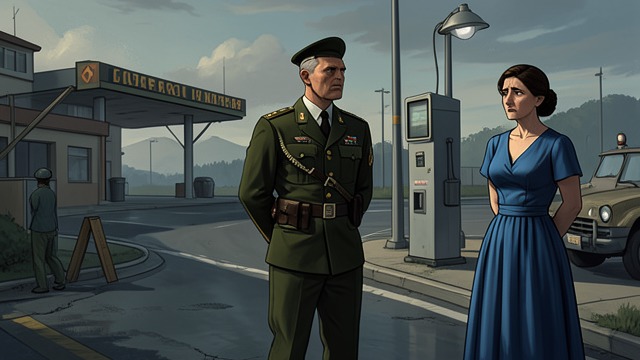
An escape disguised as a plan
A decision without conviction
After college collapses and work offers no meaningful alternative, the narrator tells people he will enlist. His decision is less a declaration of purpose than a way to stop facing the question of what else he might do.
His parents challenge the plan, but he cannot produce a more persuasive future for himself. He accepts the recruiter’s assurances, chooses a medical specialty, and signs a contract despite knowing that the war is already costing young soldiers their lives.
The first separation
The narrator spends his final civilian days with Emily in Elba, aware that leaving her is wrong for him even as he continues toward enlistment. Their closeness makes the coming separation feel like a loss he has chosen without understanding its scale.
At Fort Leonard Wood, the Army turns his uncertain decision into a routine of orders, inspections, and enforced performance. He learns to imitate the role of a soldier, while the underlying reasons he enlisted remain unresolved.
A War Without a Hero
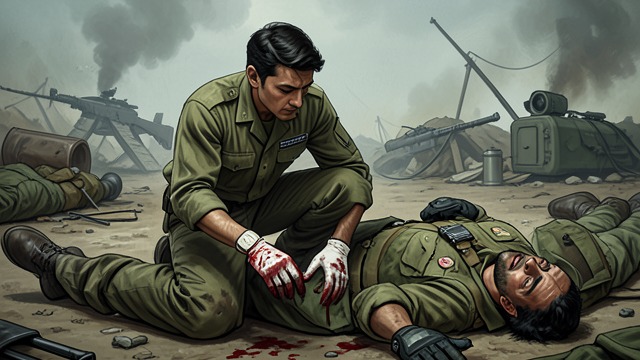
Survival becomes his assignment
The medic’s compromised role
The narrator deploys to Iraq with the 4th Infantry Division and serves as a medic attached to Echo Company. He is expected to act decisively in conditions for which his training and confidence are often inadequate, and he repeatedly fears that his mistakes will cost someone a life.
He witnesses severe injuries, failed rescues, and the deaths of soldiers around him. Jimenez’s death and the recovery of a dead Iraqi man leave him with guilt that cannot be resolved by the Army’s slogans or by the routine return to patrol.
A year of endurance
The narrator increasingly sees the deployment as futile: patrols, raids, and elaborate operational names produce little sense of progress, while improvised bombs keep killing soldiers. His growing exhaustion makes him feel less like a combatant than a frightened person waiting for the next disaster.
When his tour ends, he returns alive but does not experience survival as a clean victory. He has learned to function under threat, yet the habits and memories formed in Iraq follow him home, where no military routine can contain them.
The Homecoming Collapse
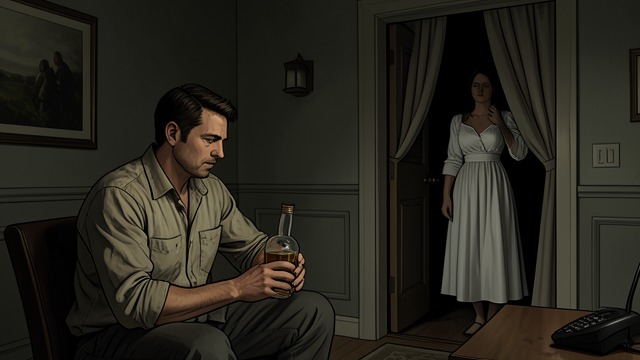
Returning without recovering
The marriage breaks apart
Back in Texas, the narrator drinks heavily and feels detached from the people and routines around him. His marriage to Emily, already strained by distance, mistrust, and infidelity, cannot become the stable home he had imagined while deployed.
The narrator’s suspicion and emotional volatility turn their conversations into accusations. Emily eventually wants a divorce, and he leaves the Army carrying both the loss of the relationship and the conviction that he has failed to become the person he was supposed to be.
Civilian life offers no reset
The narrator returns to Ohio, resumes college intermittently, and moves through the Army National Guard without finding a durable sense of belonging. He uses OxyContin and cocaine to manage distress, while avoiding the people and institutions that might help him confront it.
His survival after the war becomes a new kind of danger: he is no longer exposed to combat, but he is increasingly unable to live outside the cycles of intoxication, shame, and self-neglect. Leaving the Army ends his service, not the damage that service has left behind.
Addiction and the Bank Robberies
Survival becomes compulsion
A shared downward spiral
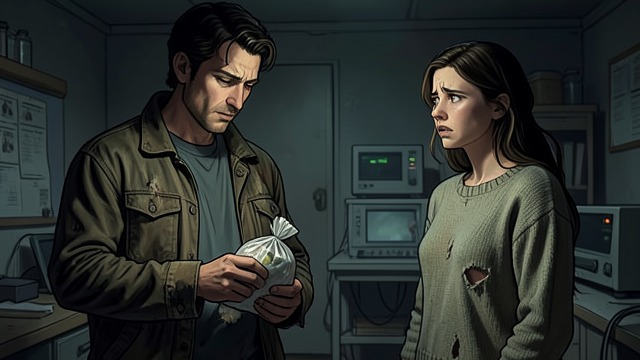
The narrator reconnects with Emily, and they eventually live together while both become dependent on heroin. Their life narrows to finding drugs, managing withdrawal, and preserving the next dose; even adopting Livinia does not make them stop.
As money runs short, the narrator begins robbing banks. The crimes initially appear to him as practical answers to immediate need, but each robbery deepens his exposure to arrest and violence while leaving the addiction untouched.
No decisive escape
The narrator and Emily try to quit, then relapse under the pressure of withdrawal and the belief that they need one more supply to get through. His criminal partnerships bring further betrayals and losses, and he becomes increasingly willing to treat danger as an ordinary cost of staying supplied.
The novel ends with the narrator still preparing to inject heroin rather than reaching a settled recovery or a final punishment. His fate remains suspended in the repetitive machinery of dependency: he is alive, but survival has become another interval before the next crisis.
Around 2003, during his first years at college
Early 2005, before leaving for basic training
2005–2006, from deployment to the end of the Iraq tour
After returning from Iraq, during his final months in the Army
After discharge, from the return to Cleveland Heights through the final scenes
