
Burt's Protective Impulse
Children of the CornThis thread follows Burt's conflicted movement from anger and responsibility toward attempted protection of Vicky, showing how his concern is real but repeatedly compromised by pride and control.
increasing Bearing strength in each event
 decreasing
Bearing strength in each eventdecreasingAnger at the Wheel
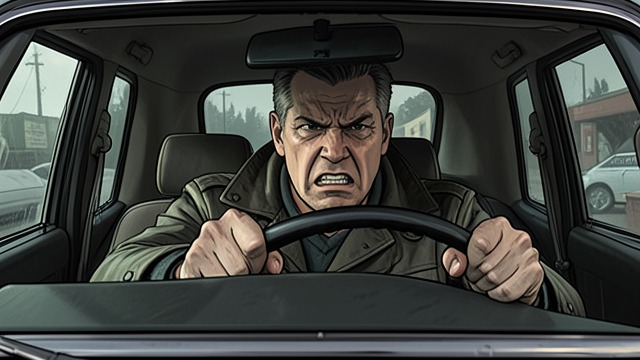
Anger at the Wheel
Resentment Takes the Lead
Burt grips the steering wheel so hard that his knuckles turn white, imagining that one hand might fly off and strike Vicky. He recognizes that they are trying to save their marriage, but his own thoughts turn the trip into a battlefield in which he feels provoked and misunderstood.
Protection Not Yet Learned
His awareness of his violent impulse does not stop him from speaking cruelly. At this point, concern for Vicky exists beside a readiness to punish her for old grievances, establishing the contradiction that will shape his later attempts to protect her.
Steadying Vicky
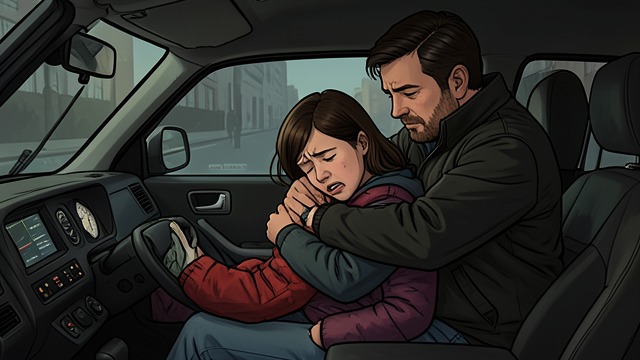
Steadying Vicky
Crisis Replaces Argument
After Burt realizes the car has hit a child, Vicky is sobbing beside the body. He puts his arms around her as she begins to sway and quietly repeats that she must not faint.
Care in the Immediate Moment
The embrace is practical as well as intimate: Burt is trying to keep Vicky conscious while both face a death they cannot undo. Their closeness is brief, but it interrupts their quarrel and shows Burt responding to her vulnerability with attention rather than accusation.
Taking Charge of the Body
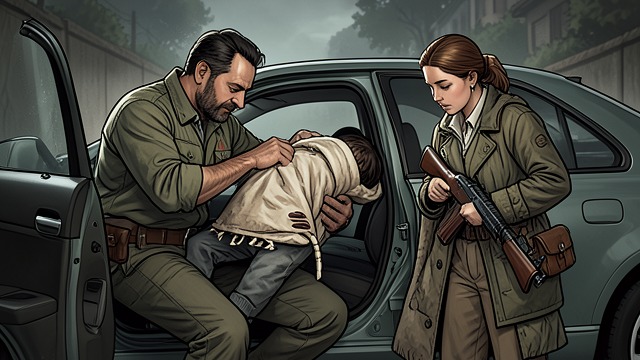
Taking Charge of the Body
Sharing the Burden
Burt asks Vicky to bring the blanket and rifle, then wraps the boy's body and lifts its weight into the car. Vicky has to take part in the grim task, but Burt carries the body and tells her to get back into the vehicle.
Protection Through Action
His instructions are shaped by the possibility that whoever killed the boy may still be nearby. In a frightening situation, he tries to turn fear into a sequence of practical steps, including keeping Vicky close and armed. Yet the same decisive manner that can offer protection also tends to override her wishes.
The Risk at the Church
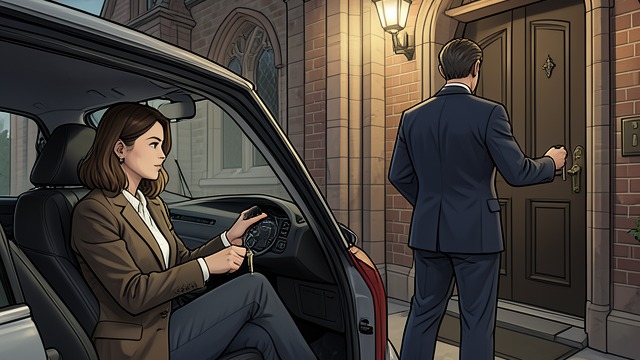
The Risk at the Church
A Choice to Investigate
Burt leaves Vicky in the car while he enters the church, despite her explicit statement that she is frightened and does not want to remain alone. He tells himself that he will be gone only briefly and takes her keys so she cannot leave.
Concern Distorted by Pride
Burt's actions reveal how easily his protective role becomes coercive. He may believe that he is keeping them together until he can find help, but his decision prevents Vicky from acting on her own fear and leaves her exposed when the attack begins.
Too Late to Protect
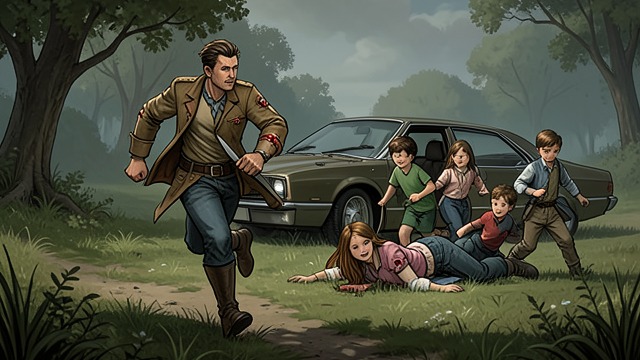
Too Late to Protect
The Attempt to Reach Her
When the children attack, Burt breaks from his paralysis and runs toward the car. A knife wounds his arm before he can reach Vicky, and the children take her away while he is forced to flee for his own life.
Grief Without Rescue
Burt eventually finds Vicky's body in the clearing. His earlier confidence that he could manage danger and keep her safe is shattered by what he sees; the emotional force comes from the gap between his urge to protect her and his inability to prevent her death.
During the argument on Route 17
Immediately after the car strikes the boy
Minutes after the roadside discovery
Shortly before the horn sounds
That evening, in the cornfield clearing
