Broccoli Bunch
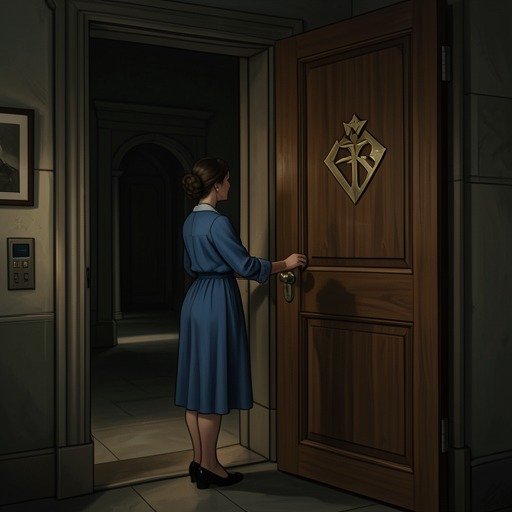
Cinnamon BunBroccoli Bunch is the central adventurer whose decisive choice is to answer the call to adventure rather than remain a passive reader of other people’s stories. An only daughter from Earth, she enters a world of dungeons, monsters, competing peoples, and system-governed classes with a temperament that favors friendship over violence. The system names her a Cinnamon Bun, a support-oriented class associated with purity, companionship, and the approval of nature. What initially appears to be a comic mismatch between a gentle class and a lethal environment becomes the foundation of her entire trajectory: Broccoli survives by cleaning what others fear, speaking when others threaten, and treating possible allies as people before treating them as obstacles.
Identity and Introduction
Broccoli’s defining impulse predates her arrival in the new world. She is described as someone who always looked for the call to adventure, whether in real life or between the pages of a book, and when her opportunity came she seized it. That formulation establishes both her longing and her vulnerability. Adventure is not merely an external assignment for her; it is an answer to an inward desire, one that makes the hazards of the new world personally meaningful even when she is unprepared for them.
Her first self-presentation is direct and disarmingly open. Facing danger, she introduces herself as Broccoli Bunch, and in another early encounter she asks whether a stranger wants to be friends. The greeting is not a temporary mask. It expresses the operating principle later recognized by her class: Broccoli is “the perfect support and friend to all,” a figure whose goodness is so pronounced that nature itself is said to smile upon her. The class description gives supernatural form to a social instinct that Broccoli already possesses, while also making that instinct strategically important in a world where trust can determine survival.
Broccoli’s own account of herself is unusually candid. She identifies herself as an only daughter of the Bunch family on Earth, calls herself a Cinnamon Bun, explains that the class is oriented toward support, and admits that she has few useful skills at first. She also acknowledges that she is poor at combat but relatively good at talking. This self-assessment prevents her gentleness from becoming mere idealization: she understands the limits imposed by her class and experience, even while refusing to regard those limits as a final definition.
Class, Skills, and Practical Growth
The Cinnamon Bun class initially gives Broccoli an identity that seems morally admirable but tactically fragile. Her first use of its associated abilities is mundane and costly: a showerhead, mop, and bucket emerge, the spray is weak, and using it rapidly drains her mana. Yet the cleaning spell is still sufficient to begin scrubbing a dungeon floor. The scene establishes the class’s characteristic reversal. Cleaning is not ornamental domestic labor detached from adventure; it is a resource-consuming action performed under threat, a way to alter hostile spaces through persistence rather than force.
The system rewards Broccoli when she performs actions aligned with the class. Repeatedly carrying out a special action unlocks Gardening, and repeating a socially oriented action enough times unlocks the general skill Friendmaking. These developments turn two activities that might be dismissed as harmless or childish into formal capabilities. The class therefore does not ask Broccoli to abandon her original nature in order to become powerful. Instead, it measures and amplifies the things she is already inclined to do.
Her advancement is cumulative and concrete. Broccoli reaches level five as the Cinnamon Bun class and later level six; at level four she is awarded the Wonderlander class as well. Arianne recognizes her specifically as a level-four Cinnamon Bun, while a later assessment identifies her as a level-seven Cinnamon Bun with a “dreary and resolute” disposition. The contrast between these assessments matters. The class remains constant, but the person inhabiting it has passed through danger, exhaustion, and responsibility. The system’s levels record progress numerically, while the changing description records the emotional cost of that progress.
Broccoli also acquires Cute through a class-aligned special action, adding another apparently soft ability to a developing repertoire. The class’s skills repeatedly blur the distinction between affection and utility. Friendmaking can create access to relationships, Gardening can produce practical support, Cute can affect social encounters, and Cleaning can confront contamination or danger. Her growth is consequently not a simple movement from weakness to conventional combat competence. It is the discovery that support, presentation, maintenance, and social intelligence can become forms of agency in their own right.
Encounters, Danger, and Key Actions
Broccoli’s entrance into the story places her gentle identity against immediate physical threat. When she introduces herself as Broccoli Bunch, ghosts are already flying toward her with arms and claws outstretched. The sequence makes her name and class inseparable from danger: her first declaration of identity is also a test of whether identity can survive contact with the hostile world.
Her relationship to Wonderland is shaped by recognition and reinterpretation. She notices a reference to Alice in Wonderland and later enters rooms decorated with red-and-black banners bearing the symbols of a heart, diamond, club, and spade. The dungeon’s design turns familiar literary imagery into an active hazard. A cake marked “Eat-Me” becomes part of Broccoli’s attempt to reach the courtroom, and the first-floor boss is Maddy the Hatter. Later, the Zombie of Cheshire appears as a level-five boss. These encounters place Broccoli inside a distorted storybook structure, but they also make her a participant who must improvise rather than a reader safely observing from outside.
Broccoli’s method remains experimental. She uses newfound jumping skills to navigate difficult mushrooms, returns toward the courtroom, and plans around the possibility of confronting the first-floor boss again. Her progress depends on learning the rules of the dungeon while acting within them. Insight is not merely an abstract talent: it is connected to her recognition that the dungeon is invoking a specific literary reference, allowing her to understand the setting as a constructed pattern rather than an undifferentiated threat.
The most severe tests expose the ethical force of her friendships. When she calls for Gunther’s help, she is not pursuing abstract victory but trying to save a friend. Her emotional state is explicit: she insists that the person in danger must be rescued because she is her friend. That commitment persists even when Broccoli is frightened, inexperienced, and uncertain how strong she must become. Her stated desire is to learn how strong she needs to be to carry out her dreams, so strength is presented as a means of protection and fulfillment rather than as a value detached from human bonds.
Relationships and Moral Orientation
Broccoli approaches relationships as active commitments. Her first instinct is to ask for friendship, and the later unlocking of Friendmaking gives mechanical confirmation to a pattern already visible in her conduct. She introduces Orange Bunch as a spirit kitten companion who is not yet strong in combat but provides excellent comfort. The description places emotional care beside tactical weakness without treating the former as trivial. Orange is valuable because companionship itself is part of the support structure Broccoli is building.
Her encounters widen that structure across species and social boundaries. She meets frog people, then continues moving through a world in which undeath, monsters, dungeons, and unfamiliar peoples are not simply categories to eliminate. The account of Gunther’s traveling group explains that classes associated with undeath are poorly regarded, either because of superstition or because death mana can damage a region if left too long. Broccoli’s presence alongside such figures underscores her willingness to look beyond inherited reputations. Her class’s promise to be a friend to all is therefore tested against actual stigma rather than left as a sentimental slogan.
The rescue crisis crystallizes Broccoli’s relational ethics. She seeks Gunther by name, knocks on his door, and asks for help; when questioned about her resolve, she refuses to retreat from the obligation to save her friend. Later, a cervid assessment identifies her as a level-seven Cinnamon Bun whose disposition is both dreary and resolute. The pairing captures her development: distress has not disappeared, but it has been disciplined into determination. Broccoli does not become fearless. She becomes willing to act while afraid.
Her approach to teamwork is also practical. When asked how she fights, moves, and positions herself on a team, the question frames her not as a solitary champion but as a participant whose value depends on coordination. This is consistent with her self-description as a support class and with the narrative’s repeated emphasis on friendship, assistance, and shared action. Broccoli’s power is relational even when the system records it as a level, skill, or class.
Change and Narrative Role
Broccoli’s arc moves from eager outsider to tested adventurer without discarding the innocence that first distinguishes her. Early scenes emphasize the enthusiastic girl who wants adventure, introduces herself to strangers, and receives a class that calls her pure. Later scenes place the same figure in mud up to her chin, among the smell of abominations, and in situations where she must summon help under extreme pressure. The contrast does not cancel the earlier idealism. It demonstrates its cost.
Cleaning provides the clearest image of that transformation. At first, Broccoli’s cleaning magic is weak, mana-hungry, and almost absurd beside the dangers around her. Yet the act of scrubbing becomes a repeatable intervention, and the wider evidence associates her with dirt, mud, corpses, undeath, and other forms of contamination. She repeatedly enters spaces that violate the class’s aura of purity, then responds not by pretending pollution is absent but by confronting it directly. Her goodness is therefore active rather than untouched: purity becomes labor, endurance, and sometimes a force capable of changing the conditions of a place.
The numbers chart a parallel movement. Broccoli begins as a level-four Cinnamon Bun, reaches level five and level six, receives the Wonderlander class, and is later assessed at level seven with a resolute disposition. Her identity expands without being replaced. The Wonderlander designation connects her to the dungeon’s literary world, but the Cinnamon Bun remains the essential through-line, preserving the support-and-friendship orientation that governs her choices.
Broccoli’s narrative significance lies in this inversion of the expected adventurer. She is not introduced as a warrior whose compassion is a secondary virtue; she is introduced as a compassionate support figure whose ordinary-seeming actions become the basis of adventure. Her class makes friendship, gardening, cuteness, and cleaning legible as progression. Her journey consequently asks how a person can become stronger without becoming less recognizable to herself. Broccoli’s answer is not to outgrow gentleness, but to make gentleness durable enough to enter haunted dungeons, survive storybook bosses, cross social boundaries, and keep moving toward the people she has chosen to protect.