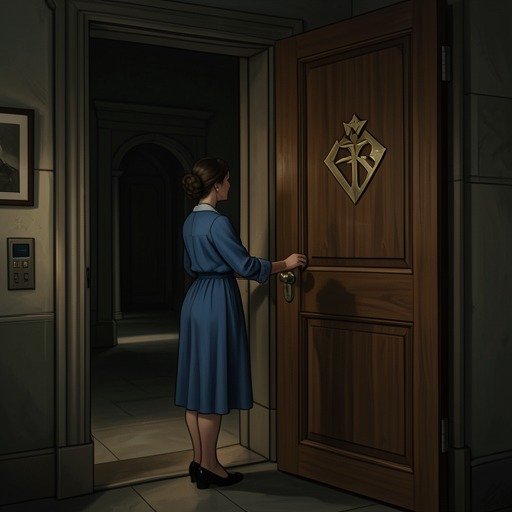
Dungeon Core Destruction Prohibition
Cinnamon BunThe Dungeon Core Destruction Prohibition forbids the destruction of a dungeon’s core and defines core-breaking as an offense against the world itself. The rule is significant because dungeons are not merely hazardous ruins or sources of treasure: they generate clean mana, sustain the surrounding environment, and attract dungeon bosses whose classes form part of the world’s larger order. Breaking a core therefore destroys more than a building. It interrupts a source of life-supporting magic, leaves the region damaged, and places the breaker under the world’s condemnation.
Definition and Legal Status
The prohibition is explained to Broccoli Bunch after a suspected dungeon destruction becomes part of his exchange with Leonard Chand’nuit and Arianne. Leonard identifies the “evil hole” Broccoli has described as the likely entrance to a young dungeon and notes that a mana surge may indicate that someone destroyed it after Broccoli left. Arianne then makes the legal and moral status explicit: destroying a dungeon is “A crime of ze highest order,” and someone who breaks a core must in turn be broken because the act goes against the world’s will. The rule is thus presented not as a local regulation or a matter of property, but as a foundational prohibition enforced by a larger cosmic authority.
The language of punishment gives the law an almost religious character. The world is treated as an active moral power whose will can be opposed and whose order can be violated. Core-breaking is not excused by ignorance, profit, or convenience; it is placed in the category of offenses for which retribution is structurally required. This makes the prohibition one of the clearest points at which the setting’s leveling and dungeon mechanics become an ethical system rather than a neutral game interface.
Why Dungeons Must Survive
Arianne’s explanation supplies the environmental basis for the prohibition. The world needs mana to sustain itself, although regions without mana can still support life. Life in such places is made more difficult: injuries heal more slowly, people die younger, and they produce fewer offspring. Dungeons compensate for this scarcity by bringing large quantities of clean mana into an area. Their presence therefore affects health, longevity, reproduction, and the long-term habitability of a region.
This account changes the apparent value of a dungeon. To an adventurer, a dungeon may look like a dangerous opportunity for experience, treasure, or a class. To the wider world, it is a mana-producing institution embedded in the environment. The prohibition protects an ecological resource whose benefits extend beyond the explorers who enter it. The law’s severity follows from that collective dependence: breaking a core deprives an entire area of a stabilizing source of clean mana and converts a private act of violence into public damage.
The system’s other forms of feedback reinforce the same world view. A quest announces that a great evil has set its root in the world and calls Broccoli to save it; performing a Special Action consistent with his Cinnamon Bun class unlocks Cleaning; killing three Sentinel Ghosts above his level grants bonus experience; and repeating a socially constructive action unlocks the general skill Friendmaking. These rewards make the world’s values executable. Actions are not merely described as useful or virtuous; they are recognized, measured, and converted into advancement. Against that background, the core-destruction prohibition reads as the negative counterpart to the reward system: the world grants progression for aligned action and reserves ultimate condemnation for an act that violates its sustaining order.
Ruined Dungeons and Visible Consequences
The rule becomes concrete through the ruined site near Threewells. A guard tells Broccoli that divers recently visited the place and returned startled, having found nothing worth looting. The absence of treasure is explained by the site’s history: it used to be a dungeon before “some filzy dog broke its core.” The guard adds that the world has cursed the culprit and that the area has bad air, even though most monsters know better than to remain there.
This description gives the prohibition a material aftermath. A destroyed core does not leave behind an ordinary abandoned dungeon waiting to be searched. It produces a contaminated, impoverished zone in which the expected rewards have vanished and the air itself has become dangerous. The area’s emptiness is therefore evidence of the law’s practical logic. Dungeon destruction removes the attraction that would draw adventurers and monsters, while the resulting environmental damage remains as a warning.
The same rule is foreshadowed in the Wonderland Dungeon. Broccoli discovers the Dungeon Core alongside an Evil Root and learns through a quest update that he is too weak to destroy the root directly. The instruction is to break the core and let the root starve. Although the command offers a direct solution to the immediate threat, Broccoli recognizes that it sounds dangerously risky. The scene places survival advice and the prohibition in direct tension: the system presents core-breaking as the available means of defeating the Evil Root, while the wider setting establishes that breaking a core is an act punishable as the highest crime.
The completion notice that follows—“The world thanks you for your sacrifice!”—complicates the rule still further. The system can frame a dangerous intervention as a sacrifice made for the world, and its quest structure can reward Broccoli for completing it, even while ordinary authorities describe core destruction as a crime against the world’s will. The contrast suggests that the menu’s immediate quest logic and the broader legal order are not interchangeable. A choice can be necessary within one emergency and still remain cosmologically perilous.
Enforcement and Narrative Function
The prohibition establishes the stakes of dungeon exploration before Broccoli fully understands them. Dungeon sites are places of danger, but they are also protected structures whose destruction can make the surrounding land unhealthy and trigger a curse. Explorers must therefore distinguish between clearing monsters, investigating a ruin, and destroying the core that gives a dungeon its identity and ecological function.
The law also converts mystery into responsibility. When Leonard proposes that someone may have destroyed the young dungeon after Broccoli’s departure, the question is no longer simply who removed a source of adventure. It becomes a question of criminal agency, environmental harm, and opposition to the world’s will. The ruined dungeon near Threewells similarly carries a hidden history: its lack of loot, bad air, and monster absence are all traces of an earlier violation.
For Broccoli, the prohibition is especially consequential because he experiences the dungeon system through floating prompts, quests, skills, and rewards. The interface encourages him to treat the world as legible through actions and outcomes, yet the core-destruction rule warns that not every mechanically available action is ethically or legally safe. Its function is to interrupt simplistic game logic. A core may be breakable, and a quest may even instruct someone to break it, but the setting insists that such an act carries consequences beyond immediate victory.
The Dungeon Core Destruction Prohibition therefore binds together law, ecology, religion, and game-like progression. It explains why destroyed dungeons become cursed and uninhabitable, why dungeon cores are protected with exceptional severity, and why the world’s reward messages cannot be read as a complete moral guide. In a setting where Cleaning, combat, Friendmaking, and quest completion all generate visible advancement, the prohibition marks the boundary that advancement must not casually cross: the destruction of a dungeon is the destruction of one of the world’s means of sustaining life, and the world treats that loss as an offense against its own continuing existence.