Exploration Guild
Cinnamon BunThe Exploration Guild is the principal institutional framework for organized exploration in the events surrounding Broccoli Bunch. It turns dangerous travel, scouting, monster encounters, and the reporting of discoveries into missions with recognized objectives, while also revealing how much such an institution depends on trustworthy administration. Its public purpose is discovery, but its crisis exposes a sharp tension between formal procedure and the people whose work makes the Guild’s knowledge possible.
Nature and Mandate
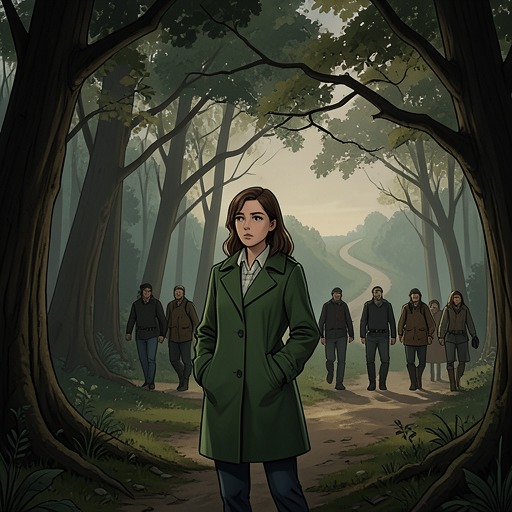
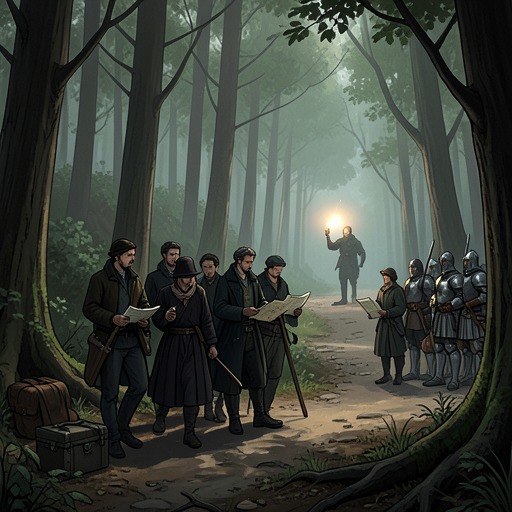
The Guild’s work is structured around missions rather than aimless wandering. Amaryllis describes her assignment as a straightforward order to scout the area around Fort Frogger, north-east of Deepmarsh, and then return toward Green Hold to report the results. The Exploration Guild therefore functions as a coordinating body: it defines objectives, sends out teams, expects information in return, and provides an official setting in which completed expeditions can be recognized.
Its institutional ideal is also connected to discovery itself. When Mathide insists that the Guild is good at one thing, she identifies that strength as discovering things. The claim is more than a slogan. The Guild’s identity rests on converting uncertain frontier conditions into usable knowledge, whether the subject is a fort, a route, a monster threat, or a disturbance affecting its members. Yet the organization’s capacity to discover is placed under pressure when the person arranging missions disappears and the Guild must investigate its own internal failures.
Missions, Reports, and Public Recognition
The Guild expects an expedition to return through an established chain of accountability. Amaryllis’s team was sent to Fort Frogger, completed its objective, and began the journey back to Green Hold specifically to report. That return is not treated as a private conclusion to an adventure; it is part of the mission’s institutional completion. The Guild needs returning explorers to bring information back into its administrative center.
The organization also maintains ceremonial expectations alongside practical ones. Amaryllis points out that the director should greet a team returning from its first mission. Her anger at the absence of that welcome is therefore not merely personal irritation. The missing reception signals that the Guild’s public face is failing at the same moment its internal structure is becoming suspect. A first mission should create recognition and belonging; instead, the returning team finds neglect, unanswered questions, and a leadership vacuum.
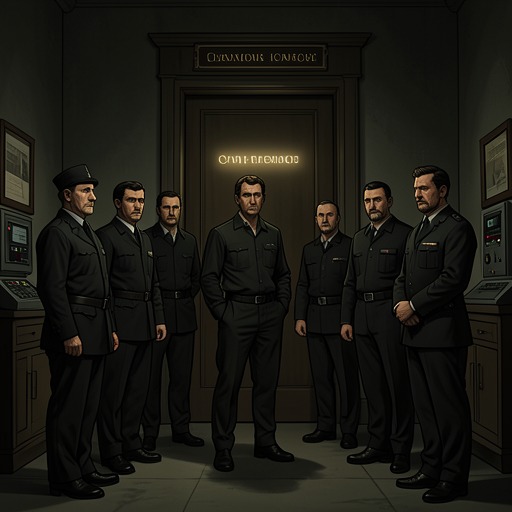
The Guild’s headquarters stands on Guild Row in Port Royal. Amaryllis leads Broccoli Bunch there after their return, moving through the city’s stairs, pipework arches, and increasingly guarded upper district before reaching the front doors. Her decision to handle the confrontation herself culminates in her kicking the door open, turning an official inquiry into a visibly forceful demand for institutional attention.
Leadership and Procedural Crisis
The crisis centers on Rainnewt, who has gone missing. According to Amaryllis, Rainnewt accepted Broccoli Bunch as a member without following the proper channels and arranged the missions. His disappearance therefore creates two connected problems: the Guild’s membership records and procedures have been bypassed, and the person who exercised operational authority outside those procedures is no longer available to answer for it.
Mathide responds by treating Broccoli Bunch as a possible administrative problem. She tells Amaryllis that what Gabriel reported is concerning and asks for Amaryllis’s version of events, indicating that the Guild is attempting to distinguish accusation from testimony. Amaryllis, however, says that Mathide believes Rainnewt was a troublemaker while also explaining that the Guild’s leadership wants to remove Broccoli Bunch even though Broccoli Bunch has done more than anyone else to correct the consequences of the Guild’s own mistakes.
This dispute reveals a conflict between formal legitimacy and substantive service. Broccoli Bunch’s admission is irregular, so exclusion can be justified as procedural enforcement. At the same time, the same irregularly admitted explorer has acted effectively enough to prevent or repair institutional failures. The Guild must decide whether membership rules exist to protect the organization’s integrity or whether they have become a reason to punish the person who proved most useful under dangerous conditions.
People and Internal Structure
The Guild’s authority is distributed among several recognizable roles. Rainnewt appears as the missing director or mission-arranger whose decisions have shaped Broccoli Bunch’s participation. Mathide acts as an investigating authority and speaks for institutional caution, demanding an account of the mission and warning that the organization will get to the bottom of the matter. Abraham and Raynold represent another part of the Guild’s adventuring culture: they bicker over the damage done to equipment while also discussing the success of their own mission and the Screaming Mountains.
The contrast between Mathide’s scrutiny and Abraham’s rough humor suggests that the Guild is not a single uniform voice. It contains administrators, mission personnel, and experienced adventurers whose attitudes toward risk and responsibility differ. Abraham’s exchange with Raynold shows a culture in which reckless-looking behavior can coexist with successful fieldwork, while Mathide’s questioning shows that success does not erase the need for explanation. The Guild’s internal life therefore joins practical competence to continual argument over who is authorized to define a successful expedition.
Amaryllis is both subject and critic of this structure. She reports the mission in precise terms, challenges the proposed expulsion, and openly condemns the idea that Broccoli Bunch should be removed after compensating for the Guild’s errors. Her defense makes the organization’s contradiction explicit: it needs explorers willing to act in unstable circumstances, but its officials may distrust the irregular paths by which those explorers enter its ranks.
Significance and Development
The Exploration Guild is significant because it gives the book’s adventuring world an institutional memory. Quests and discoveries do not remain isolated personal experiences; they are supposed to be assigned, completed, reported, and absorbed into a larger network of knowledge. The Guild’s headquarters, missions, and returning teams make exploration a social process rather than merely an individual contest of strength.
At the same time, the Guild becomes a test of whether institutions can recognize the value of relationships and actions that do not begin within approved channels. Broccoli Bunch’s first contact with the wider world includes system-generated quests, skill rewards for actions such as Cleaning and Friendmaking, and dangerous objectives involving the Wonderland Dungeon. The Guild offers a human and organizational counterpart to that impersonal system: it also assigns tasks, records achievement, and distributes belonging, but its judgments are vulnerable to missing leaders, incomplete reports, and fear of procedural breach.
The immediate outcome is unresolved rather than triumphant. Mathide promises to investigate, while Amaryllis maintains that Rainnewt should be held responsible for arranging the missions and attempting to have her kidnapped, not that Broccoli Bunch should bear the institutional blame. Broccoli Bunch responds with an offer of friendship rather than resentment, suggesting that the Guild’s future may depend on turning disciplinary suspicion into cooperation. Its crisis thus defines the organization as both a gateway into collective adventure and a fragile authority that must learn to reconcile proper channels with the realities discovered in the field.