General Skills
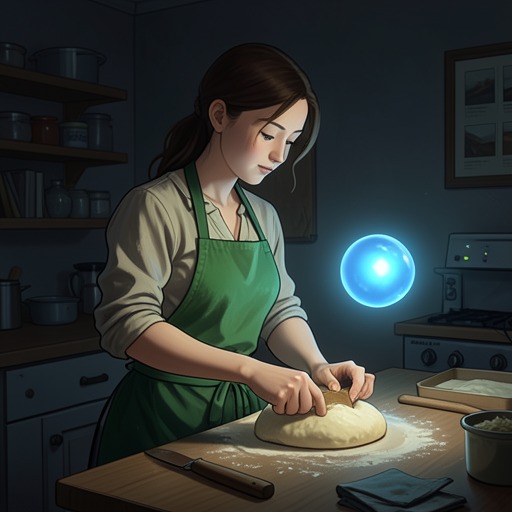
Cinnamon BunGeneral Skills are abilities that do not have to belong to a character’s class, allowing the holder to develop powers outside the normal boundaries of class-based progression. Their importance lies not merely in versatility: because access to General Skill Points is exceptionally restricted, these skills create a separate economy of strength, opportunity, and danger within the world’s leveling system.
Definition and Limits
General Skills are distinct from class skills while remaining part of the same broader progression structure. A person may acquire an ability that is not included in the person’s class, which means that class identity does not completely determine what someone can learn. The protagonist’s own development demonstrates this possibility through Cleaning, which is first unlocked after a Special Action performed in accordance with the Cinnamon Bun class, and later through the General Skill Physical Manakinesis.
The system places a firm limit on the number of General Skills a person can possess. Amaryllis explains that a character can initially have five General Skills, with another five becoming available when the character reaches the class bottleneck. This makes the category expandable but not unlimited. The restriction also gives every selection weight: acquiring a General Skill is not equivalent to collecting an endless list of convenient abilities, but involves using scarce space within a defined progression track.
Points, Ranks, and Accelerated Growth
General Skill Points are even rarer than the skills they support. Amaryllis states that characters cannot normally obtain General Skill Points and that they come from doing something for the World. The protagonist possesses only two, yet Amaryllis warns that even this small number could make the protagonist a target. Her explanation places the points among the world’s most dangerous forms of personal capital: killing someone who has them allows the victor to take the points for themselves.
The people who possess General Skill Points are correspondingly unusual. Amaryllis identifies dungeon core breakers, champions who have performed extraordinary deeds, and people who receive exceptionally rare quests as possible holders. Dungeon core breakers are treated as fair game, while champions are generally powerful enough that killing them for their points is not worth the trouble. During wars, however, such champions become deliberate targets, turning a leveling resource into a military and political liability.
The value of General Skills also depends on rank. At Rank D, Jumping makes the protagonist better at jumping and improves timing and balance, while Cleaning makes cleaning more efficient; both remain within ordinary human limits, though aided by the system. At Rank C, the abilities become magical rather than merely enhanced versions of natural competence. General Skill Points therefore do more than unlock variety. A person with many points can raise several skills quickly, reach higher ranks in a short time, and become substantially stronger at an accelerated pace.
Development Through the Plot
The system repeatedly presents growth as a response to action. A quest initially calls the protagonist to save the world after announcing that a great evil has set its root in it. Later, performing a class-aligned Special Action unlocks Cleaning, and repeated use of another Special Action eventually unlocks the General Skill Friendmaking. These notifications establish that General Skills are connected to behavior, repetition, and system-recognized achievement rather than being purely abstract possessions.
The category also intersects with quests and world-scale consequences. The protagonist discovers the Evil Root and receives a quest update stating that the root cannot yet be destroyed directly; instead, the protagonist must break the core and let the root starve. After the task is completed, the system declares that the World thanks the protagonist for the sacrifice. Although this reward is not identified as a General Skill Point, the episode clarifies the kind of world-serving accomplishment that Amaryllis describes as a possible source of such points.
The protagonist’s later acquisition of Physical Manakinesis makes the category more unpredictable. The skill appears after a major exertion and is identified explicitly as a General Skill. Amaryllis has expected a more familiar magical ability, such as Fireball, Mana Manipulation, or Mana Shaping, but has never heard of Physical Manakinesis. Its description involves using the body as a focal point for pushing out mana, suggesting that General Skills can produce unusual combinations of personal action and magic rather than simply reproducing standard class abilities.
Narrative and Systemic Significance
General Skills function as a game-like interface through which the world evaluates conduct. The system announces quests, identifies class-aligned actions, grants abilities for repetition, awards experience for defeating enemies, and marks completion with formal declarations. In this structure, action is never merely action: it can be translated into ranks, skills, points, and new capacities. The notifications make the world’s values executable, rewarding conduct that the system recognizes as useful, persistent, or aligned with a larger purpose.
At the same time, the system’s rewards resist simple wish fulfillment. The protagonist receives useful abilities such as Cleaning and Friendmaking, but the most valuable resource is scarce enough to provoke murder, wartime targeting, and concern from experienced characters. General Skills thus create a contrast between ordinary incremental improvement and explosive advancement. They promise freedom from class limitations while imposing scarcity, competition, and exposure.
The category ultimately makes power appear both personal and institutional. A character may seem to grow through individual effort, but the menu decides which actions count, when a skill is unlocked, and how quickly points can transform potential into strength. General Skills are therefore not only supplementary abilities. They are the mechanism by which the setting turns experience into opportunity, opportunity into inequality, and inequality into a source of conflict.