Refusing the Wonderlander Class
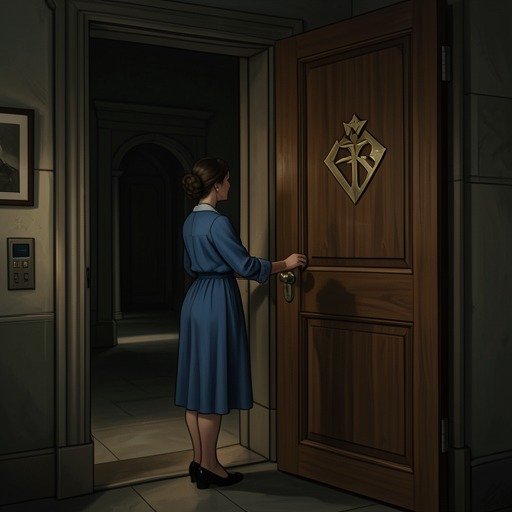
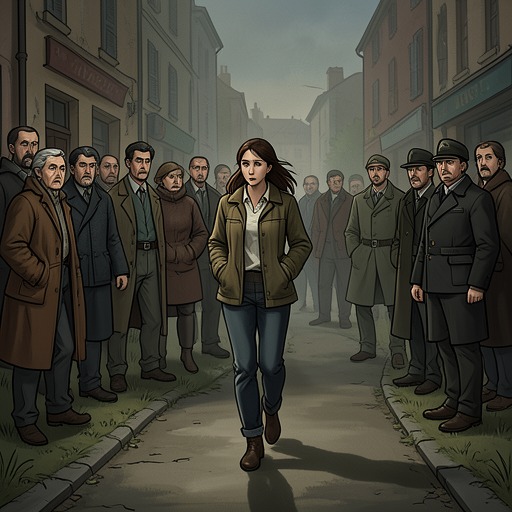
Cinnamon BunRefusing the Wonderlander Class is the pivotal decision that follows Broccoli Bunch’s successful completion of the Wonderland Dungeon. The dungeon’s system declares every adversary and every boss defeated, awards Broccoli’s Cinnamon Bun class level 4, and then offers the Wonderlander class as a replacement. Because accepting the replacement would reset the current class to level 0, Broccoli refuses immediately and leaves Wonderlander in abeyance. The action converts victory into a test of agency: the system can offer advancement, but it cannot make Broccoli accept progress on terms that erase what has already been built.
The Reward That Becomes a Choice
The refusal occurs only after the dungeon has been fully cleared. The interface announces that all adversaries of the Wonderland Dungeon have been defeated and that all bosses are defeated, establishing the offer as the formal culmination of Broccoli’s expedition rather than an ordinary level-up. Broccoli is identified as “Broccoli Bunch, Cinnamon bun, level 4,” so the reward arrives at a moment when the existing class has acquired a definite level and history.
The next prompt presents the Wonderlander class as an alternative to that established identity: “Replace current class with Wonderlander?” The wording makes the reward conditional. Wonderlander is not simply added to Broccoli’s abilities; it must displace the current class, and the system explicitly warns that replacing the class will reset the level to 0. The decision therefore carries a concrete loss. A new title and possible new capabilities are set against the immediate destruction of the progress represented by Cinnamon Bun, level 4.
The Refusal and Its Immediate Result
Broccoli rejects the offer without hesitation. The response is recorded as “Heck no!”, a quick refusal prompted by the prospect of being reduced to level zero. The decision is not a rejection of the Wonderland Dungeon’s significance or of the possibility of multiple classes in principle. It is a rejection of this particular exchange, in which obtaining Wonderlander requires sacrificing the current class’s level.
The system accommodates the refusal by placing Wonderlander “in abeyance until Class Slot becomes available.” This result preserves the possibility of future access while preventing the new class from becoming active. The refusal consequently produces neither total abandonment nor immediate advancement. Wonderlander remains attached to Broccoli’s progression as an unrealized option, while Cinnamon Bun continues to occupy the active class position.
Agency Against Systemic Progression
The action exposes the logic of Broccoli’s leveling world. Menus identify quests, award skills, grant experience, and declare completion, but their rewards are not automatically beneficial in every form. Earlier system feedback has already taught Broccoli to read development through formal notices: a Special Action in line with the class unlocks Cleaning; defeating three Sentinel Ghosts grants bonus experience; and completing a quest produces the declaration, “The world thanks you for your sacrifice!” These notifications turn action into measurable advancement. The Wonderlander offer reveals the limit of that arrangement: a system-defined promotion can also demand an unacceptable reset.
Broccoli’s refusal is therefore a form of practical judgment within a heavily programmed world. The system values replacement as advancement, but Broccoli values continuity of level and accumulated progress more highly. The scene’s irony lies in the fact that the offer appears immediately after an unambiguous victory. The reward screen promises elevation while concealing a fall from level 4 to level 0. Broccoli’s agency consists in recognizing that numerical novelty is not identical with meaningful progress.
Connection to the Dungeon’s Wonderland Logic
The offered class belongs specifically to the Wonderland Dungeon’s strange, rule-governed environment. The dungeon presents recognizable but altered Alice in Wonderland imagery: a poisoned cake marked “Eat Me,” a room decorated with red-and-black banners bearing hearts, diamonds, clubs, and spades, and the Zombie of Cheshire as a level 5 boss in a dungeon otherwise described as level 2 to 4. Wonderlander is the system’s final attempt to convert that environment into Broccoli’s identity.
Yet Broccoli refuses to let the dungeon’s thematic power determine the next stage of progression. The dungeon can award a class connected to its world, but it cannot force Broccoli to exchange a functioning identity for an untested one. This makes the refusal a quiet counterpoint to the dungeon’s larger pattern of coercive invitations and dangerous prompts. From the opening quest that asks whether Broccoli will accept a mission to save the world, through the deceptive food and potion placed before locked doors, Wonderland repeatedly disguises peril as an invitation. The Wonderlander prompt follows the same pattern in administrative form: it offers something desirable, but the cost is stated in the fine print.
Longer-Term Meaning
The refusal does not close Broccoli’s development; it postpones one route through it. Broccoli considers that the earlier suspicion about multiple classes may have been correct, and wonders whether a second class might become possible at a much higher level. The uncertainty remains unresolved at the moment of refusal, but the system’s abeyance message provides a concrete future condition: Wonderlander may become available when a class slot opens.
That unresolved status gives the action lasting structural importance. Broccoli has not defeated the class or proved it worthless. Instead, Wonderlander becomes a suspended possibility, while the active path remains tied to Cinnamon Bun. The decision preserves accumulated progress, keeps a future transformation available, and establishes a recurring tension between what the world’s interface calls advancement and what Broccoli can actually afford to lose. In that sense, refusing Wonderlander is not an anti-adventure gesture. It is Broccoli’s first clear insistence that progress must remain compatible with personal choice.