Rockstack
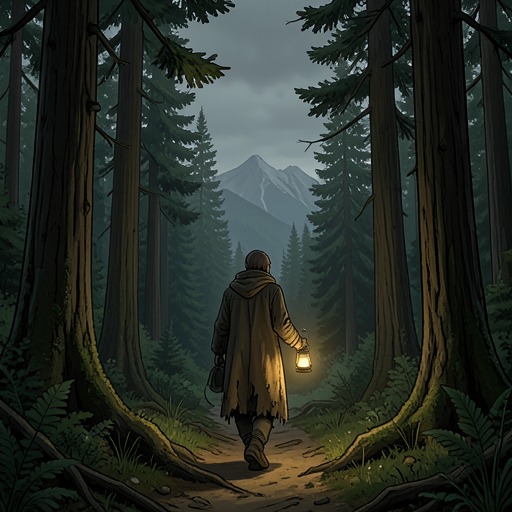
Cinnamon BunRockstack, officially known as Royal Outpost Seven, is a small fortified outpost on the frontier and the first organized settlement Broccoli Bunch reaches after becoming lost in the surrounding wilderness. It converts an uncertain journey into a network of practical possibilities: shelter at Juliette’s inn, contact with guild activity, access to caravans, and a route onward toward Port Royal. At the same time, its military walls, uneasy relationship with nearby dungeon territory, and position amid forests, marshes, and mountains make it a threshold rather than a settled interior city.
Name, Function, and Frontier Position
Rockstack is the name used by residents, while Royal Outpost Seven is its official designation. The distinction reflects the settlement’s double identity. To travelers, it is a recognizable outpost with a local name; administratively, it is one numbered installation within a royal frontier system. When Broccoli Bunch reaches the gate, a Grenoil Hunter explains that Rockstack is the common name and Royal Outpost Seven the formal one, while a Grenoil Fencer remarks that Broccoli Bunch does not resemble an inspector. The exchange establishes the outpost as a place where ordinary local custom and official authority overlap without perfectly coinciding.
The settlement is positioned as a stopping point between dangerous country and more connected urban centers. Emeric tells Broccoli Bunch that Rockstack is a small outpost run by several guilds and suggests that someone clever might find work there and eventually join the Exploration Guild. The promise is modest but important: Rockstack is not merely a camp or military checkpoint, but a place where a displaced traveler can be absorbed into an occupational and institutional network.
Its surrounding geography emphasizes that frontier character. From a nearby plateau, Broccoli Bunch can see the Darkwoods spreading like a sea of trees, marshes to the east, mountains to the north, and what may be a large lake far to the south. The settlement therefore stands within a broad, only partially charted landscape. Its function is shaped by what lies beyond its walls: forests to cross, ruins and dungeon sites to investigate, and routes that eventually lead to Port Royal.
Walls, Gate, and Central Monument
Broccoli Bunch first sees Rockstack after cresting a hill, where the wall dominates the view. It is made from living tree trunks, each roughly as thick as Broccoli Bunch’s arm-span and almost entirely free of branches. The remaining branches project outward like cactus spines, turning the trees into a defensive barrier rather than ordinary woodland. Large, dark-bark bowls sit along the top of the wall, spaced around it and large enough to hold several Broccoli Bunches. Their shape recalls oversized coconuts, but their regular placement suggests deliberate fortification.
The gate is manned by a Grenoil Hunter and a Grenoil Fencer. The hunter initially appears bored, then straightens when the traveler approaches and asks what business brings Broccoli Bunch to Rockstack. The guards do not treat entry as an elaborate diplomatic process, but neither do they leave the threshold entirely unregulated. Broccoli Bunch explains the need for rest and a possible route to Port Royal, and the hunter directs the traveler to Juliette at the inn. He also warns that reaching the next destination may take time because the next caravan could be a while away. The exchange shows how the outpost’s frontline security is combined with practical wayfinding: the guards are both gatekeepers and informal civic guides.
Inside the walls, Broccoli Bunch is struck by the number of people, the ring of distinctive buildings, and especially the structure at the center of the settlement’s square. Rockstack’s namesake is a ten-meter-high stack of enormous boulders arranged in three rising arches that meet at a glossy black stone flecked with gold. The central stone may be fool’s gold, but its visual effect is still striking. The monument gives the settlement an unmistakable symbolic center, contrasting with the living, thornlike wall that defines its outer edge. Rockstack is thus organized around both defensive growth and balanced stonework: the forest is shaped into a barrier, while raw rock is shaped into a civic landmark.
Shelter, Movement, and Institutional Access
Rockstack’s most immediate importance for Broccoli Bunch is practical. The settlement offers a place to sleep after a difficult journey and a chance to locate work. Juliette’s inn is prominent enough that the guards say it cannot be missed, and the inn functions as part of the outpost’s basic infrastructure rather than as an isolated luxury. Rockstack is also connected to caravan traffic, though not continuously; the delay before the next caravan means that mobility depends on schedules and available transport rather than simple proximity.
The outpost is linked to the wider world through layered routes. Broccoli Bunch later considers different ways to reach Port Royal: walking the entire switchback path, paying three copper for a shared ox-drawn carriage, or paying a silver for a cable car that climbs towers toward the city proper. These alternatives make movement through the region visibly unequal. The cheapest route demands time and exertion, the carriage organizes travelers and cargo together, and the cable car offers speed and elevation at a price equivalent to half a normal person’s day of work. Rockstack’s role is therefore not only geographical; it is part of a transportation system whose costs determine who can move efficiently.
The contrast with Port Royal clarifies Rockstack’s scale. Port Royal rises across three plateaus, with red roofs, towers, a port suspended over a chasm, cable cars, and dense mechanical infrastructure. Its roads are narrow, its pipes carry water and steam, and its urban noise is constant. Rockstack is far smaller and more exposed, yet it is not disconnected from that complex city. The route from the outpost toward Port Royal turns a remote frontier settlement into an entry point for the continent’s larger systems of commerce, transport, and administration.
Rockstack’s connection to institutional life also appears through information and tools. Broccoli Bunch discovers that a personal map was available all along and can display Threewells as well as the curving route taken to Rockstack, though it does not automatically update areas that have changed or places not actually explored. The map transforms the outpost from an isolated destination into a marked node within a navigable world. At the same time, the limits of the map preserve the frontier’s uncertainty: charting depends on experience, and distant or unexplored spaces remain incomplete.
Dungeon Rumors and Regional Threats
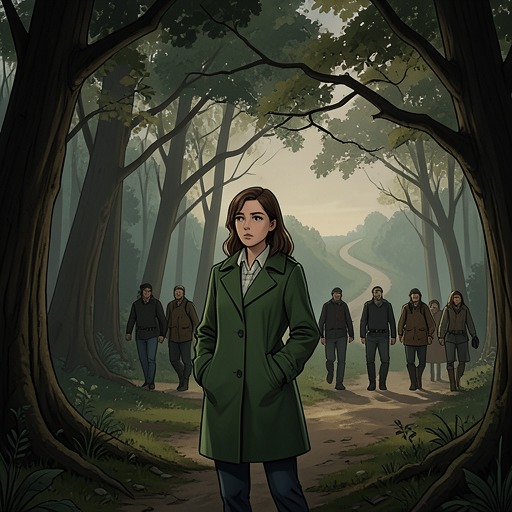
Rockstack is closely associated with the discovery that dungeons exist in this world. Reports from the surrounding region describe large mana shifts and concern that someone may have damaged the dungeon core at Dunwich Dungeon. Guard rotation C has also seen a person in green in the forests, raising suspicion that the Imperials may have reached unusually far into the frontier. The report responds by doubling the guards and sending a scout toward Dunwich Dungeon. Rockstack therefore occupies a security environment in which magical disturbances, military movement, and unexplored territory are difficult to separate.
The settlement’s connection to dungeon activity is also economic and informational. When Broccoli Bunch later discusses the “evil hole” associated with Threewells, Leonard Chand’nuit identifies it as the likely entrance to a young dungeon. A mana surge had been felt there, and Leonard concludes that someone may have destroyed the dungeon after Broccoli Bunch departed, though he emphasizes that such an act would not be easy. This conversation turns Broccoli Bunch’s route through the frontier into potentially valuable intelligence. A map of the region is not merely a travel aid; it may also be a commodity in a world where dungeon entrances, mana shifts, and their destruction matter to guilds and authorities.
The frontier’s dangers remain visible beyond Rockstack. The Darkwoods, marshes, and mountains surround the settlement; Fort Frogger is later found with broken gates and a courtyard crowded by undead, including Grenoil Skeletons and centaur-like creatures, while two Skeleton Knights guard its entrance. These scenes are not events inside Rockstack, but they define the region through which Rockstack provides passage. The outpost’s walls and sentries acquire meaning because the land beyond them contains abandoned structures, monsters, military histories, and unstable magical sites.
Narrative Significance
Rockstack marks a change in the shape of Broccoli Bunch’s adventure. Before reaching it, the traveler is moving through uncertainty, relying on chance encounters and improvised survival. At Rockstack, that uncertainty becomes legible as a route: there is an inn, a guarded gate, guild employment, a caravan, a map, and a recognized destination beyond the outpost. The settlement does not remove danger, but it gives danger an infrastructure.
Its design also condenses the book’s recurring tension between exploration and control. Living trees are converted into a defensive wall; a local settlement carries an official royal number; dungeon rumors trigger doubled guards; movement depends on paid transport; and access to larger institutions is mediated by guilds and gatekeepers. Rockstack presents the frontier as neither empty wilderness nor fully governed territory. It is a constructed hinge where exploration, military vigilance, commerce, and magical knowledge meet.
For Broccoli Bunch, Rockstack is consequently more than a place-name on a route map. It is the first settlement to offer a plausible social future after being lost: rest, work, guild membership, and onward travel. The outpost’s smallness is part of its significance. It does not provide the spectacle of Port Royal, but it supplies the local connections that make Port Royal reachable. In the journey’s larger pattern, Rockstack is the threshold at which a solitary wanderer begins to move through a world of institutions rather than merely across its landscape.