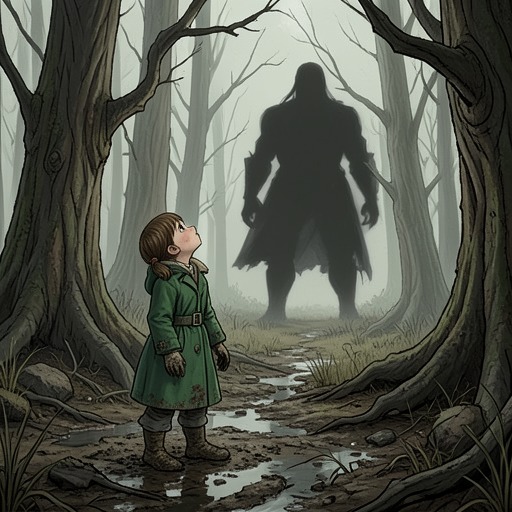
Tier system
Cinnamon BunThe Tier system is the world’s hierarchy of advancement, linking character levels, multiple classes, training, and escalating danger. Its decisive importance lies in the gap between merely gaining experience and crossing a genuine threshold of power: Throat Ripper’s third-tier status makes him a model of formidable strength, while Amaryllis’s explanation shows Broccoli Bunch that advancement becomes progressively slower, rarer, and more dangerous. The system therefore functions both as a measure of capability and as a forecast of the sacrifices required to reach it.
Definition and Structure
The Tier system is organized around level thresholds rather than a single uninterrupted climb. Amaryllis identifies Throat Ripper as third tier and explains that this means he has advanced beyond level twenty in his primary class. Reaching that point requires a second class at level ten and a third class as well, so tier advancement depends not only on raising one class but on developing a broader combination of classes. The structure makes higher status a compound achievement: a character must accumulate progression across several class paths before passing the boundary that separates one tier from the next.
This arrangement gives the hierarchy a visible relationship to the class system. A character’s primary class can carry progress toward the first major threshold, but surpassing level twenty requires secondary development and the addition of a third class. Tier is consequently not a synonym for ordinary level. It marks a change in the scale of what a person has built, and it explains why Throat Ripper’s apparent strength cannot be understood simply by counting the levels of one profession.
Advancement and Time
Amaryllis describes the first tier as comparatively accessible. With safe, well-paced training, a person can pass it in a few years; in life-or-death situations like those faced by Broccoli Bunch and his companions, the process can be much faster. The contrast establishes an important rule of the system: danger accelerates growth, but only by exposing the person seeking advancement to immediate and potentially fatal consequences.
The second tier is substantially more difficult. Amaryllis estimates that passing it can take anywhere from two to ten years, and says that people younger than thirty are rarely found beyond level twenty. The observation turns level twenty into more than a numerical benchmark. It is a social and generational dividing line, one that distinguishes unusual adventurers from the ordinary population and makes early high-tier achievement exceptional rather than expected.
Progress becomes still more arduous afterward. The highest points reached by most civilisations are the third and fourth tiers, and moving beyond them can take decades. Most people die of old age before reaching the fifth tier, not because the system stops permitting growth, but because continued advancement demands challenges that are described as frankly ridiculous. The farther a character rises, the more extreme the conditions required to rise again, producing a progression curve in which each success narrows the number of people able or willing to continue.
Broccoli Bunch’s Understanding of Power
The conversation about Throat Ripper gives Broccoli Bunch a concrete reason to study the hierarchy. The cervid mercenaries had withdrawn rather than fight the bone doggo, so Broccoli Bunch uses Throat Ripper’s strength as a target for his own development. His question is not merely about classification; it is an attempt to calculate how long it will take to become strong enough to stand in the same field as a figure whose presence changes the choices of armed opponents.
When Amaryllis asks whether the question is connected to Broccoli Bunch’s status as a Riftwalker, he rejects that explanation and frames the ambition as personal. His interest belongs to Broccoli Bunch himself, not simply to an unusual identity or external destiny. The Tier system thus converts aspiration into a measurable problem: how many classes, levels, years, and dangerous encounters separate him from the strength he wants?
Broccoli Bunch’s conclusion is practical rather than grandiose. He recognizes that leveling becomes harder at every stage and that most people do not reach level forty without sustained effort over a long period. He can therefore either work harder than ordinary people or stop at a point where he will be respected. The latter possibility fits his stated goals, making the Tier system a tool for self-assessment rather than an automatic command to pursue the highest possible rank.
Narrative Function and Consequences
The Tier system supplies the book with a graduated language for danger. Early encounters show Broccoli Bunch receiving experience, unlocking Cleaning through a class-aligned Special Action, defeating three level-one Sentinel Ghosts, and completing quests, but those rewards do not erase the distance between beginner progress and established high-tier power. The system’s notifications make advancement legible in small increments, while the tier hierarchy reveals how far those increments must accumulate before they become a lasting change in social and martial standing.
It also places limits on the apparent promise of system-guided growth. Broccoli Bunch receives quests, skills, and rewards, yet the framework does not make strength effortless. The Evil Root quest explicitly tells him that he is too weak to destroy the root directly and must instead break the Core so that the root will starve. Even when a quest is completed and the world thanks him for his sacrifice, the achievement does not imply that every later threat is within his power. Tier remains a reminder that individual victories and permanent advancement are related but not identical.
The hierarchy further clarifies the scale of Broccoli Bunch’s expanding world. At the beginning, a supernatural quest appears almost unbelievable; later, guild membership, city guards, fortifications, missions, and political crises place his growth inside institutions that judge capability and liability. The Exploration Guild’s decision to remove him because he is considered a liability contrasts with the system’s impersonal rewards. Notifications can recognize a skill or completed objective, while an organization can still deny belonging. Tier therefore measures potential and accomplishment without guaranteeing acceptance, authority, or safety.
Significance
The Tier system combines game-like clarity with a traditional progression arc. It makes power countable through levels and classes, but its most consequential information concerns time, age, danger, and mortality. The third tier is impressive because it requires coordinated advancement across multiple classes; the fourth represents the upper edge of what most civilisations produce; and the fifth stands beyond the lifespan of most people. Advancement is therefore simultaneously an adventure mechanic and a philosophy of limits.
For Broccoli Bunch, that philosophy produces a more mature understanding of ambition. He does not learn that unlimited growth is impossible; he learns that every higher threshold demands a disproportionate price. The system’s central tension is consequently not whether he can gain power, but what kind of life he is willing to build, risk, and perhaps shorten in order to gain enough of it. By turning that question into the language of tiers, the book makes personal aspiration visible as a negotiation between desire, danger, social recognition, and time.