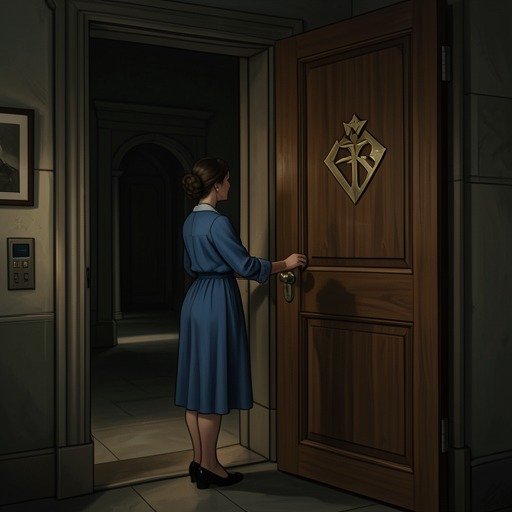
Wonderlander
Cinnamon BunWonderlander is the class awarded to Broccoli Bunch when the Wonderland Dungeon is fully cleared, but its immediate importance lies in the refusal that follows: the class offers advancement while also threatening to erase the progress represented by Broccoli Bunch’s existing level. The result is not a conventional transformation but a suspended possibility, with Wonderlander placed in abeyance until another class slot becomes available.
Origin in the Wonderland Dungeon
The class appears only after the dungeon’s completion has been formally recognized. The system announces that all adversaries and all bosses associated with the Wonderland Dungeon have been defeated, establishing Wonderlander as a completion reward rather than a class Broccoli Bunch selects at the beginning of the expedition. The reward is therefore tied to mastery of a specific dungeon and to the defeat of its full sequence of opposition.
The setting makes the class’s name and function deliberately intertextual. Broccoli Bunch encounters an apparent Alice in Wonderland reference in the poisoned cake and shrinking potion, then enters rooms marked by red-and-black banners bearing hearts, diamonds, clubs, and spades. A royal decree associated with the Queen of Hearts warns visitors away, while the dungeon’s level-five boss is identified as the Zombie of Cheshire. Wonderlander consequently names a class born from surviving and clearing a hostile version of Wonderland, not merely from visiting a fantastical location.
System Reward and Class Mechanics
The class is presented through the same menu-driven progression system that governs Broccoli Bunch’s development. Earlier feedback has already converted repeated or class-appropriate actions into advancement: cleaning a room unlocks the Cleaning skill, defeating three Sentinel Ghosts grants bonus experience, and repeating a social special action unlocks the general skill Friendmaking. Wonderlander extends that pattern from skills and experience to class acquisition, making dungeon accomplishment a route to a new identity within the leveling system.
The reward is explicit: Broccoli Bunch, whose Cinnamon Bun class has reached level 4, is awarded Wonderlander. The system immediately reports that all class slots are filled and asks whether the current class should be replaced. This wording reveals that Wonderlander is not simply added alongside Cinnamon Bun. It competes for a limited structural place, and accepting it would require a consequential exchange.
Refusal and Abeyance
Broccoli Bunch refuses the replacement because the system states that replacing the current class will reset the existing level to zero. The refusal protects the accumulated progress of Cinnamon Bun at level 4, even though Wonderlander represents a newly earned opportunity. The choice is therefore practical rather than a rejection of the dungeon or of the class’s value: the immediate cost of accepting it is greater than the uncertain benefit of starting over.
The system records the result by placing Wonderlander in abeyance until a class slot becomes available. This preserves the class as an earned possibility rather than deleting it, while also preventing Broccoli Bunch from using it in the present. Wonderlander thus becomes a visible marker of progress and limitation at once: Broccoli Bunch has advanced far enough to qualify for another class, but the architecture of the class system prevents that reward from becoming immediate power.
Broccoli Bunch’s Developing Class Identity
Wonderlander broadens the meaning of Broccoli Bunch’s progression. The initial quest prompt calls upon the protagonist to save the world from a great evil, and later quest feedback directs Broccoli Bunch toward the Evil Root while warning that the root cannot yet be destroyed. These messages frame advancement as a sequence of externally legible tasks, and Wonderlander is the clearest class-level expression of that logic: an extraordinary achievement is translated into a system notification and a choice with measurable costs.
Broccoli Bunch’s response also shows a growing ability to interpret the system rather than obey it automatically. The protagonist has already learned that Cleaning can emerge from a seemingly mundane action and that extraordinary rewards can follow dangerous encounters. After refusing the reset, Broccoli Bunch considers whether multiple classes might eventually be possible and wonders whether a second class could become available at a much higher level. The speculation remains unresolved, but it establishes Wonderlander as part of a larger, still-mysterious progression structure.
Narrative Significance
Wonderlander turns the familiar adventure reward into a dilemma about continuity. Clearing the Wonderland Dungeon produces recognition, but recognition alone does not determine the correct choice. The class system values both achievement and accumulated level, forcing Broccoli Bunch to decide whether a new role is worth surrendering an established one. By remaining in abeyance, Wonderlander keeps the future open while making the cost of advancement impossible to ignore.
The class also exposes the game-like world’s persuasive structure. Quests call for action, special actions generate skills, combat produces experience, and dungeon completion produces classes; each stage converts behavior into feedback that encourages Broccoli Bunch to continue. Yet the Wonderlander notification is not pure reward. Its replacement rule makes the system’s ideology visible by attaching loss to progress and requiring the protagonist to exercise judgment. The class therefore signifies both the triumph of clearing the Wonderland Dungeon and the unresolved question of what kind of adventurer Broccoli Bunch will become next.