
The Amphitryon Movie Outline
City of GodAn unwritten film about a lover who plans to replace a CEO husband survives only as an extended authorial fantasy.
increasing Bearing strength in each event
 decreasing
Bearing strength in each eventdecreasingA Dinner-Party Seduction
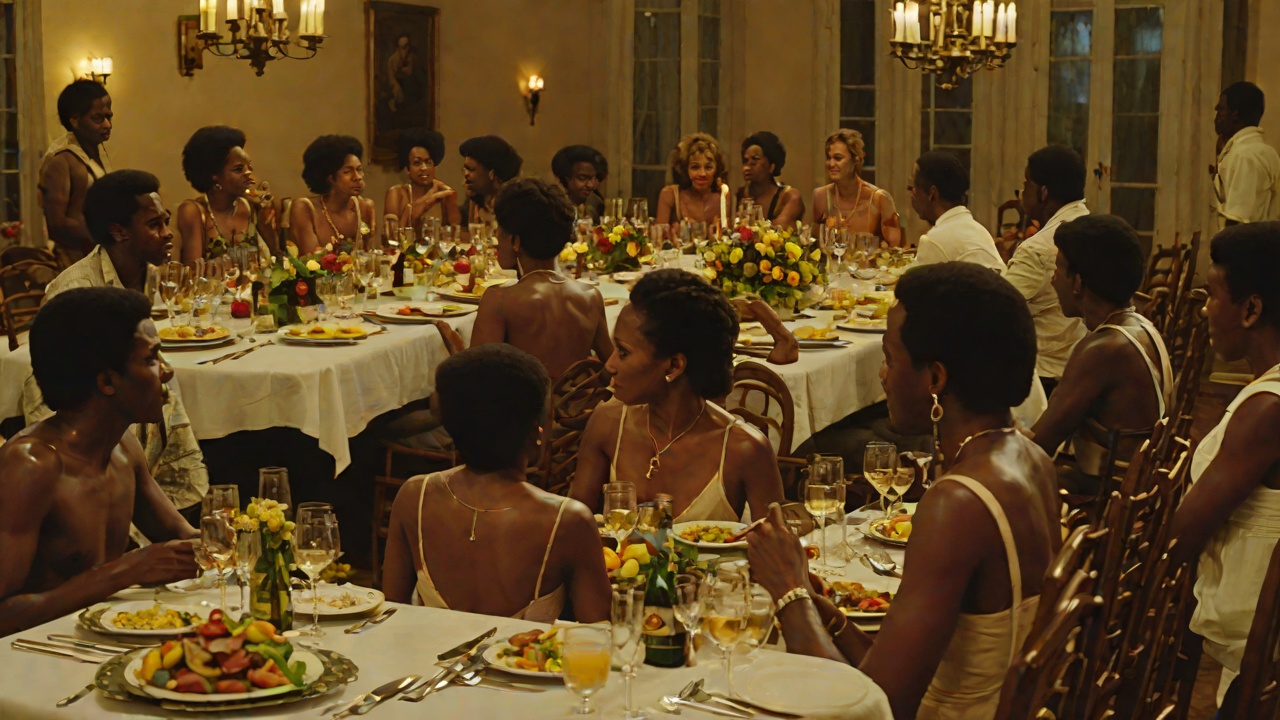
A Dinner-Party Seduction
Context
A woman code-named Moira sits next to the narrator at a dinner party, and their mutual recognition begins an affair. Her husband is a powerful CEO. The narrator describes her quietness, her lack of makeup, and her unsettling directness. He is drawn to her as to an authentic life beyond the social swirl.
Significance
The seduction is the seed of the Amphitryon story. The narrator turns Moira into a character who crosses class lines, a trophy wife whose serene certitude conceals a desperate history. She becomes the subject of a movie that exists only in his mind.
Consequences
The affair begins under conditions entirely controlled by the narrator, who imagines himself exercising remote control over her husband's life.
The Executive Husband's File

The Executive Husband's File
Context
The lover assembles a complete dossier on the husband: bank accounts, medical records, credit ratings, political contributions, and personal weaknesses. He learns that the husband is a squeaky-clean narcissist with no other secret lover. The only affair consuming him is with himself.
Significance
The dossier is an instrument of total knowledge. The lover uses intimate data as a weapons system, preparing to erase the husband's social existence. The ease of access exposes the vulnerability of modern identity in a world of digital records.
Consequences
The lover decides to become the husband, a plan that requires surgery, forged documents, and the willing cooperation of the wife. The movie outline begins to take shape as a high-concept horror.
Surgery in Budapest
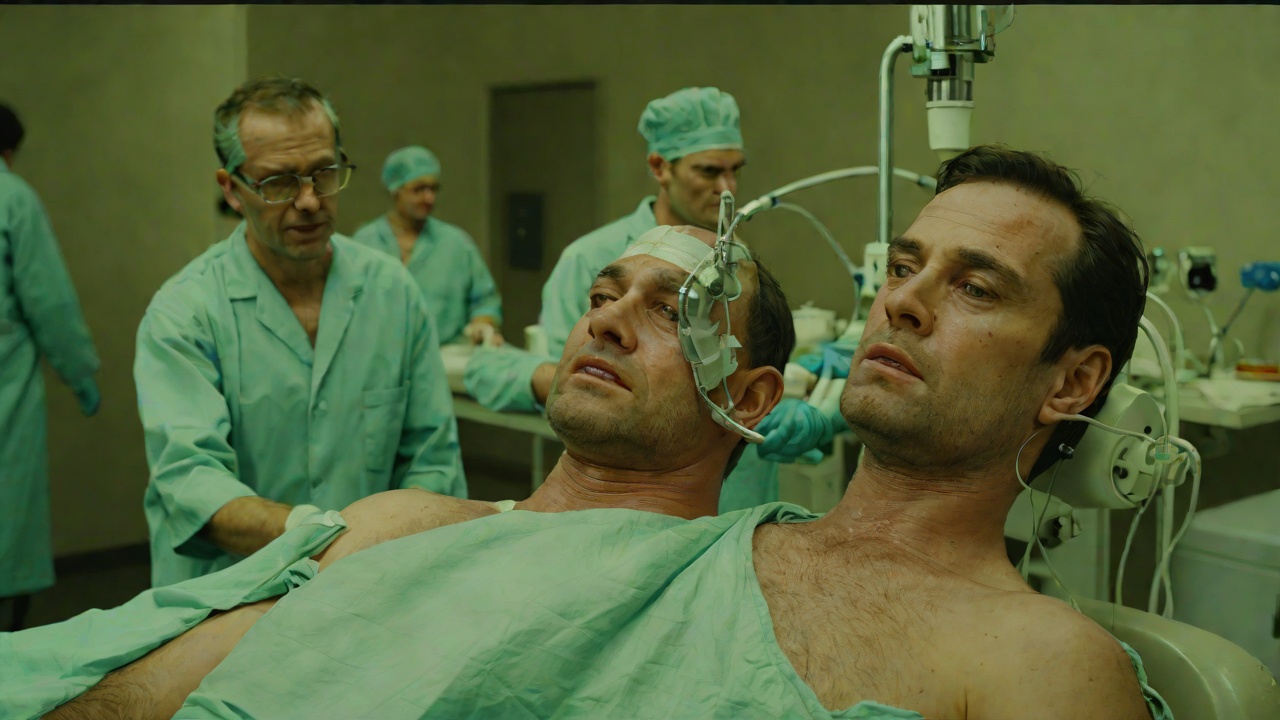
Surgery in Budapest
Context
A surgeon the lover knows from his intelligence days reshapes his face, widens his jaw, lowers his hairline, and gives him the morphology of the husband. The lover gains weight, wears shoe lifts, and practices the husband's mannerisms. The details are glossed in montage, as the narrator recognizes that a realistic plot cannot bear this weight.
Significance
The surgery literalizes the fantasy of absolute usurpation. Yet the narrator admits that a credible impersonation belongs to Zeus, not to a CIA veteran. The movie must operate in an abstract realm where evil takes its form from existing circumstances.
Consequences
The lover's plan reaches its culminating scene: a man comes to a door he thinks is his own, and his wife denies knowing him. The self is displaced entirely.
The Shrunken-Head Finale

The Shrunken-Head Finale
Context
The lover kills the displaced husband, cuts off his head, and shrinks it with the techniques of the Jivaro tribe. He presents the shrunken head to the wife, who calls the police and then commits suicide. The head resembles the lover more than the husband, so the lover is put on trial as the murderer of himself.
Significance
The finale is pure melodrama, and the narrator knows it. He has taken the tale to its wretched limits, allowing the villain's amplification to destroy the plot's credibility. The shrunken head reverses the course of evil, identifying the impostor as his own victim.
Consequences
The narrator dismisses the whole Amphitryon fantasy as a movie, a waxworks melodrama unworthy of serious fiction. The outline remains a fragment inside the novel, a warning about the seductions of narrative.
Why Only a God Can Usurp a Life

Why Only a God Can Usurp a Life
Context
The narrator concludes that a secular Amphitryon is impossible; only a mischievous horny god like Zeus could credibly impersonate a husband. The story grinds into a tank full of armament, clanking forward on the treads of its own plot. He lets the movie die in the laboratory of his skull.
Significance
The failed plot clarifies the novel's deepest theme: identity cannot be stolen by human means without collapsing into farce. The self-displacement that the lover imagines is a theological idea, not a practical one. It belongs to myth, not to realism.
Consequences
Attention returns to actual lives, especially Pem's, Moira's, Sarah's, and Joshua's, where transformations are moral and internal rather than surgical.
early in the novel, in the narrator's social set
after the affair has stabilized, before the lover's surgical transformation
after the lover flies to Budapest with holographic photographs
late in the outlined movie, after the husband's downfall
when the author abandons the movie outline and returns to the novel's central concerns
