Divinity Detective
City of GodThe Divinity Detective is the investigative persona that Thomas Pemberton, the Episcopal priest known as Pem, adopts in E. L. Doctorow's City of God. The name first surfaces in Pem's own private narration, where he addresses God directly as his watchful companion, and it becomes his working identity as he pursues the mystery of the stolen St. Timothy's brass cross. The persona fuses two seemingly incompatible vocations: the detective, whose world is "circumscribed and dependable in its punishments," and the priest, whose God offers no such dependable order. Pem explicitly contrasts the paperback detective novel's reliable moral universe with the chaos of divine providence, confessing that he reads detective fiction when depressed because its world is more trustworthy than God's. The Divinity Detective thus emerges as a coping mechanism and a method, a way of imposing investigative order on a cosmos that has lost its theological coherence.
Origins and the Theft of the Cross
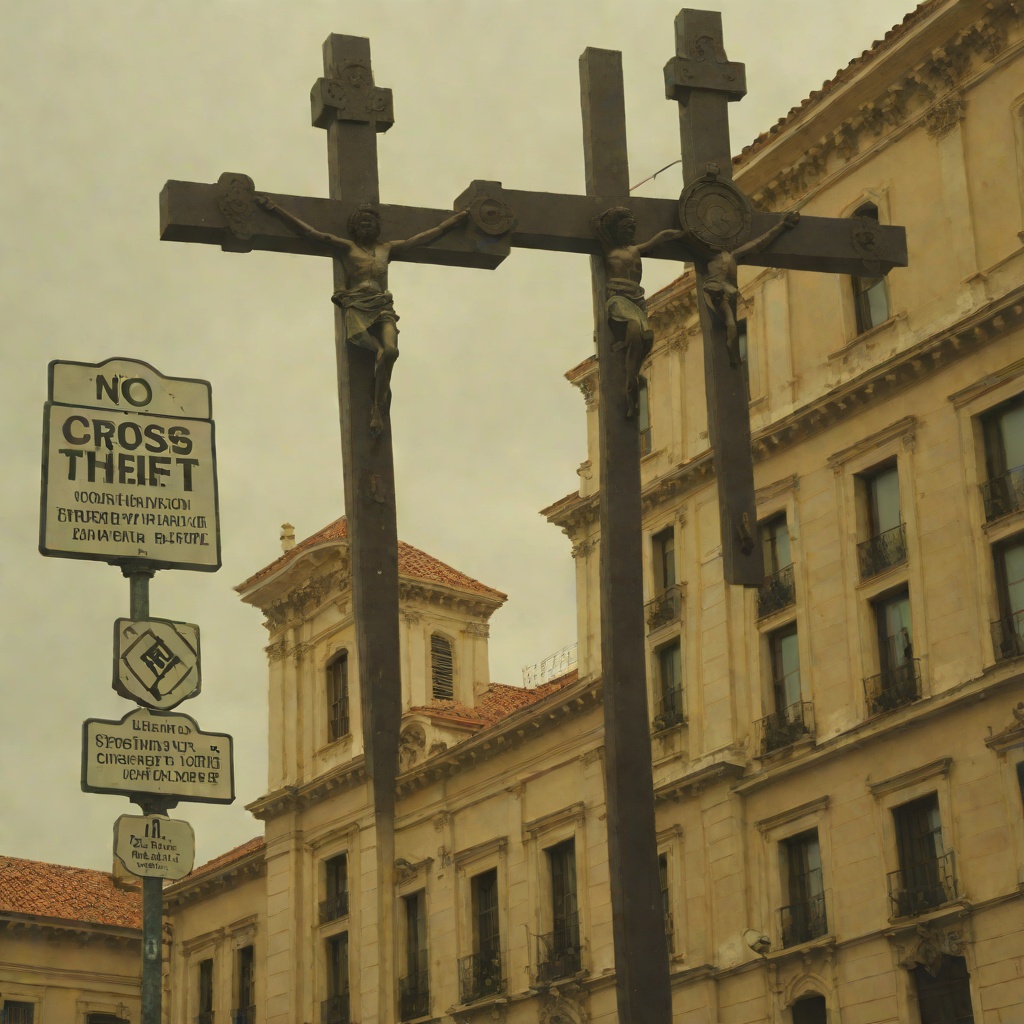
The Divinity Detective is born from a specific crime. Pem returns to St. Timothy's Episcopal Church to find the great brass cross missing from behind the altar, leaving only "a shadow of Your crucifix, Lord, in the unfaded paint of my predecessor's poor taste." The theft immediately casts Pem into the role of investigator, a role he embraces with self-deprecating humor. When a police detective tells him that thieves would target a synagogue's Torah scroll instead—worth a minimum of five thousand dollars, whereas the cross is "on the street there is no way it is anything but scrap metal"—Pem is left with a mystery that defies criminal logic. The theft is not economically motivated, and this anomaly becomes the first clue that the Divinity Detective must pursue. The persona hardens into resolve when he receives a voice mail from Rabbi Joshua Gruen of the Synagogue of Evolutionary Judaism on West Ninety-eighth Street, insisting that they meet "as soon as possible." Pem recognizes Gruen as "clearly not one of the kooks" and decides to investigate, choosing to wear his clerical collar for the meeting.
The Investigation and the Sign
Pem's investigation leads him to the roof of the Synagogue of Evolutionary Judaism, where Rabbi Gruen shows him the eight-foot hollow brass cross of St. Timothy's, lying flat on the black tarred roof, its transverse exactly parallel to the front of the building, its upright pressed against the granite pediment. Pem admits he "supposed I'd known I'd found it from the moment I heard the rabbi's voice," and he bends down to examine the old nicks and dents. The discovery transforms the theft into what Pem comes to call "the Sign." He begins to suspect that the thieves were not "mindless creeps" and that the cross's placement was not the work of anti-Semites or Jewish ultras, but of someone with a more cryptic purpose. The Divinity Detective's task becomes not merely to recover a stolen object but to interpret a divine communication. Pem feels that when the brass cross appeared on the synagogue roof, "something momentous was announced," though he cannot say what. He keeps this conviction secret, even from Sarah Blumenthal, believing that to speak of the sign would cause it to "lose its light." The sign is "ambiguous, he had recognized it for what it was but not for what it was instructing him to do," and he resolves to be "patient and attentive and alive to his life, the person on whom nothing is lost."
Method and Self-Image
As the Divinity Detective, Pem adopts the methods and self-image of the fictional detectives he reads. He buys half a dozen used paperback detective novels from a thrift shop on St. Marks, claiming he wants "to learn the trade," though he admits he simply reads them when depressed. The persona allows him to reframe his theological crisis as a solvable puzzle. When a friend presses him on the meaning of an evening's events, Pem leans across the table, puts his hand on the back of his friend's neck, kisses him on the forehead, and declares, "Ways of God. You'll just have to take my word for it. This is the Divinity Detective you're talking to." The self-designation is both a joke and a serious claim: Pem is a detective of the divine, investigating the ways of God with the tools of a genre that promises resolution. Yet the persona also carries a note of desperation. Pem's investigation is "a truly humble, dogged act of detection," a way of living seriously in the face of a faith that has crumbled. The Divinity Detective is not a triumphant hero but a man "stress-tested and entranced," climbing an iron ladder to a rooftop to confront a mystery he cannot solve.
The Detective's Training and the Archive
The Divinity Detective's methods prove transferable beyond the cross. When Pem tracks down the fate of the Barbanel archive—the writings of Jews hidden by a priest in Vilnius—he credits his persona with the success. "My training as the Divinity Detective stood me in good stead," he tells a friend, explaining how he deduced that a Russian officer who had questioned the priest was an intelligence officer, and that the archive had been swept up and taken to Moscow. Pem describes the KGB vaults as "like a flea market," where anything can be bought "if the price is right." The recovery of the archive, like the recovery of the cross, becomes an act of detective work that serves a larger spiritual purpose. The Divinity Detective is not merely solving crimes; he is recovering the fragments of Jewish history and memory that the Holocaust scattered across Europe. The persona thus expands from a private coping mechanism into a method for engaging with the deepest wounds of the twentieth century.
The Limits of Detection
The Divinity Detective ultimately confronts the limits of its own method. The mystery of the cross is never fully resolved; Pem never learns definitively who stole it or why it was placed on the synagogue roof. The persona, which promised a "circumscribed and dependable" world, delivers instead an open-ended ambiguity. Pem's investigation leads him not to a solution but to a transformation: he resigns from the priesthood, converts to Judaism, and marries Sarah Blumenthal. The Divinity Detective, who began as a way of imposing order on chaos, ends by surrendering to a mystery that cannot be solved. In his final act as a Christian priest, Pem delivers a wedding prayer that interrogates God directly, asking how an omniscient deity could allow the genocidal cruelties of the century. The prayer is the culmination of the Divinity Detective's investigation: it is the question the detective finally dares to ask, not of a suspect but of God Himself. The persona thus dissolves into the very faith it was meant to investigate, leaving Pem reborn as a son of Abraham, a convert who has traded the certainties of detection for the uncertainties of belief.