Everett and Thomas Pemberton
City of GodThe friendship between Everett and Thomas Pemberton forms the narrative spine of the novel, a bond that begins as a writer's opportunistic interest in a stolen church cross and deepens into a complex, almost filial attachment. Everett, the narrator, first approaches Pem because of the St. Timothy's Cross Theft, seeing in the defrocked priest a compelling story. But what starts as a professional pursuit becomes a genuine entanglement, with Everett finding himself "at the mercy of his life," a literary dependent who must wait for Pem to choose what to reveal. Pem, for his part, enjoys the attention even as he worries that Everett is stealing something from him—his mind's life, his being. This mutual wariness and need defines their relationship from the start, a dynamic that plays out across drinks at Knickerbocker's, rooftop revelations, and family gatherings.
The Writer and the Divinity Detective
Everett's framing of Pem as his "Divinity Detective" is more than a clever label; it is the organizing conceit of their collaboration. When Pem protests that he does not understand a point Everett is making, Everett insists, "Please. Am I or am I not your Divinity Detective?" The title casts Pem as the investigator of a cosmic mystery, a role he has already embraced privately. Even before the cross was stolen, the events at St. Tim's had turned him into a detective of sorts, and he had decided his life must seriously become "a truly humble, dogged act of detection." Everett's nickname thus names a vocation Pem has already chosen for himself, and the two men become partners in a shared inquiry that is at once theological and criminal. Their conversations at the bar, with a tape recorder running, are the workshops of this joint investigation, where they puzzle over the meaning of the cross's appearance on the roof of the Synagogue of Evolutionary Judaism and whether the thieves were "mindless creeps" or something more deliberate.
The relationship is also a study in the ethics of representation. Everett is writing a book that uses real names, and Pem objects: "You're using the real names. You told me—" Everett concedes he will change them, but insists that "just now they're still the best names." This exchange exposes the tension at the heart of their friendship: Pem is both subject and collaborator, a man whose life is being shaped into narrative by another. When Everett suggests that Pem might write his own book, Pem laughs nervously, and Everett teases that a big publisher's advance would follow. The joke carries a real anxiety, as both men recognize that Pem's story is a valuable commodity, and whoever tells it first will own it. Pem's comment that no writer can reproduce "the actual texture of living life" is both a compliment to Everett and a defense of his own irreducible reality.
A Friendship Tested by Distance and Change
Their bond is tested by the physical and emotional distances that grow between them. Pem, no longer wearing the collar, works at a cancer hospice on Roosevelt Island, a choice Everett describes as "an appropriate dead end for his professional life." He has grown heavier, his big face more lined, but still "open, candid, floridly handsome," his light eyes moving restlessly over a room "as if looking for someone to gladden his heart." This description captures the man Everett has come to know: a priest without a parish, a detective without a case, a man searching for meaning in the moans of the dying. When Pem and Sarah travel without inviting Everett, he feels the sting of exclusion, though he insists he is "over that." Pem, sensing the hurt, is careful to explain that it is "a delicate time for Sarah. And for me too." The apology is offered and accepted, but it marks a shift: Pem's primary loyalty is no longer to his chronicler but to the woman he loves.
Everett's own feelings complicate the friendship. He admits to finding Sarah attractive, a "not entirely professional feeling," and confesses to feeling "just a bit shifty, double-dealing" when he sees her without Pem around. There is "a little of Pem in me," he acknowledges, a half-wanting, a delusion of expecting something hardly likely to happen. This unspoken attraction is never acted upon, but it colors Everett's perception of the couple and his place beside them. He comes to see himself in a "new and distinctive filial relationship" with Pem and Sarah, "as if they are the long-married couple and I am the younger sibling or son who has brought his date around." The triangulation is tender and painful at once, a longing for intimacy that can only be expressed as family.
The Central Park Afternoon and the New Family
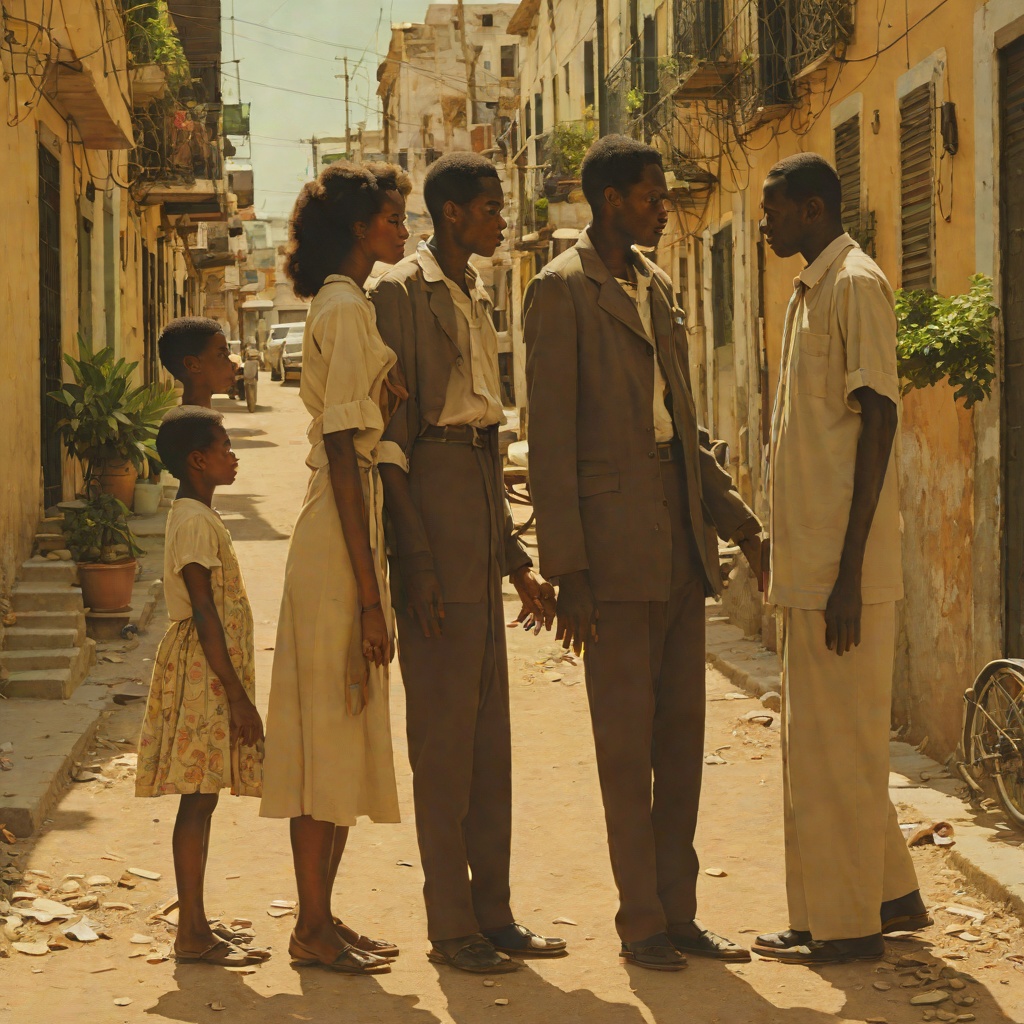
A pivotal scene unfolds on a Sunday in Central Park, where Pem, Sarah, and Sarah's boys meet Everett and his new friend, Miss Warren, near the western edge of the Sheep Meadow. The outing is a study in contrasts: the arcadian New York scene, the deli heroes and Snapples, the softball game, and the jarring presence of Miss Warren, a freelance magazine writer from New Orleans whose tales of adventure are "a touch exotic for a Sunday in Central Park." Everett watches as Pem plays with the boys, rolling up his sleeves and calling, "Okay, let's hustle," praising each catch and encouraging each dropped ball. Sarah watches too, and Everett reads in her glances the inevitable question: "Is this woman really the mythomaniac I think she is?" The afternoon is a performance of normalcy, but it reveals the deep currents beneath: Everett's need to establish himself in Pem's life, Pem's ease as a surrogate father, and Sarah's patient tolerance of Everett's "weakness for the profane mysteries."
The relationship reaches its fullest expression at the wedding of Pem and Sarah, where Everett is present as family. Pem, his double-breasted blazer hanging open, his tie loosened, his forehead "triumphantly cowlicked," puts his arm around Everett's shoulders and introduces him to the assembled guests: "This is the man who is writing my spiritual biography. He's going to make me famous." When Everett demurs, Pem insists, "I'll make you proud of me yet." The exchange is playful, but it confirms the bond: Everett is not merely a chronicler but a son, a brother, a witness. Later, when Sarah takes Everett's arm and leads him to the dance floor, the moment becomes almost unbearable in its intimacy. He holds her for the first time, feeling her heat, the clean herbal scent of her hair, and she whispers in his ear, "You will always be our friend, Everett." His knees nearly buckle, and he is about to declare "something spectacularly foolish" when her older boy, Jake, taps him on the elbow to cut in. The interruption is a mercy, and Everett bows, watching Sarah dance away with her son, her arms outstretched, looking down on his solemnity of concentration "in the healing pleasure of her serene love."
The Wedding Prayer and the End of a Quest
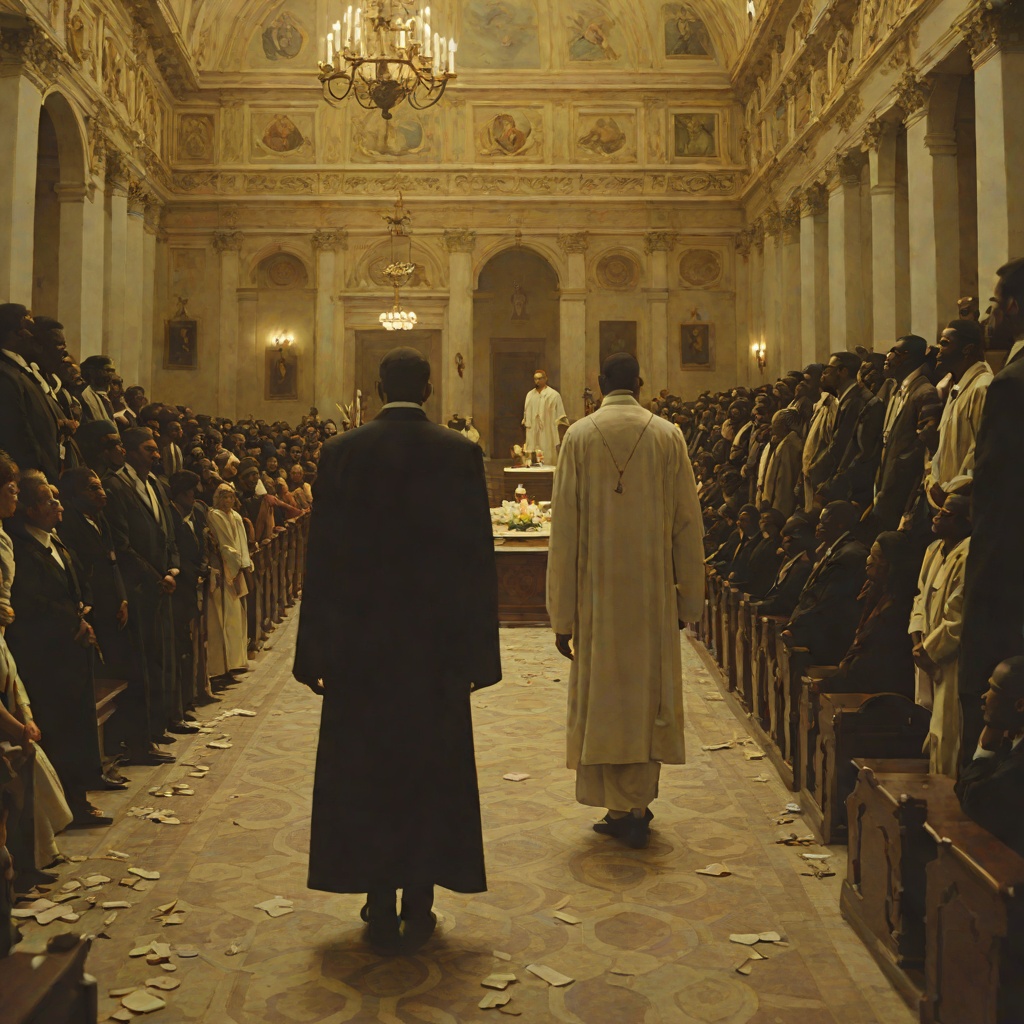
Pem's wedding prayer, delivered as "my final act as a Christian and an ex–Christian priest," is the culmination of his spiritual journey and the resolution of the mystery that brought him and Everett together. Standing before the assembled guests, he addresses God directly, speaking of the "monstrously evil mortifiers of humanity" and the "exponential murder of souls" that has marked the century. He refuses to ask how a supposedly omniscient God could allow such catastrophes, but he tells God plainly that the genocidal cruelties of the age "have brought You into disrepute." The prayer is a reckoning, a farewell to the Christian faith that could not contain the horror of the Holocaust, and an embrace of a new understanding. For Everett, witnessing this moment, the quest that began with a stolen cross ends not with a solution but with a transformation. Pem has found his answer not in recovering the cross but in surrendering it, not in solving the mystery but in living into a new faith. The friendship that sustained this journey—through bars and rooftops, through jealousy and tenderness—has served its purpose. Everett has written his book, and Pem has found his life. The two men remain bound, not as detective and writer, but as family, their story a testament to the strange, redemptive power of being witnessed.