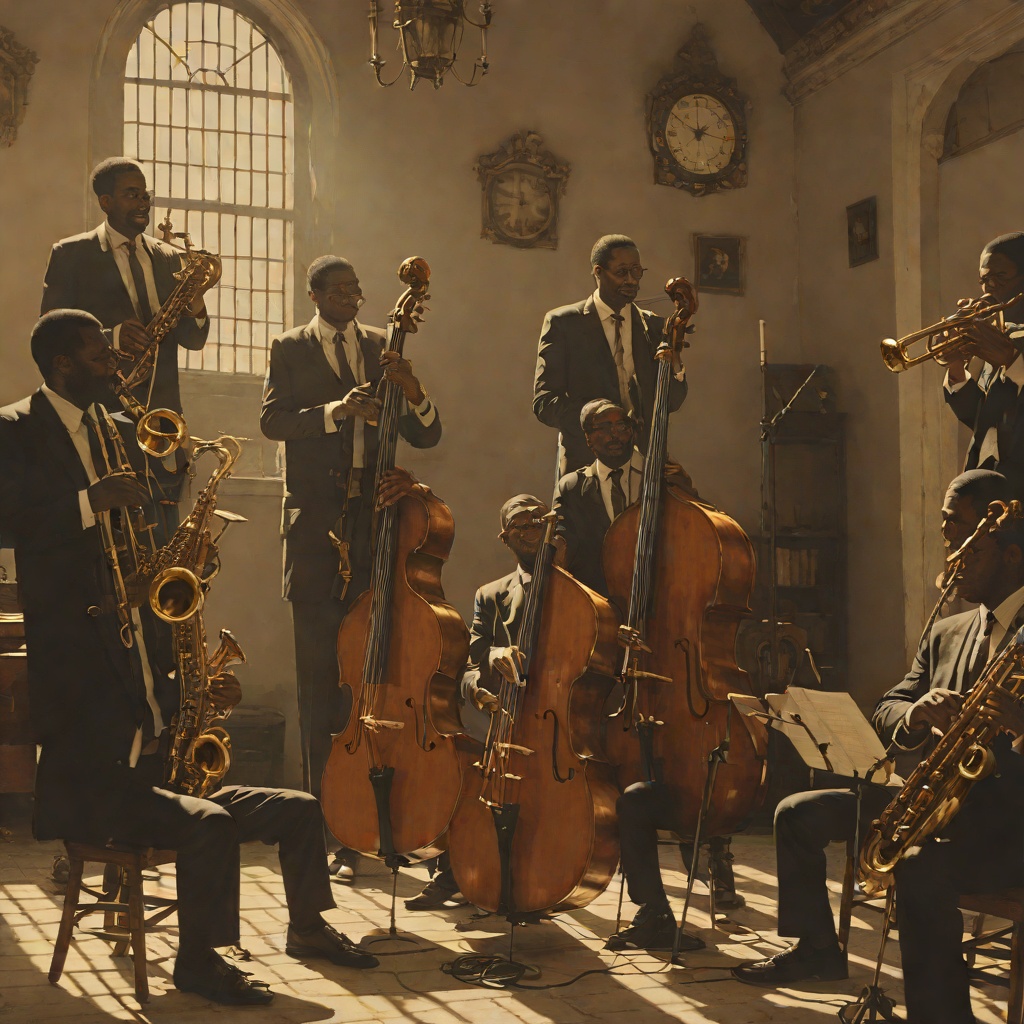
Good Night Sweetheart
City of God“Good Night Sweetheart” is presented as both a popular standard and a recurring expressive form. Its decisive significance lies in the tension between its reassuring promise of meeting again and the scenes in which that promise is shadowed by absence, solitude, and the possibility that farewell may be final.
A Standard Built from Farewell
The song first appears under the heading “GOOD NIGHT SWEETHEART,” followed by the opening lines “Good night sweetheart, / Till we meet tomorrow,” establishing a compact emotional situation: one person departs, while the words convert separation into an anticipated return. The song’s language is direct and easily remembered, fitting the book’s larger interest in standards as forms that can be summoned in whole or in fragments.
The song’s publication history reinforces its status as a durable cultural object. The permissions acknowledgment identifies “Good Night Sweetheart” as a 1931 song by Ray Noble, Jimmy Campbell, and Reg Connelly, with North American rights administered by EMI Robbins Catalog Inc. It therefore belongs to the historical repertoire of songs that outlive their original performance contexts and remain available for later emotional use.
Recurrence in the Midrash Jazz Quartet
The standard is placed within the recurring frame of “The Midrash Jazz Quartet Plays the Standards.” In that setting, a popular song is not merely performed; it becomes material for reflection, much as a traditional text might be returned to, interpreted, and heard differently in a new context. “Good Night Sweetheart” consequently operates at two levels: it is a lyric of parting within the musical sequence, and it is an object through which the book examines how familiar songs carry meanings beyond their literal words.
Its recurrence is especially important because the song is not allowed to remain a stable reassurance. After the initial presentation, the refrain returns with “She’s gone. It’s done. You’re all alone.” The words of departure now coexist with an explicit condition of abandonment. The repeated greeting is therefore changed by context: “Till we meet tomorrow” can sound like hope, habit, denial, or a promise that the surrounding narrative cannot guarantee.
Promise, Absence, and the Repeated Refrain
The song’s emotional force depends on repetition. “Good night sweetheart” is a small ritual, one that gives shape to the otherwise shapeless moment after intimacy or companionship has ended. Its repetition can preserve a bond when the person addressed is no longer present, but it can also expose the fragility of that bond. The return to the refrain after the statement that she is gone turns the song’s ordinary optimism into an instrument for registering loss.
The refrain also belongs to the book’s broader account of standards as memory devices. The Midrash Jazz Quartet’s commentary explains that a standard can be reproduced from one of its constituent parts: words can call up the melody, while the melody can call the words into the mind. Such songs remain cross-indexed with earlier periods of life and may arise unbidden, bringing back the look, feel, and smell of a past time. “Good Night Sweetheart” exemplifies that mechanism through its compressed formula of parting. A few familiar words can reopen an entire emotional scene without narrating that scene directly.
From Lullaby to Existential Ritual
The book’s reflections on song connect this kind of repeated farewell to the earliest human uses of melody. It proposes that the first songs may have been lullabies, with mothers imitating moving water to soothe infants, while rhythm reproduced the rocking of a water hammock. Lullabies are described as double-sided: gentle in their maternal voice yet terrifying in their imagery, urging sleep while enacting the terror of waking and birth. Within that framework, “Good Night Sweetheart” inherits the lullaby’s uncertain work. It comforts, but its comfort contains the knowledge that sleep, departure, and disappearance cannot be fully controlled.
The standard’s simplicity also links it to the book’s theory of popular song. Great songs are said to keep their tunes simple enough for untrained voices, often within one octave and with basic chords and uncomplicated rhythms. Such songs resemble church hymns, which are described as the first hits: forms that ennoble or idealize life while remaining accessible to ordinary listeners. “Good Night Sweetheart” uses that accessible simplicity to make farewell communal and repeatable, even as the narrative places the words against loneliness rather than fulfillment.
Narrative and Emotional Significance
“Good Night Sweetheart” helps organize the book’s movement between performance and commentary, presence and absence, and private feeling and shared cultural memory. The song offers a conventional ending to an encounter, but its recurrence prevents closure. Its promise of tomorrow remains suspended beside the blunt recognition that someone is gone and that the listener is alone.
The result is not a settled reunion but an unstable emotional afterlife. The song continues because standards continue: they can be repeated by performers, remembered by listeners, and reinterpreted by the surrounding narrative. In “Good Night Sweetheart,” a conventional goodnight becomes a test of what language can preserve when companionship has ended. The refrain does not abolish separation; it gives separation a melody, a ritual, and a fragile form of hope.