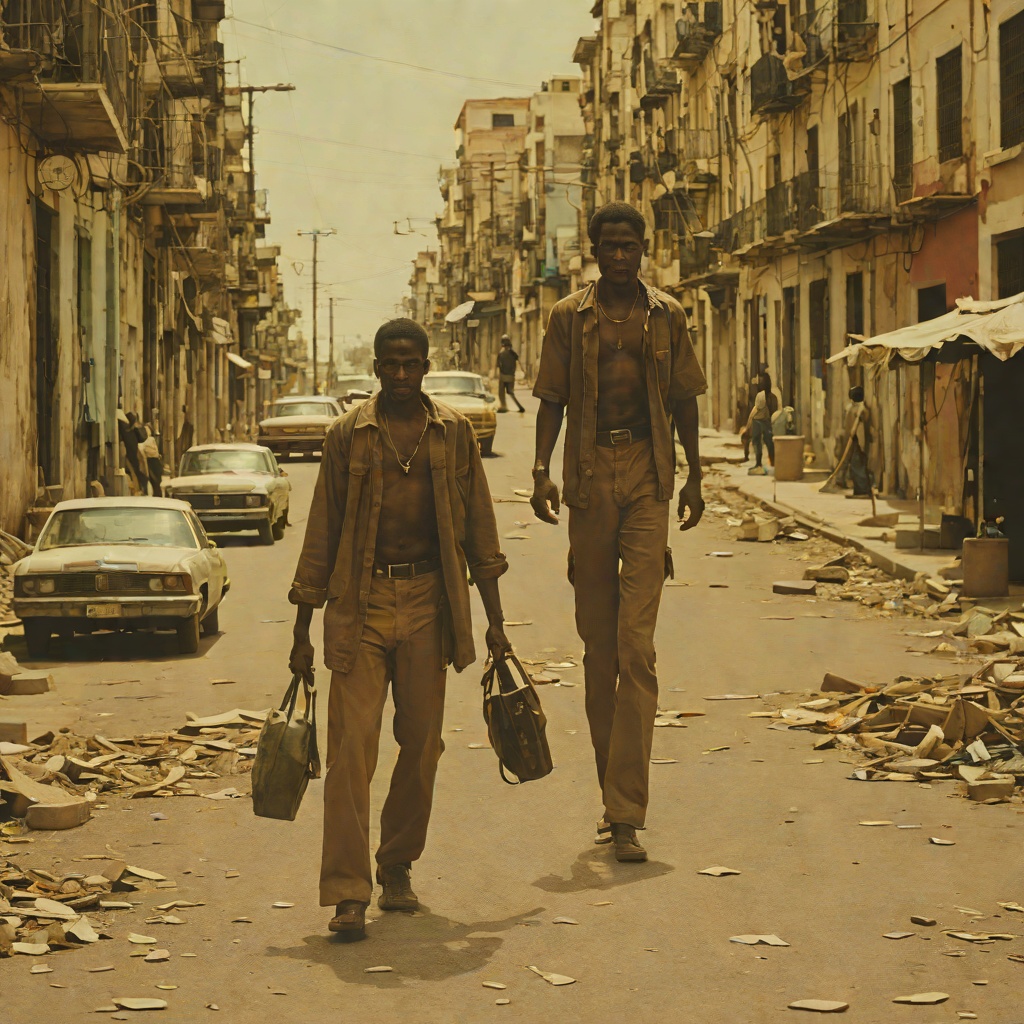
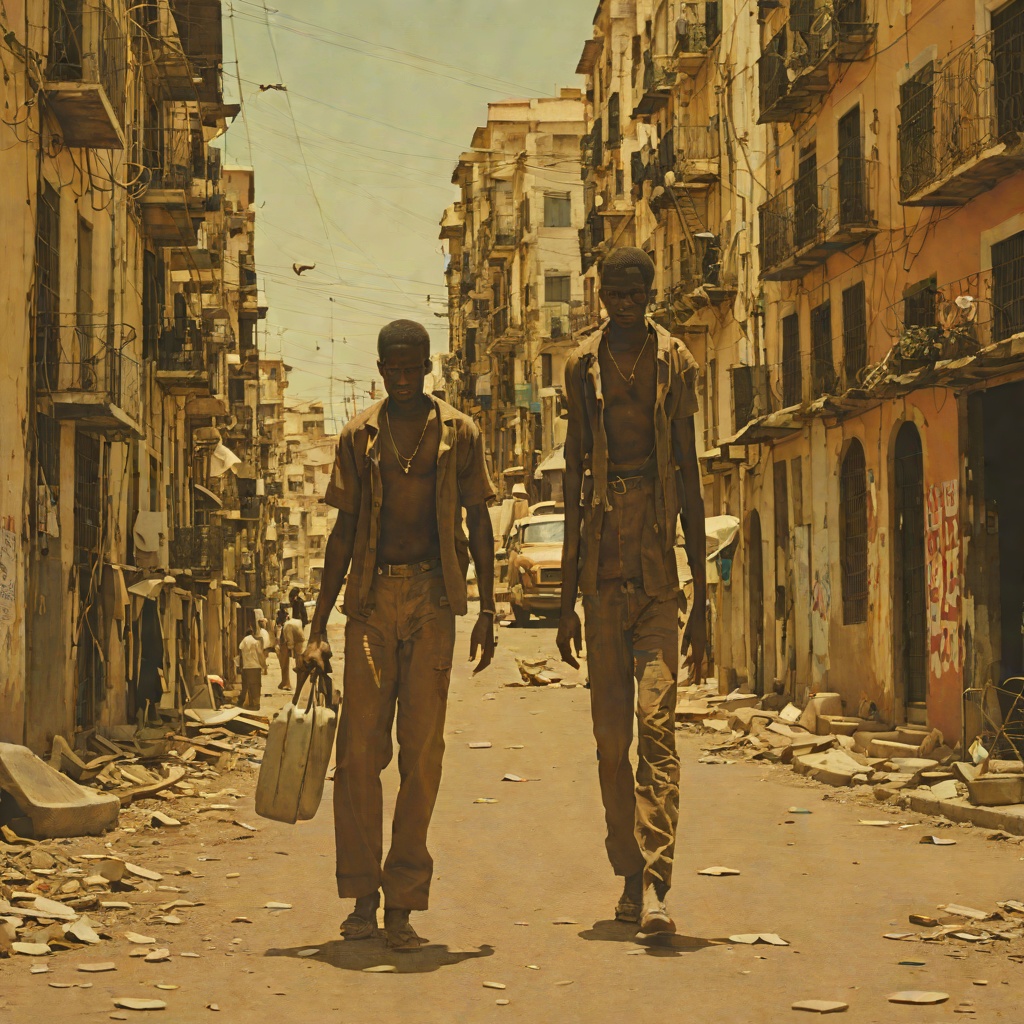
Hit-and-Run Death of the Former S.S. Sergeant in Cincinnati
City of GodThe Hit-and-Run Death of the Former S.S. Sergeant in Cincinnati is the accidental killing of an elderly refugee by the ex-Times man, a former journalist who had flown to Cincinnati with the intention of confronting the man he believed to be the former commandant of the Kovno ghetto. The event is a grotesque inversion of the ex-Times man's quest for justice: instead of exposing the man's wartime role, he becomes a hit-and-run killer, and the victim, later revealed to be S.S. Major Schmitz, dies without ever facing trial. The incident underscores the novel's exploration of the limits of legal and personal retribution, and the difficulty of translating moral resolve into effective action in the world.
Background and the Ex-Times Man's Mission
The ex-Times man, a former journalist for The New York Times, flies to Cincinnati with an open-ended return ticket, checking into a hotel called the Something Arms on a residential street in the hills above the downtown. He rents a car and cruises around to get the feel of the place, noting that the whole city smells like beer, with lots of red brick, white granite steps, and the sun bronzing off the Ohio River down below. He recalls accounts of the Eichmann kidnapping, remembering that the major problem was identification—that they would have the right guy. The suspected Eichmann worked under an assumed name, wore heavy black-rimmed glasses, looked unprepossessing, and came home to a not very nice neighborhood, a cubelike flat-roofed cinder-block house in the middle of an empty lot outside Buenos Aires. The ex-Times man reflects that he comes from the other culture—the culture of reporting the fact, getting the story, getting the spelling right. He feels it is like a ball and chain that drags on him, a heavy weight to pull, and he realizes that it is one thing to have the resolve to end a story, another to make the muscles actually do it. All his life he has looked on, and civilization paid people like him for doing nothing, for living subsidized, the way a farmer is paid for not planting crops.
The Surveillance and the Bicycle
The ex-Times man drives past the S.S. man's address a couple of times, noting that the house is the same as the others on the hill street, though slightly more modest. He decides he can accomplish nothing from a car, as it is too dangerous to pull up, and no cars are parked on the street. He drives down the terraces into the lower city and, in a riverside neighborhood of porched cottages and clapboard houses, sees a yard sale going on. Among the peeling painted kitchen chairs, used books, and a couch with sprung springs, he sees a bike—a three-speed 28-inch wheel, only the third speed works, and the rear tire is soft—and buys it for twenty dollars. He goes to a garage, gets air for the tire, and has himself a working surveillance bike. He parks in a shopping mall, takes the bike out of the car, takes off his jacket and tie, rolls up his sleeves and trousers, and is on his way, appearing as a graying, overweight, middle-aged man getting in his workout, puffing up the hills, cruising down, and waving at the kids in the yards. He figures that if he does this a few days at the same time every day, nobody will notice him anymore. He begins to think about buying a gun, something to fit in his pocket, but considers that the gun shops keep records, and wonders if a knife would be better—some sort of hunting knife from a sporting goods store, or one of those underwater harpoons that divers use to spear fish, carried in a case, to walk right up to the door. He is thinking imaginatively and not without pleasure, feeling better about himself, when he loses his bearings and the bike wobbles.
The Collision and the Death
The ex-Times man, coasting down a hill in the right neighborhood, somehow loses his bearings, and the bike wobbles, bouncing up on the sidewalk and going faster than he should. A man appears, coming down the path from his house and turning onto the sidewalk, unhearing and unseeing—a heavyset elderly man with a cane. The ex-Times man later cannot remember if he shouted Look out or just shouted, unable to understand how someone, even someone that old, could be so unseeing and unhearing. He remembers the catastrophic impact: the fedora flying up, the white hair rising as the body falls, the black-rimmed glasses askew over the chin, the terrified milky eyes, and a good clear complexion for such an old man, jowly, florid, healthy. Simultaneously, the back of the head hits the brick retaining wall of the man's own lawn with a thwack, a burlesque konk, and there is an unwanted sudden intimacy as he falls on top of the man together with him on the sidewalk, smelling his onion breath, hearing the hiss from his throat, feeling the nap of his cashmere jacket, and finding the man's plaid muffler in his own mouth. His nausea rises—the nausea of shock but also disgust—and he uses the man's body to push himself upright, pressing the man's shoulders against the sidewalk. He realizes a certain stillness at his feet, an absence of response, a vacuum in the world's vitality in the exact shape of the still hump lying before him, because the man is dead, suddenly unequivocally dead, as if there hadn't been that much life left to him in the first place. It is all instantaneous, no rattle in the throat, no blood, no mute imploring eyes, just a suddenly achieved openmouthed cadaverousness. Outraged at this calamitous idiot, shouting at the dead form, shaking with umbrage, he rights his bike, jerks at the unaligned handlebars, and, as if to punish the old fool for making such a mess of his transfigured intent, mounts his bike and rides off wobblingly down the hill, the rear wheel scraping with every rotation against the bike frame.
Aftermath and the Revelation of the Victim's Identity
The ex-Times man makes it to the mall a few blocks away, throws the bike into a dumpster behind the A&P, and drives back to his hotel. He should have called for help, seen to the old man—but how could he explain himself, or what had brought him to this place? Sickened, pulse racing, he lies down, fearful of a heart attack, and dozes off. He wakes hours later disgusted with himself and determined to forget the whole thing. He checks out and goes to the airport to wait for a flight back to New York, picks up an evening paper, and sits at the bar. He reads that a hit-and-run bike killer is at large, with some kid having seen the whole thing from his window, giving an imprecise description of the biker as a heavyset white man. The victim is an elderly refugee, age eighty-one, who had some years ago been accused of gaining entry to the United States by hiding his wartime role as a machine-gun platoon sergeant in charge of mass executions of Jews from the Kovno, Lithuania, ghetto, a charge that was later dismissed for lack of evidence. Neighbors say he was a good kind man who lived alone since the death of his wife, had something of an old world elegance about him, tipped his hat to women in the street, and came to his porch on Halloween with handfuls of candy for the trick-or-treaters. The irony is compounded by the earlier legal record: three people had testified that the man in question was the ghetto commandant, Schmitz, but his lawyer shot down their testimony, and the defendant testified he was Helmut Preissen, an ex-corporal who only did guard duty in the ghetto for three months before being shipped to fight on the Russian front. The judge found in his favor, and the Department of Justice lawyer was somewhat defensive about his handling of the case.
The Unfinished Justice and the Archive
The death of the former S.S. sergeant is later revealed to be the death of S.S. Major Schmitz himself. Pem, the former priest, tells the narrator that they found out the son of a bitch died two months ago—Schmid, Schmitz, whatever his name was—the Nazi who ran the ghetto, died in his sleep in a home in Yonkers. Pem laments that they had him good and nailed, but that he never had to stand up in court and let the world take a look at him for what he was. The event is thus framed by the larger quest for justice that centers on the recovery of the Barbanel archive, the ghetto diary kept by Josef Barbanel, the chief aide to Dr. Koenig, who wrote down verbatim everything that happened, along with the relevant documentation, the latest regulations, the execution orders, the deaths, minutes of the council meetings, orders signed by the infamous Commandant Schmitz, proscriptions, dicta, and identity papers for the work details. The archive, hidden in the earth of Eastern Europe, is later recovered and impounded at JFK Airport, where Pem and Sarah witness the unsealing of the chest, finding a diary covering the period from 1941 to 1944, and reams of documentation with the signature of Commandant Schmitz. The archive also contains forbidden little black-and-white photos, including a line of men and women marching to work behind barbed wire, a husband and wife and their child on a bench having their picture taken with cloth stars sewn to their coats, a body in a business suit hanging from a gallows, and seven little boys in front of a wood cabin, wearing military-school caps and stars on their breasts, standing at attention in the full knowledge of death—among whom Sarah finds her father in the first row. The hit-and-run death thus stands as the tragic, accidental culmination of a quest for justice that the legal system had failed to deliver, and the archive that might have proven Schmitz's identity arrives too late to matter.