Liquidation of the Kovno Ghetto
City of GodThe Liquidation of the Kovno Ghetto is the terminal catastrophe of the ghetto's existence, the moment when the captive Jewish community is rounded up, marched across the bridge, and sealed into boxcars for deportation. It is narrated retrospectively by Yehoshua, a young council runner whose testimony forms the novel's most direct account of the destruction. The event is the historical wound at the center of the book's plot: it is what Josef Barbanel's secret archive documents, what the recovered chest at JFK is meant to prove, and what the pursuit of Commandant Schmitz is meant to avenge. The liquidation is not merely a background fact but the organizing catastrophe around which the novel's quest for justice, memory, and meaning revolves.
Causes and Background
The liquidation comes after a long period of mounting dread. Yehoshua recalls standing with Barbanel at the open cistern in the stone house, hearing distant German voices coming up from the bowels of the viaduct, and Barbanel setting the cistern cover back in place with the words, "Well that is that." The sense of an approaching end pervades the ghetto. The Germans, aware of their culpability, had long forbidden unauthorized writings or photographs and had confiscated all cameras, making Barbanel's secret diary an act of defiance against the regime's effort to erase its crimes. Barbanel, as chief aide to Dr. Koenig, had used his official duties to conceal his documentation, writing in a neat Yiddish that Yehoshua describes as "like stitches sewn into the page." The archive, by the time Yehoshua was aware of it, had run into thousands of pages, a whole trunk full of material, hidden in the earth of Eastern Europe. The liquidation is the culmination of this history of suppression and resistance.
What Happens
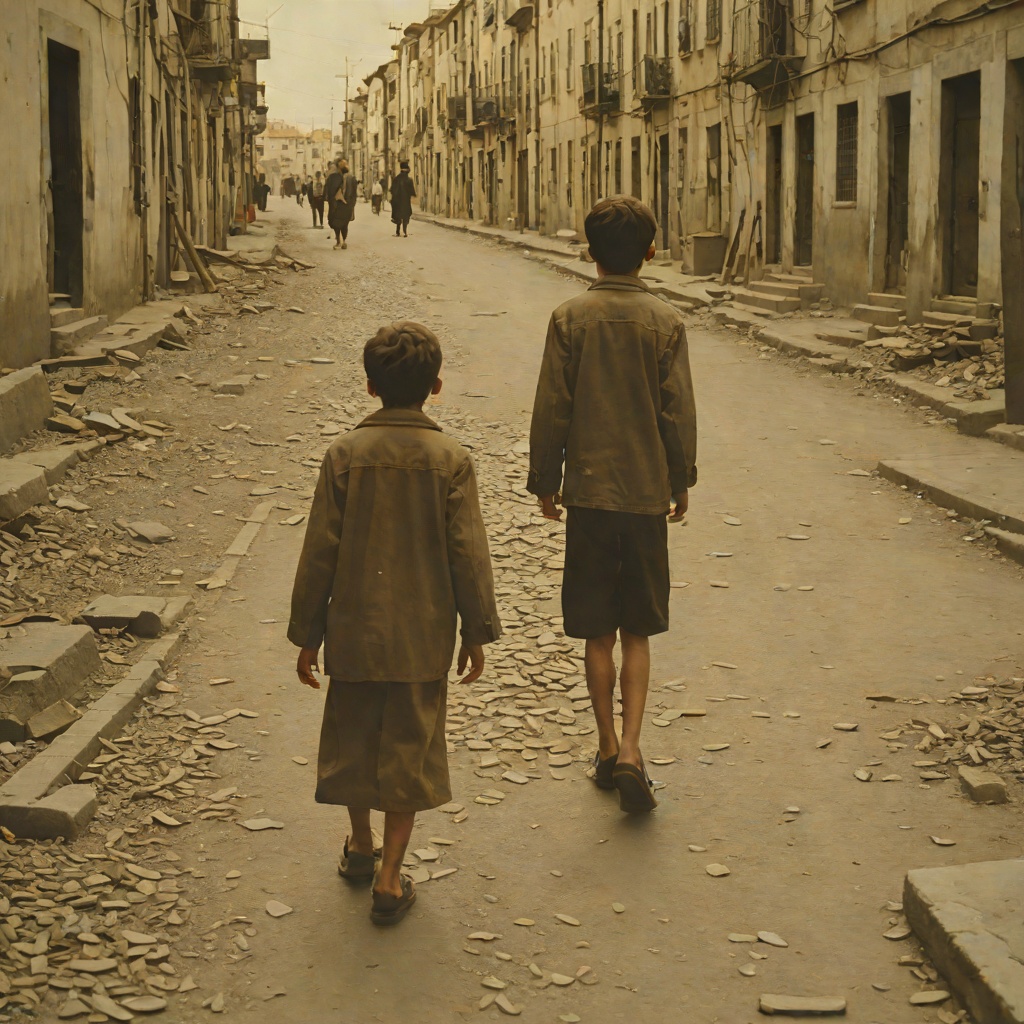
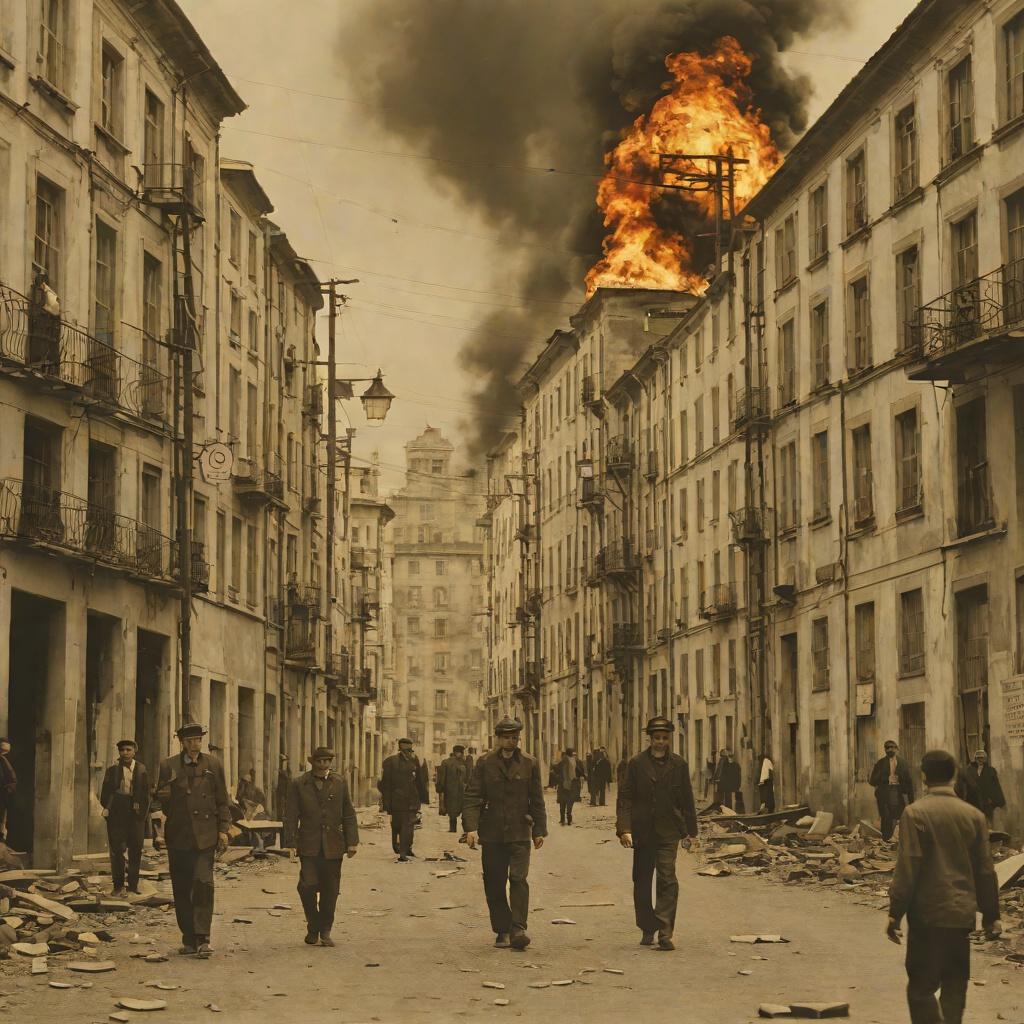
The day of destruction arrives with sudden violence. Truckloads of troops come across the bridge, and Yehoshua runs for all he is worth to warn the council, but it is his last mission as a runner, and it does not matter. The news is blaring out of loudspeakers in "that terrible bureaucratic language of theirs." The inhabitants are given fifteen minutes to gather their belongings. Soldiers run down the streets, burst into houses, clubbing people who do not move fast enough, and buildings are set afire, all by the directive of Commandant Schmitz. Yehoshua cannot see as much as he can hear: people screaming, crying out, shooting. The population is herded into the square. Greta Margolin holds two infants in her arms, wrapped with their heads hidden. People clutch at Dr. Koenig, asking him to do something, but the poor man holds his head high, his silvered hair lifted in the wind, standing as helpless as the rest. Barbanel walks in the crowd with his arm around an elderly man. The entire population is paraded across the bridge, through the city, to the railroad station, while Lithuanian citizens watch from the sidewalks—some laugh, some jeer, some go about their business as if it were an ordinary day.
The Boxcars and the Loss of Identity
In the confusion of the march and the depot, Yehoshua loses his runner's cap with the military brim, the emblem of his role as a council runner. He does not realize it until the car doors are swung shut and the bolts are slammed into place, leaving him in the blackness. He is furious that he cannot lift his arms to see if the cap is still on his head, although he knows that it is not. He has seen some people he knows climb into the same car, but he does not know where Barbanel is, or Greta Margolin, or Dr. Koenig, or any of the other boys. The car lurches and begins to move. People are wailing, calling out "Where are you?" to one another in the darkness, demanding to know what is going on, what is the meaning of this outrage. But Yehoshua knows the meaning. He is locked up in a boxcar in a long train of boxcars, packed standing and swaying with the living dead. He is "the star runner no longer." The loss of the cap marks the dissolution of his identity and his function within the ghetto's doomed social order.
Consequences and Aftermath
The liquidation is the event that the rest of the novel's plot is built to address. Neither Barbanel nor Greta Margolin survives the destruction of the ghetto, and their archive remains hidden in the earth of Eastern Europe until its recovery. The recovered chest, impounded at JFK, contains the diary covering three years from 1941 to the date in 1944 when the ghetto is dismantled and the survivors are marched to the railroad station, along with reams of documentation bearing the signature of Commandant Schmitz. The archive is meant to provide documentary proof of Schmitz's identity as the ghetto commander, but the legal pursuit fails: the former commandant, living under the assumed name Helmut Preissen, dies in his sleep in a home in Yonkers before he can be brought to court. Pem's frustration is palpable: "He never had to stand up in court and let the world take a look at him for what he was." The liquidation thus becomes the unavenged crime that the novel's quest for justice cannot fully close.
Thematic Significance
The liquidation is the historical ground against which the novel's theological and moral questions are posed. In Pem's wedding prayer, delivered as his final act as a Christian and an ex-Christian priest, he speaks of the "monstrously evil mortifiers of humanity" and the "exponential murder of souls" in the century's wars and genocides, consigned by their very numbers to "the lists of anonymous oblivion." The liquidation is the concrete instance of this anonymous oblivion, the mass death that cannot be resurrected even in imagination. The event also grounds the novel's meditation on sacrifice: Burkert's image of the lizard leaving its tail in the mouth of the predator, the fox chewing off its foot to escape the trap, is the idea of giving up a part to save the whole. The liquidation is the moment when the whole is not saved, when the sacrifice is total and unavailing. The event thus stands as the novel's most powerful argument against any easy theology of redemption, the historical fact that no narrative, no archive, and no legal proceeding can fully repair.